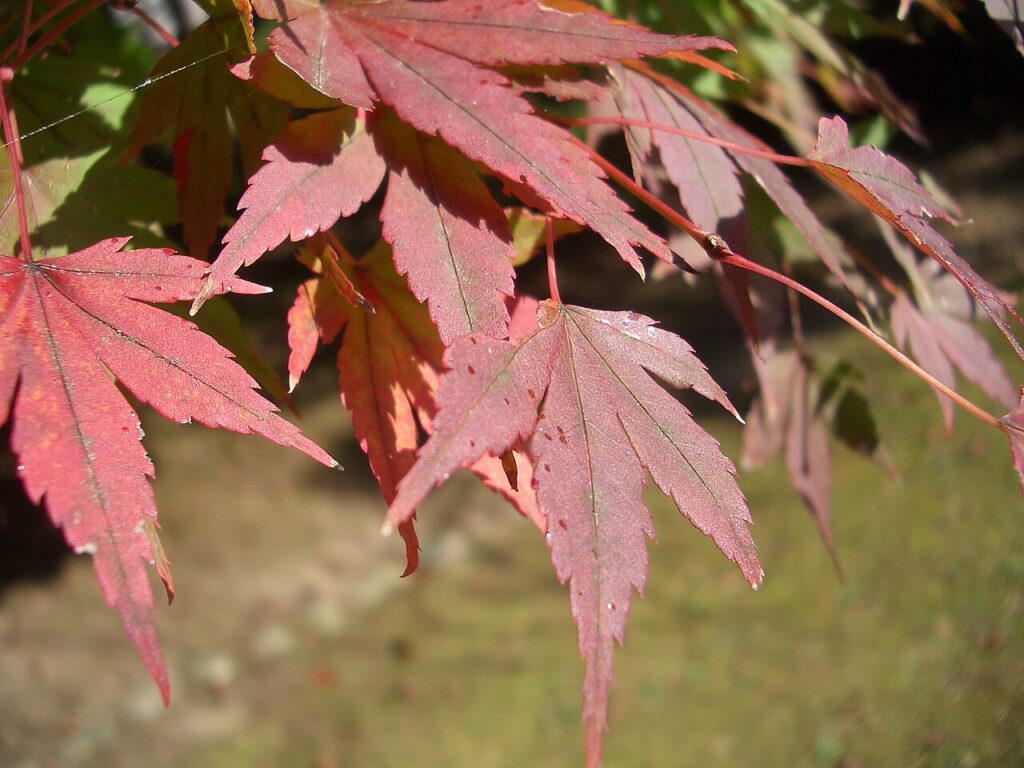
Informopedia Explains: every autumn, without a single instruction from anyone, the trees put on the most reliable show in nature. Green hillsides turn gold, then orange, then a red so vivid it looks lit from within. People drive for hours to see it — in New England they call it “leaf-peeping”, in Japan the maple season has its own word, momijigari. But the colour was never painted on. It was there all along, hiding underneath the green. Autumn does not add colour to leaves. It takes the green away.
The green is a mask
A leaf is a solar panel, and chlorophyll is the machinery that makes it work. All spring and summer, the leaf churns out chlorophyll as fast as sunlight breaks it down, and chlorophyll’s green swamps everything else. But the leaf contains other pigments too. Carotenoids — the same family of chemicals that make carrots orange — produce yellows and oranges and are present in the leaf all year. They help capture light and protect the leaf from damage. You never notice them, because the green drowns them out.
As the days shorten, the tree gets the signal: winter is coming, and leaves are a liability. A broad, thin leaf is a wonderful thing in July and a frozen, water-losing disaster in January. So the tree stops making chlorophyll. The green that remains breaks down and is not replaced, and the hidden pigments step into the light. That is why the first colours of autumn are yellow and gold — they were there all summer, waiting for the green to leave.
The reds are made fresh
Red is different. The red and purple pigments, called anthocyanins — the same chemicals that colour blueberries and cranberries — are mostly not present during the growing season. The tree manufactures them in autumn, on purpose, and only under the right conditions. When days are sunny and nights are cold, sugars made by photosynthesis get trapped in the leaf instead of flowing back into the tree, and those sugars fuel anthocyanin production. The brighter the days and the colder the nights, the more vivid the red.
Scientists still argue about exactly why trees bother. The leading idea is protection: as chlorophyll is dismantled, the leaf’s machinery is exposed to sunlight it can no longer handle, and anthocyanins act as a sunscreen, shielding the leaf while the tree recovers valuable nutrients from it. Autumn is not a death. It is a salvage operation, and the red is the tarpaulin thrown over the work.
The great withdrawal
That salvage operation is the real point of the season. Before a leaf falls, the tree strips it of everything worth keeping — above all nitrogen, a nutrient that is expensive to get from the soil and essential for building proteins. The leaf is dismantled from the inside, its useful parts shipped back into the branches and trunk for storage over winter. What is left is a husk of cell walls and waste, and the brown of late autumn is the colour of tannins, the last pigment standing after everything else has gone.
Then comes the drop. At the base of every leaf stem sits a layer of cells called the abscission layer. All summer, a hormone called auxin keeps it glued together. As days shorten, auxin production falls away, the cells in the layer stretch and weaken, and the leaf’s own weight — or a gust of wind — finishes the job. The scar left behind seals itself against water loss and infection. The tree is now bare, dormant, and ready for whatever winter brings.
What about the trees that never change?
Not every tree plays this game. Evergreens — pines, spruces, firs — keep their needles through winter, sometimes for several years, shedding them gradually rather than all at once. Their secret is the needle itself: narrow, tough, coated in wax, with a tiny surface area that loses little water to the cold, dry air. A broad maple leaf would freeze and desiccate; a pine needle barely notices. The trade-off is speed. Evergreens photosynthesise slowly all year, while deciduous trees sprint through spring and summer and then shut down completely. Two strategies, same winter — one tree blazes and drops everything, the other endures it, green and patient, needle by needle.
Why some years blaze and others fizzle
Anyone who has watched autumn in two different years knows it is never the same twice. The recipe for a spectacular season is specific: a warm, wet spring, a summer that is neither too hot nor too dry, and then sunny days followed by cold — but not freezing — nights. Drought dulls the show, because stressed trees drop their leaves early, before the colours develop. A warm, wet autumn does the same in the opposite direction: without cold nights, the reds never form and the leaves slide straight to brown. The best years are the ones with crisp air and hard light.
That sensitivity is also why scientists watch autumn so closely. The timing of leaf colour and leaf fall is one of the clearest signals of a changing climate, shifting with temperature records that keep breaking — and the same warming that stretches summers is redrawing the calendar of the seasons. The trees will keep putting on their show. The question is whether it will still arrive when we expect it.
Next time you stand under a maple in full flame, remember what you are looking at: not a leaf dying, but a tree packing up its summer, pigment by pigment, and storing it away for spring. The colour is the evidence of the work — and, as the University of New Hampshire Extension puts it, a reminder that the most beautiful part of the year is really a tree getting ready for the hardest one. It is the same kind of quiet engineering that hides everywhere in the natural world — even in the invisible climate leak in every air conditioner, a machine that borrows the same physics to move heat around our homes.