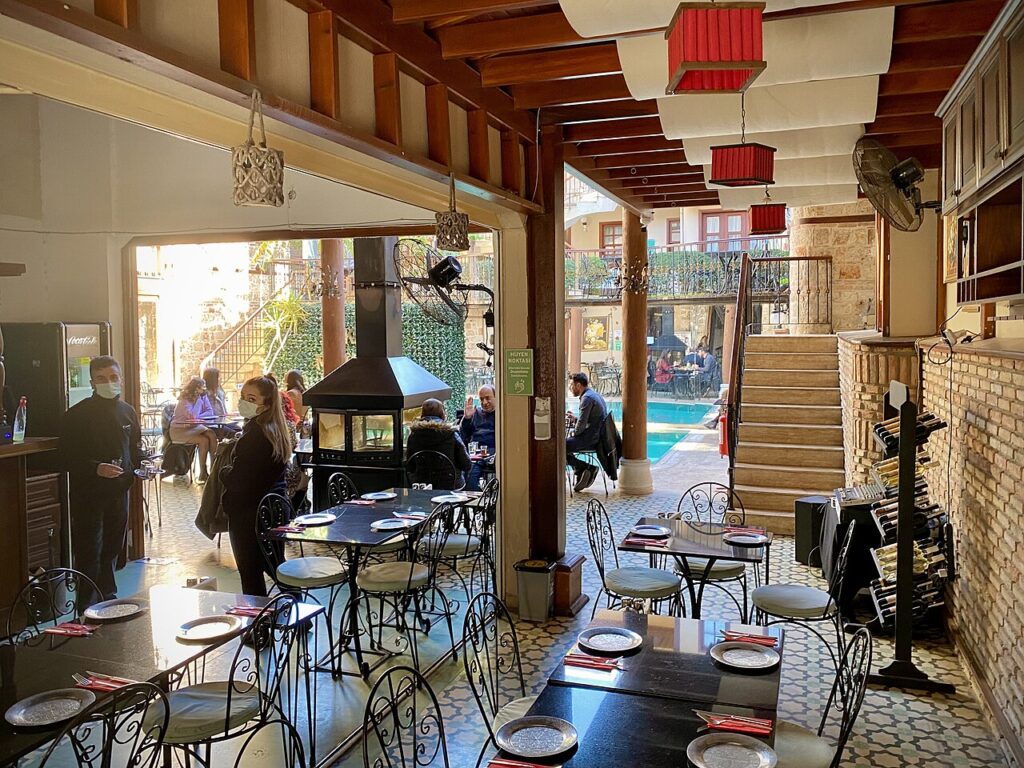
The 31st United Nations climate conference opened on Monday morning in Antalya, on Türkiye’s Mediterranean coast, with a message its hosts have repeated for months: this is the summit where promises must become projects. Nearly 200 countries are gathered at the Antalya Expo Center for twelve days of talks that run until 20 November.
A United Nations synthesis of national climate plans, published on 27 October, examined 127 new nationally determined contributions — the Paris Agreement climate plans — from 154 parties, covering about 71 per cent of global emissions in 2019. It found that current pledges would cut global emissions by only about 6 per cent by 2035, or about 9 per cent if conditional elements are delivered. The Intergovernmental Panel on Climate Change benchmark for a path consistent with holding warming to 1.5°C is a cut of about 60 per cent over the same period. The gap between what countries have promised and what the science demands is not narrowing. It is the central fact of this summit.
COP31 is also the first climate conference held without the United States at the table. Washington left the Paris Agreement and, since January 2026, is no longer a member of the UN climate convention. It is the second year running that the world’s largest historical emitter has been absent, and negotiators expect the gap to show — in the finance discussions above all.
A presidency shared, for the first time
The conference is being run under an arrangement the UN climate process has not tried before. Türkiye hosts the summit and runs the Action Agenda, with Murat Kurum, the environment minister, serving as COP31 President. Australia chairs the formal negotiations, with Climate Change and Energy Minister Chris Bowen as President of Negotiations. The two teams say they will work on a cover decision together, though Türkiye insists it has the final say. A World Leaders’ Summit convenes heads of state and government on 11 and 12 November.
The most prominent deliverable the two presidencies are pushing is a voluntary commitment to raise electricity to 35 per cent of global final energy consumption by 2035, up from about 23 per cent today — the “35 by 35” Global Electrification Pledge. Its test will be how many major economies sign it, not how it is worded.
Finance is the fight
Finance, the issue that has poisoned more climate summits than any other, returns in difficult circumstances. At COP29 in Baku, developed countries pledged to provide $300 billion a year to developing countries by 2035, with a wider call to scale finance from all sources to $1.3 trillion. But the milestones between now and then are not well defined, and official development assistance fell by a record 23 per cent in 2025.
The adaptation numbers are starker still. The UN Environment Programme’s Adaptation Gap Report, released on 4 November, estimates that developing countries will require $310–365 billion a year for adaptation by 2035 — 12 to 14 times the $26 billion in international public adaptation finance received in 2023. Tracked adaptation finance actually fell 20 per cent, to $63 billion a year, in 2023–24, even as total climate finance rose. Vulnerable countries and campaigners are pressing for more public, grants-based funding and clearer rules on delivery and access — and for the Fund for Responding to Loss and Damage, agreed in principle years ago, to become genuinely accessible rather than another queue.
An agenda fight is possible on the first day. The Like-Minded Developing Countries and the Arab Group want a dedicated space for Article 9.1 of the Paris Agreement — the developed-country obligation to provide finance — and said so in a joint submission. A draft COP31 agenda left the item out.
The fossil fuel question will shape the politics of Antalya even though it is not formally on the agenda. On 3 November, Brazil’s COP30 presidency published a voluntary roadmap for transitioning away from fossil fuels. Whether COP31 picks that thread up — or lets it lie — will be watched closely by the small island states and African delegations for whom the energy transition is not an abstraction but a matter of survival.
Why this matters
COP31’s organisers have billed it as the “implementation COP”, and, as they put it, “the stakes are not abstract”. That framing is honest — and it is also a gamble. If the test of this summit is delivery, then delivery is exactly what the system has failed at for a decade: pledges made, milestones missed, finance promised in the hundreds of billions and delivered in the tens. It has begun with the arithmetic already against it — a 6 per cent cut where 60 is needed, a $300 billion promise with no milestones, and the biggest emitter in history absent from the room. What happens in Antalya over the next twelve days will not settle the climate crisis. It will settle something narrower, and in its own way more important: whether the process built to solve it can still produce anything that looks like an answer.
Background: our preview of the summit is at COP31 opens in Antalya in eight days — this time the test is delivery, not promises, and the finance picture is covered in Europe gave a record €41.6 billion in climate finance — and says it won’t pledge more at COP31.


One Comment