Four soldiers from El Salvador are missing in Haiti after gangs ambushed their armoured vehicle with explosives near Port-au-Prince on Sunday — the first major attack on the United Nations-backed international force since it began operating earlier this year.
The four men, identified by El Salvador’s armed forces as aviation technicians, were returning to camp when their vehicle was hit in Croix-des-Bouquets, a community north of the capital that violent gangs now control. They escaped the burning vehicle, but contact has not been re-established.
Search helicopters dispatched to find them came under fire too, Salvadoran authorities said Monday, and were forced back after they dispersed armed men in the area.
“Multiple attempts to approach by land and air have been made, but the intensity of the fighting has hampered these,” the Salvadoran armed forces said in a statement, adding that it is working with international forces to “establish contact and determine the location of our military personnel.”
The Gang Suppression Force — the UN-backed multinational mission meant to break the gangs’ stranglehold on Haiti — said it was assessing the situation and urged residents in the area to stay indoors.
The gangs are testing the force — and saying so openly
The ambush landed hours before the UN Security Council was due to hold its scheduled session on Haiti on Monday, and it dominated the proceedings.
Mike Waltz, the United States ambassador to the UN, condemned the attack and described its ferocity: the gangs hit the armoured vehicle with “hundreds of bullets and explosives,” he told the council. “We believe the four men survived, but they do remain unaccounted for,” he said. “We will bring you home.”
He aimed a warning directly at the attackers: “To the gangs and gang leaders who carried out this cowardly attack, if you think you’re going to intimidate this coalition into retreat, you have made a terrible mistake.”
Jack Christofides, the force’s special representative, told the council that “gangs are testing the gang suppression force,” and noted that attacks against it have increased in recent weeks. Gangs have carried out reprisal killings in some areas following operations by Haitian and international forces, he said, and pushed deeper into neighbourhoods including Kenscoff and the Artibonite region.
“The reality is that we cannot be everywhere at once,” Christofides said — an unusually blunt admission from the mission’s leadership.
Haiti’s own deputy permanent representative to the UN, Wien-Weibert Arthus, called the ambush “a reminder, as if we really needed one, of the fact that the security challenges in Haiti are complex and complicated.” He added: “We hope that those who are missing will be able to go back to their families unscathed.”
What the force is up against
No group has claimed responsibility for Sunday’s attack. The area where the vehicle was struck is controlled by two gangs whose leaders have been sanctioned by both the UN and the United States: Kraze Barye, led by Vitelhomme Innocent, and 400 Mawozo, led by Lanmo Sanjou.
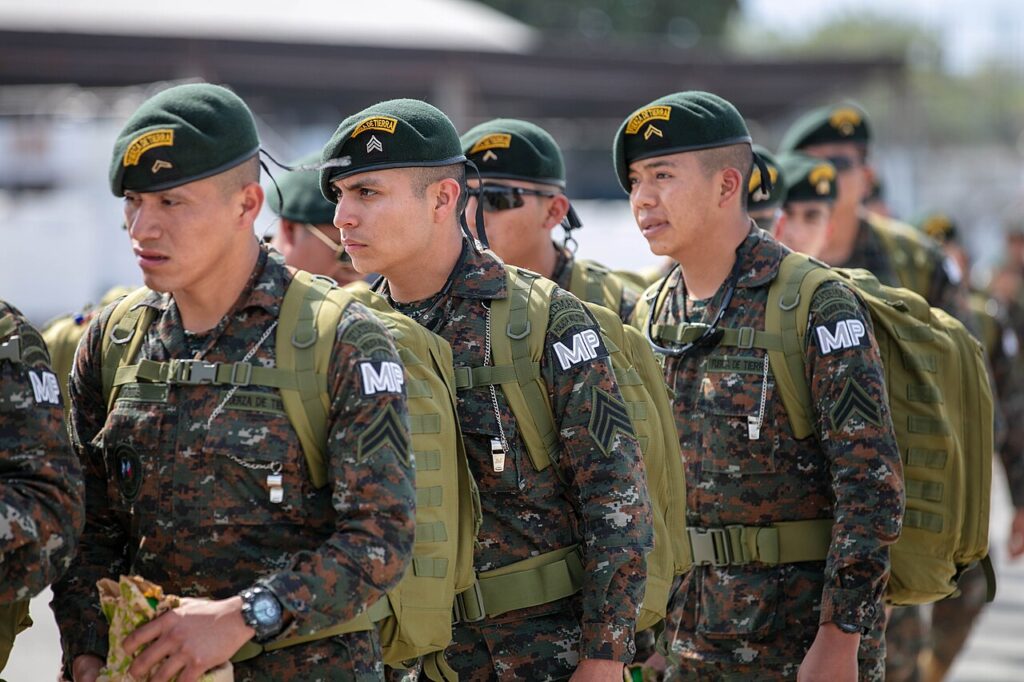
The Gang Suppression Force began operations on June 1 this year, taking over the mandate of the earlier Kenya-led multinational mission. It currently fields more than 1,500 troops from Chad, Jamaica, Guatemala and El Salvador, with additional contingents from Sri Lanka and Guatemala expected after completing preparatory training. The Security Council renewed its mandate in September for six months, through March 2027, and a UN statement said it is expected to reach full operational capacity by the end of this year.
That timeline is colliding with a crisis that keeps deepening. Gang violence has displaced nearly 1.5 million people across Haiti — a record — and the UN says more than 5,700 people were killed or injured between January and mid-September, with over 230 kidnapped. Armed gangs now control an estimated 70 per cent of Port-au-Prince, using what a UN report last month described as “murder, kidnapping, and sexual violence amid widespread impunity.”
The ambush also comes as Haiti prepares for its first general election in more than a decade — the vote that the international community has said should follow security gains, not precede them.
Why this matters
This is the moment the Gang Suppression Force was always going to face. An international mission in Haiti has two options when it takes the fight to entrenched gangs: grind the violence down slowly, or absorb a counterattack that proves the gangs can still reach its troops. Sunday was the latter — and it happened while the force is still building toward full strength.
For El Salvador, which sent the aviation technicians now missing, the ambush turns a distant deployment into a domestic political question. For the UN, it is a credibility test: the force was created precisely because the previous mission couldn’t pacify the gangs, and if its soldiers are being picked off in gang-held territory, donors and troop-contributing countries will start asking what the endgame is.
And for ordinary Haitians — 1.5 million of them displaced, many waiting for an election that has been more than a decade coming — the attack is a warning that the streets they fled may not be safe for a while yet. The gangs, as the UN’s own representative put it, are testing the force. What they learn from this test will shape everything that comes next.