Greek authorities recovered the bodies of 12 people from a migrant boat found drifting south of Crete early on Monday, while a passing cargo ship rescued 18 survivors from the same vessel, the country’s coast guard said.
The boat was spotted about 15 nautical miles — roughly 28 kilometres — south of the island, off the port of Kaloi Limenes, by a Moroccan-flagged container ship. The coast guard said it had no information yet on who the dead were, or how they died. The survivors were being brought ashore.
Two more boats were found in the same stretch of sea overnight. A European Union border agency aircraft spotted one carrying about 47 people some 30 nautical miles south of Kali Limenes, and a drone located another with about 40 people on board 31 nautical miles to the south-east. In all, about 117 people were found in the three operations, and 105 were rescued alive.
Separate reports say eight more people were recently found dead on another boat bound for the island, bringing the number of migrants who have died trying to reach Crete in recent days to 20.
The deaths come as arrivals on the island are climbing fast. Greece’s migration minister, Thanos Plevris, said about 1,700 people had arrived from Libya in the first three days of November alone, and the government is preparing for a possible migration crisis on Crete. Only last month, 12 people, including an infant, died when two boats travelling from Turkey to the islands of Lesbos and Samos capsized.
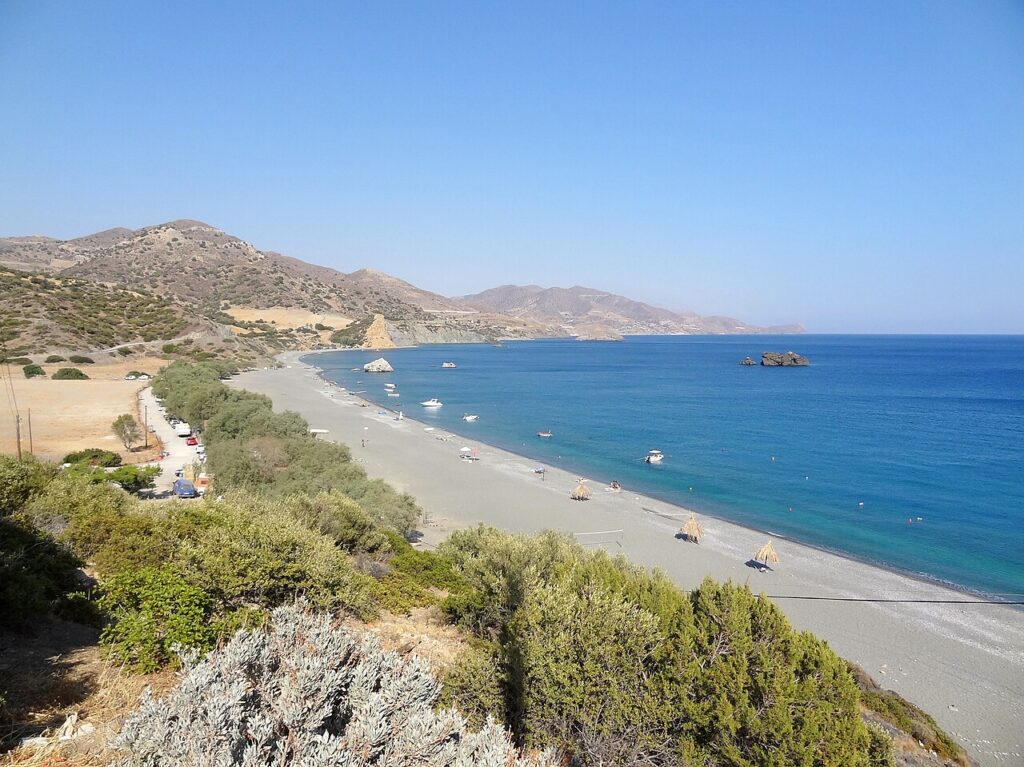
Crete, the largest of the Greek islands, sits at the southern edge of Europe, closer to the Libyan coast than to mainland Greece. For years it was a secondary route. That is changing. As smugglers shift away from the central Mediterranean crossings to Italy and the Aegean crossings to the eastern Greek islands, the longer Libya-to-Crete passage — hundreds of kilometres of open sea in often unseaworthy boats — is taking more of the traffic, and more of the lives.
The pattern is familiar from other routes. A migrant boat capsized off Senegal last week, killing at least 35 people, and 139 migrants died off Djibouti last month on the crossing from the Horn of Africa to Yemen. In each case the toll is counted in bodies pulled from the water, and the dead are often never named.
That is what makes Monday’s toll so hard to read. Twelve people died on a boat that was found, not one that sank in view of rescuers. Their identities are unknown, and the circumstances of their deaths are unclear — whether they drowned, or died of exposure, dehydration or something else on a crossing that can take days. Until the coast guard says more, they are 12 unnamed dead in a count that keeps growing.
Why this matters
The Libya-to-Crete route matters beyond Greece because it is where Europe’s migration debate now lands in practice. Crete is an entry point to the European Union, and every surge in arrivals there forces the same questions Athens and Brussels have wrestled with for a decade: who rescues, who takes responsibility, and what happens to the people who survive. With winter approaching, the sea only gets rougher. The 1,700 arrivals in three days suggest the route is not a one-off — it is becoming a regular corridor, and Monday’s 12 dead are a warning of what that corridor costs.