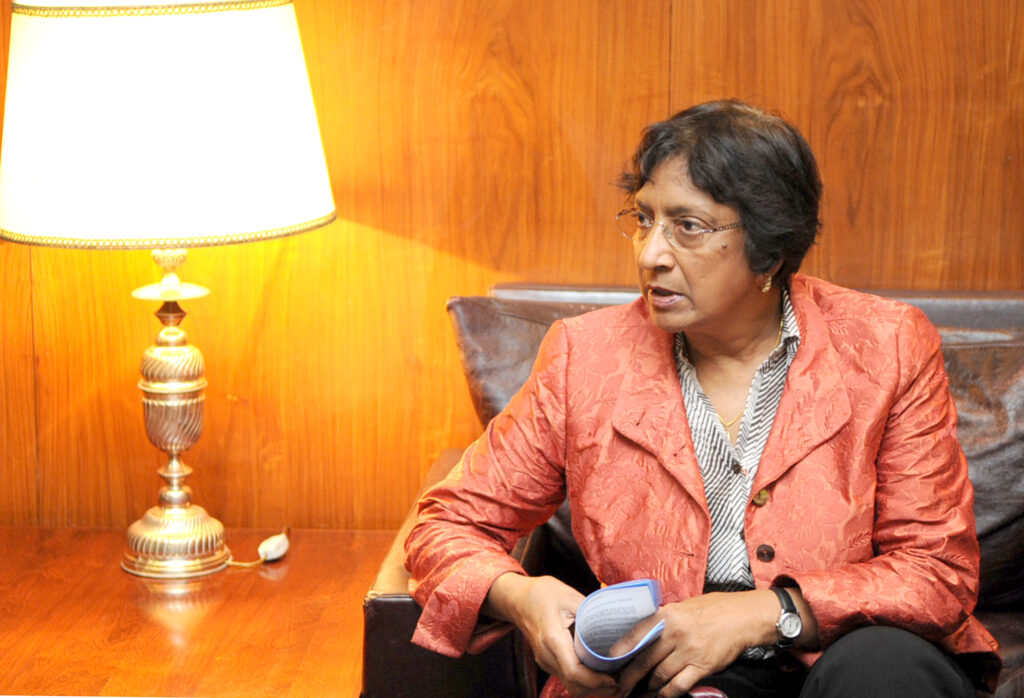
For most of the morning, Oslo kept the world guessing. Then, just after 11 a.m. local time, the Norwegian Nobel Committee read out a name that needed no dramatic buildup to be the right one: Navanethem “Navi” Pillay.
The 85-year-old South African jurist has been awarded the 2026 Nobel Peace Prize — the 125th in the prize’s history — for a lifetime of work to promote peace through international law. The announcement, made Friday at the Norwegian Nobel Institute, honored a career that began in the courtrooms of apartheid-era South Africa and ran straight through the tribunal that tried the architects of the Rwandan genocide.
Pillay was, as committee chair Jørgen Watne Frydnes put it, instrumental in making sure that war crimes, crimes against humanity and genocide are actually prosecuted — not condemned from podiums and then quietly forgotten.
The committee framed the choice as a deliberate answer to the moment. “At a time of existential challenges – including more wars and conflicts than the world has seen in a long time – international law is no longer just a supplement to peace and security. It is an absolute necessity,” its statement read.
Frydnes went further at the announcement. The system of international law, he said, is under tremendous pressure, and its institutions are under attack. It is judges, he added, who guard the thin red line between order and chaos.
Few living people embody that argument better than Pillay. Born September 23, 1941, in Durban into a Tamil family, she grew up under apartheid and became, in 1967, the first non-white woman to open a law practice in South Africa’s Natal province. Her clients included anti-apartheid activists and political prisoners — among them Nelson Mandela himself, a previous Peace Prize laureate. Her legal work helped establish rights for prisoners held on Robben Island.
After apartheid fell, her career went global. She became the first non-white woman judge on South Africa’s High Court, then president of the International Criminal Tribunal for Rwanda, then a judge of the International Criminal Court. From 2008 to 2014 she served as the United Nations High Commissioner for Human Rights — the world’s most powerful human-rights post — and she later led the UN’s Commission of Inquiry on the Occupied Palestinian Territory. Today she sits on the International Court of Justice in the case in which Myanmar stands accused of genocide against the Rohingya.
The committee considered 287 candidates this year, according to Frydnes. Among the names circulating beforehand were the International Space Station, emergency teams working in Sudan, children’s advocates in Ukraine, and two of the world’s top international courts. In the end, the prize went not to an institution but to the jurist who spent six decades proving what institutions are for.
The choice carries a sharp edge. United States President Donald Trump spent months publicly insisting he deserved the prize, even as he wages war in Iran — an argument the committee effectively answered by choosing the opposite archetype: not a dealmaker but a judge, not someone who promises peace through strength but someone who built the courts that outlast strongmen.
Why this matters goes beyond one woman’s honor roll. Pillay’s career is the modern history of accountability law itself — from the courtroom that defended Mandela to the tribunal that prosecuted genocide, to the ICJ bench now hearing the Rohingya case. The committee’s message is that peace is not the absence of conflict; it is the presence of justice. In a year with more armed conflicts running simultaneously than any in recent memory, Oslo has bet on the radical idea that war criminals should fear the courtroom.
Pillay will receive a medal, a diploma and 12 million Swedish kronor — roughly $1.2 million — at the ceremony in Oslo on December 10, the anniversary of Alfred Nobel’s death.



One Comment