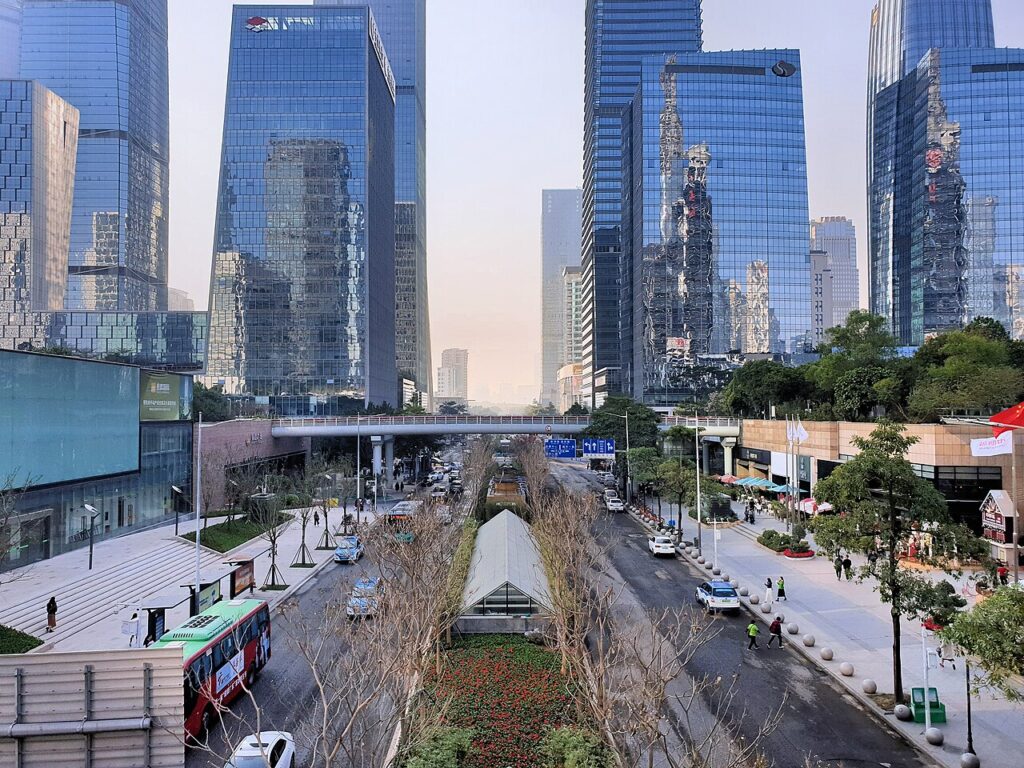
The three men who between them control most of the world’s nuclear weapons are about to sit in the same room for the first time. The White House confirmed on Friday that Donald Trump, Xi Jinping and Vladimir Putin will hold a three-way meeting on Thursday 19 November, on the sidelines of the Asia-Pacific Economic Cooperation summit in Shenzhen, China.
It is a gathering with no precedent. The three leaders have met in pairs many times, but never as a trio — and it arrives at a moment when there is no treaty left limiting the arsenals of the two largest nuclear powers. New START, the last agreement capping American and Russian strategic weapons, expired in February 2026.
The stated subject is nuclear weapons. White House spokeswoman Olivia Wales told reporters the president “has made it clear” that he “will discuss the reduction of nuclear weapons.” A senior administration official who briefed reporters was blunter about what the session would produce: “We do not expect to get to any kind of agreement.” The meeting is being described instead as the start of a conversation — a first exchange that might, eventually, lead to negotiations on a new arms-control framework.
Mr Trump also intends to raise the war in Iran with both leaders, according to the same official. What he will not raise, at least not in the three-way room, is Ukraine. Russia’s war there is not on the trilateral agenda, the official said — Washington runs a separate track of talks with Kyiv and Moscow that China is not part of. That is a notable omission, and an awkward one: it was Mr Putin who first floated the idea of a three-way summit, and his version of it, proposed in October, was about ending the war in Ukraine.
A meeting announced before it was agreed
The announcement itself showed how far apart the three sides still are. When the White House confirmed the plan on Friday, Beijing and Moscow had not formally confirmed their participation, and no format or venue details had been released. The Kremlin later said the meeting would take place on 19 November, but there was still no confirmation from China.
Mr Trump is also scheduled to meet Mr Xi separately on Thursday afternoon, for talks and a working lunch, before the three-way gathering at the end of the day. The APEC leaders’ meeting itself runs on 18 and 19 November, bringing together 21 Pacific economies in China’s southern technology hub.
China, for its part, has already signalled where it stands on the central question. Its foreign ministry has said it is “neither fair, reasonable nor realistic” to ask China to join nuclear negotiations — a position that reflects Beijing’s long-standing argument that its arsenal, far smaller than those of the United States and Russia, should not be treated as equivalent.
Why this matters
The significance of Shenzhen is not what it will decide — by the White House’s own account, that is likely to be nothing — but what it reveals about the state of arms control. For the first time in decades, the world’s two largest nuclear powers operate with no binding cap on their arsenals at all. The treaty that once set those limits is gone, its replacement does not exist, and the third nuclear power in the room has said it sees no reason to join one.
That is why the meeting is best read as a photograph with a purpose: three leaders demonstrating that the channel exists, even if the substance does not yet. The risk is that it becomes only a photograph. A summit announced with no agreement expected, no agenda settled and two of the three participants yet to confirm it can easily end as a piece of stagecraft — impressive to watch, and empty the morning after.
What happens next will be decided by whether the conversation the White House describes actually begins, and whether it survives the many disagreements — over Ukraine, over Iran, over who gives up what — that the three leaders have agreed, for one afternoon in Shenzhen, not to discuss.
Related: Trump told Ukraine to “get a new leader” last month as his diesel deal with Putin tore open the Western alliance — and Trump waived the Russia sanctions bill a day before it bit, sparing India and China 100% tariffs.