China carried out a large, unannounced military exercise across the western Pacific and around Taiwan in early November — massing more than 100 naval and coast guard vessels in what officials in Taipei have described as a campaign of “silent intimidation” aimed at pressuring Taiwan and other governments before major international meetings.
That is the account given to Reuters by a senior Taiwan security official, speaking on condition of anonymity, in a report published on Friday. At one point early this month, the official said, China’s military and coast guard had more than 100 vessels operating in the region, conducting drills that included simulated attacks on other militaries and on cities — including Taiwan’s.
The deployment was larger than “Justice Mission 2025”, China’s last formally named exercise targeting Taiwan nearly a year ago and one of the largest Chinese naval deployments on record. This time, Beijing did not announce the exercise at all. There was no name, no notice, no declared start or end — just the ships.
What the drills rehearsed
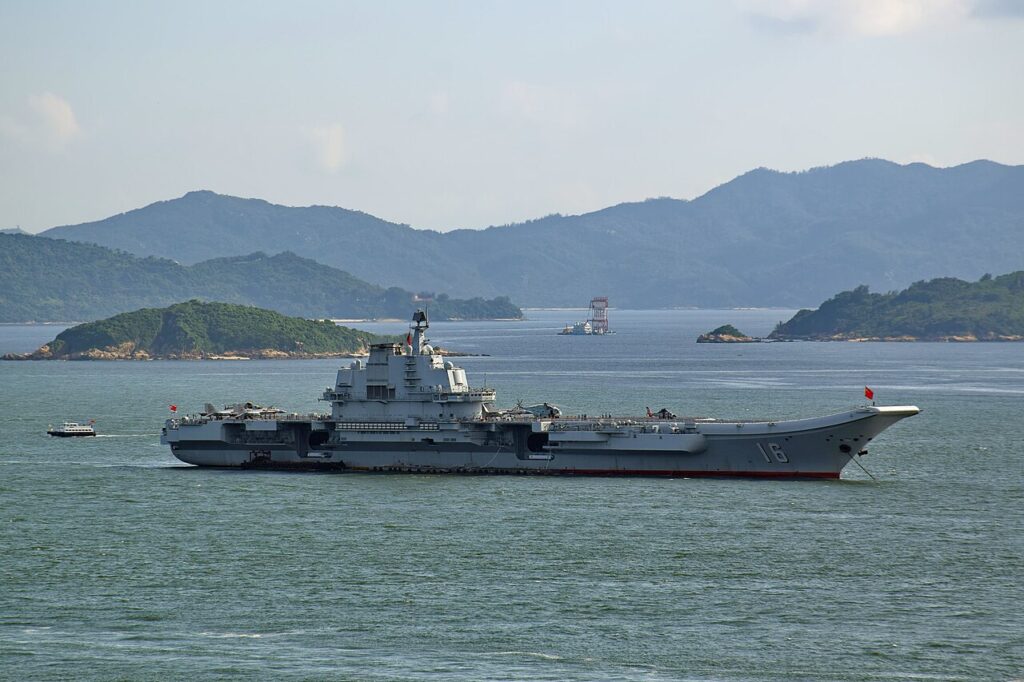
According to Taiwan’s defence minister, Wellington Koo, the operations were anti-access and area-denial drills — the military term for practising how to keep other countries’ forces out of a stretch of sea. The Liaoning aircraft carrier group took part, alongside other naval formations, and the exercise drew on coordinated forces from China’s eastern, northern and southern theatre commands — a scale that suggests Beijing was rehearsing not only a blockade of Taiwan but broader operations across the western Pacific.
During the drills, a Chinese submarine also launched an intercontinental ballistic missile from the Yellow Sea into the Chinese mainland, the Taiwan official said — a reminder, if one were needed, that the exercise was about far more than ships sailing in circles.
The scale has eased this week, with around 70 vessels still operating within the first island chain on Friday, according to two Taiwan security officials. But Taiwan’s National Security Council secretary-general, Joseph Wu, posted details of the latest deployments on X late on Thursday, saying the numbers had fallen but the pressure had not gone away.
The timing is the message
China has never renounced the use of force to bring Taiwan under its control, and it has stepped up military pressure on the democratically governed island steadily over the past five years. But the timing of this exercise looks deliberate. On Thursday, President Xi Jinping gave a major policy speech on Taiwan, urging peaceful reunification at a conference marking the 160th anniversary of Sun Yat-sen’s birth. Next week, Beijing hosts the APEC leaders’ summit in Shenzhen, where Xi is expected to meet President Donald Trump for the third time this year. Taiwan also attends APEC — and holds local elections later in November.
That is the logic of “silent intimidation”: no declaration of war, no shots fired, no formal exercise to protest — just a hundred warships appearing off your coast in the week before the world’s leaders gather in Beijing, and a reminder that the fleet can return whenever it likes. China’s defence ministry did not respond to a request for comment.
Taiwan has been preparing for exactly this kind of pressure — it is spending a record sum on defence — while the arms race across the region keeps accelerating.
For Taiwan, the drills are a test of nerve as much as of readiness. For Washington, which is preparing for the Trump-Xi meeting, they are a reminder that the Taiwan question will be sitting at the table in Shenzhen whether anyone raises it or not.