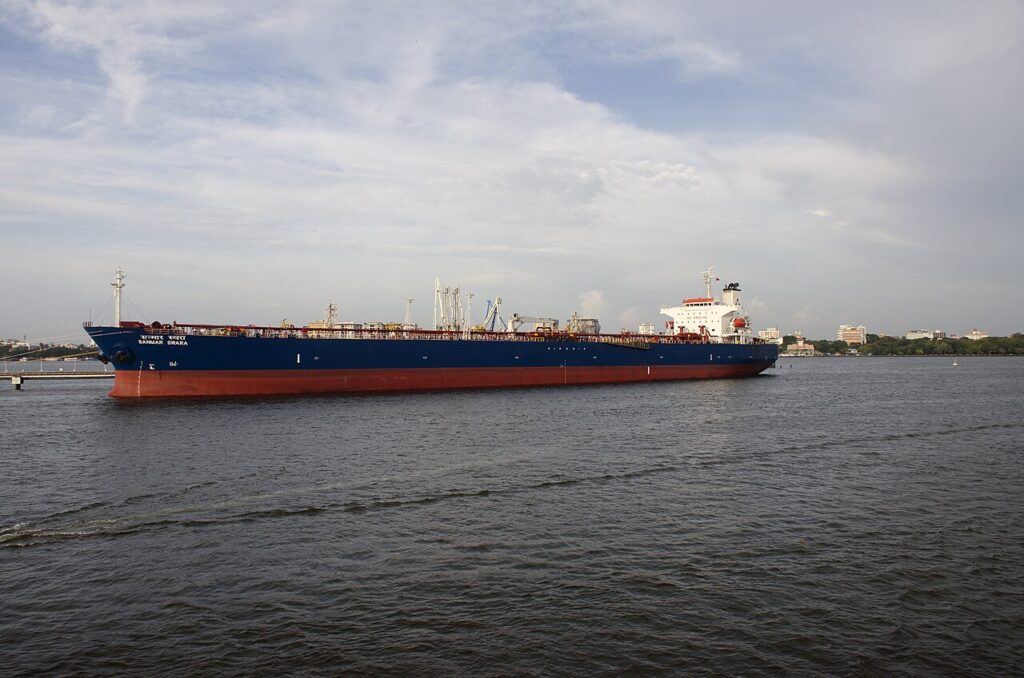
Four oil tankers were hit by explosions in the Strait of Hormuz in the space of two days, Iran’s military said on Thursday — and on Friday, Tehran claimed it had also struck an American early-warning radar in Bahrain. Oil prices jumped more than 3% as the Gulf’s most dangerous waterway slid deeper into crisis.
Wednesday: two supertankers disabled
According to Iran’s Revolutionary Guards Navy, two supertankers were disabled by explosions on Wednesday after ignoring warnings against using what Tehran calls an unauthorised shipping route. Iranian state media said the vessels had struck naval mines. Iran said firefighting was under way and all crew had been evacuated. No names or nationalities of the ships were given, and Reuters said it could not independently verify the Iranian account.
Thursday: two more tankers, and strikes on Saudi Arabia
On Thursday afternoon, Iran’s military said two more tankers were hit in the eastern section of the strait. At the same time, Yemen’s Houthis — Iran’s allies — said they had attacked a pumping station on Saudi Arabia’s East-West oil pipeline and an oil facility at Yanbu on the Red Sea coast, a sharp escalation in a campaign that has already hit Saudi energy infrastructure repeatedly in recent weeks.
The market reaction was swift. Brent crude settled at $95.82 a barrel on Thursday, up $3.06 or 3.3%. US crude closed at $88.74, up 2.6%. The strait carried nearly one-fifth of the world’s crude oil before the US-Israeli conflict with Iran began, and every incident there now moves the price of fuel everywhere.
But the two sides tell very different stories about what is happening in the water. US Central Command says American forces have cleared every internationally recognised primary route of mines and that the routes remain clear. Britain’s maritime authority, UKMTO, reported on Thursday that a tanker was hit by a projectile off the coast of the United Arab Emirates, with all crew evacuated safely — and cited no mine. The International Maritime Organization has verified more than 130 attacks on vessels in the strait since February 28.
Friday: Iran claims a strike on Bahrain
On Friday, Iran’s Revolutionary Guards said they had targeted a US early-warning radar in Bahrain, describing it as retaliation for an alleged strike on a telecommunications tower in Sirik county, in Iran’s southern Hormozgan province. Reuters reported that the United States and Bahrain had not immediately commented, and said the claim was the first of its kind involving US military assets in a Gulf country since early September.
President Donald Trump said on Thursday that the United States does not need a deal with Iran, and has threatened renewed military strikes. The claim and counter-claim now follow a familiar pattern: Iran announces an incident, Washington disputes the details, and the shipping industry is left to guess which version of the strait it will be sailing through tomorrow.
Why this matters
What makes this week different is the scale and the spread. Four tankers in two days is the largest single claim of the month, and the fighting has now spilled beyond the strait itself — to Saudi pipelines on one side and a claimed strike on American military hardware in Bahrain on the other. The gap between Washington’s account of an open strait and Tehran’s talk of closure is widening, and oil traders are pricing in the possibility that the next incident is the one that closes it for real. For everyone who buys petrol, that gap is already showing up at the pump.