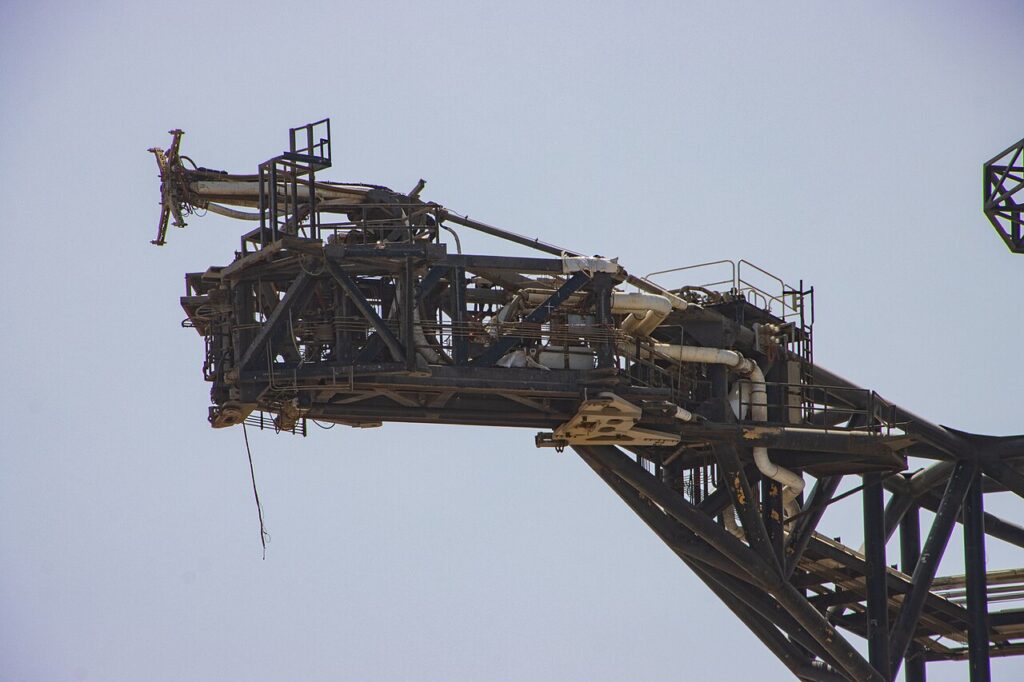
On Saturday afternoon, a spacecraft the size of a fifteen-storey building fell out of the sky over Texas — and instead of crashing, it was caught. SpaceX’s Starship upper stage, returning from nearly a full day in orbit, was plucked out of the air by the two giant mechanical arms of its launch tower at Starbase, Texas. It was the first time any orbital spacecraft has ever been recovered this way.
The vehicle, known as Ship 42, had lifted off on Friday evening, November 13, atop its Super Heavy booster at 5:47 p.m. Eastern time. Over the next 22 and a half hours it circled the Earth 14 times at an altitude of about 265 kilometres, releasing 26 new Starlink V3 internet satellites along the way. Then, on Saturday afternoon, it fired its engines to come home.
The final descent was the part nobody had ever seen work. Ship 42 plunged through the atmosphere, flipped itself upright in a manoeuvre SpaceX calls the belly flop, and lit three of its six methane-fuelled Raptor engines to slow down. At roughly 3:20 p.m. Central time it slid between the tower’s two steel arms — nicknamed “chopsticks”, the system formally called Mechazilla — which swung closed around it and held it in the air as the last engine shut down. SpaceX’s own announcement was three words: “Mechazilla catches Starship!”
One catch, one loss
The mission was not the clean sweep SpaceX had planned. The company had aimed for a double catch: the Super Heavy booster returning to the tower minutes after launch, and the Ship a day later. The booster never made it back. Shortly after separation it diverted toward the Gulf of Mexico, where it exploded before hitting the water. Elon Musk said on X that slight underperformance of the booster’s engines was the reason, and that a low-fuel warning had ended its return burn early.
That failure matters, but it does not diminish what the Ship’s catch represents. SpaceX had already caught Super Heavy boosters with the same tower arms. Catching the Ship — the part that actually goes to orbit and back — is the harder half of the problem, and the one that has to work for Starship to become the fully reusable rocket Musk has promised for years. A rocket that can be caught, refuelled and flown again is the difference between spaceflight as an expedition and spaceflight as an airline.
NASA’s administrator, Jared Isaacman, hailed the catch, and the stakes for his agency are concrete: NASA has contracted a version of Starship to land astronauts on the Moon. Every test that proves the vehicle can come home intact is a step toward that landing.
What comes next
SpaceX has not yet said when the next flight will go, or what it found when engineers inspected the recovered Ship. The booster failure is still under investigation. But the arithmetic of the programme changed on Saturday: the company went into Flight 15 having never caught a spacecraft returning from orbit, and came out of it having done exactly that. Friday’s launch had already put the Ship in orbit; Saturday’s catch brought it home. The space internet race the flight was also serving — Amazon is building its own rival constellation — now has a new benchmark for what reusable means.
Fully reusable orbital flight is still unproven. The booster has to be caught too, and then both stages have to fly again quickly. But for the first time, the hardest catch of all is no longer a theory. It is a spacecraft, hanging from a tower in Texas, that flew to space and came back without ever touching the ground.