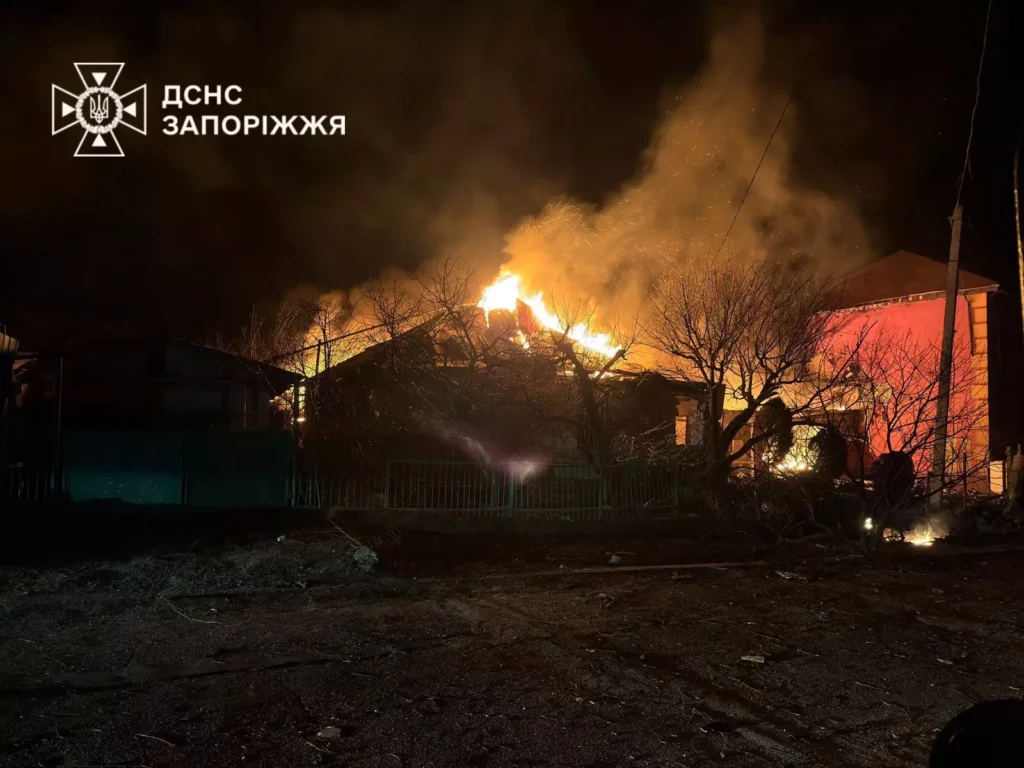
Five Russian guided aerial bombs fell on residential buildings in the southeastern Ukrainian city of Zaporizhzhia on Saturday, destroying an entire section of a three-story apartment block and killing at least 12 people, including three children.
A six-year-old girl was among the dead. Her grandfather stood sobbing over her body, laid on the ground in a white bag, after rescuers pulled it from the wreckage, reporters at the scene said. Fourteen people were wounded, two of them in critical condition. Another 12 people who may have been at the site were still unaccounted for, and search-and-rescue crews were working through the rubble. At least 26 residential buildings across the city’s Shevchenkivskyi and Voznesenivskyi districts were damaged.
President Volodymyr Zelensky, in some of his sharpest criticism of Washington yet, tied the attack directly to a deal President Donald Trump announced a day earlier to lift sanctions on Russian diesel exports. “Today, Russia expressed its thanks for the lifting of sanctions on diesel exports by dropping five glide bombs on residential buildings in Zaporizhzhia,” Zelensky wrote on Telegram. “Thirteen of our regions came under attack. Residential buildings, infrastructure, and railway facilities have been damaged.”
The Zaporizhzhia strike was the bloodiest single blow in a night of heavy attacks. Ukraine’s Air Force said Russia launched 160 drones overnight — many of them jet-powered Shaheds — and that air defenses shot down or suppressed 117. Weapons struck 14 locations, with debris falling in 10 more. Explosions were also reported in Lutsk, Mykolaiv and Ivano-Frankivsk, and a daytime missile strike on Kyiv on Saturday wounded four people, Mayor Vitalii Klitschko said.
Trump said Friday that Russia would immediately supply more than 300,000 tonnes of diesel to the United States and world markets, with another 500,000 tonnes in November and one million tonnes immediately after — a striking reversal of years of U.S. pressure on Moscow, aimed at bringing down fuel prices ahead of the U.S. midterm elections. The move drew criticism from lawmakers in both parties. Kyiv warned it would hand the Kremlin fresh revenue to fund the war: Ukrainian officials said the country would not stop striking the oil refineries that generate it. Zelensky said he had spoken to French President Emmanuel Macron about reinforcing air defenses, warning of a higher risk of further missile strikes in the coming days.
Why this matters: this is the first major Russian strike since Washington effectively reopened part of the sanctions wall, and both sides are already treating it as a test case. Zelensky is framing any easing of pressure as a license for Moscow to escalate; the White House is framing it as a domestic cost-of-living move. If the Zaporizhzhia death toll — and the attacks Kyiv fears are coming — reshape that argument, the diesel deal may turn out to be the most consequential fuel purchase of the war.