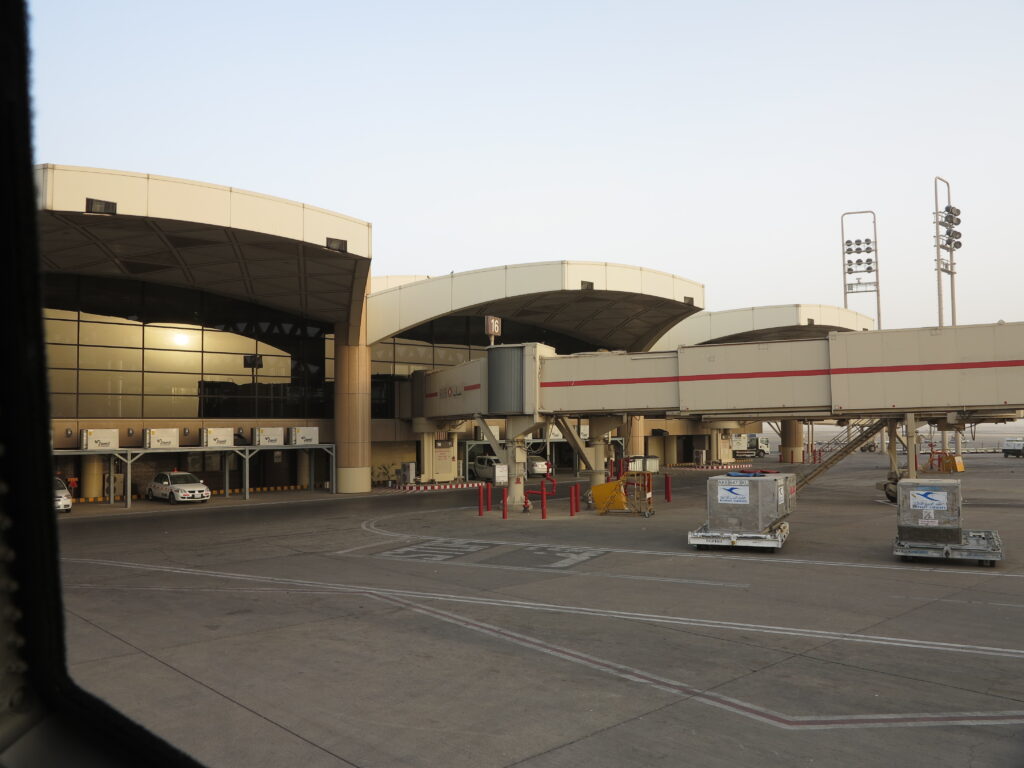
The strike landed without a single warning. No siren, no alert from Saudi Arabia’s threat-warning system — just an explosion tearing through the domestic terminal of King Khalid International Airport on Saturday, in what officials are calling the deadliest attack on Saudi soil in more than a decade.
Saudi Arabia’s General Authority of Civil Aviation confirmed the toll on Sunday: 12 people killed, 309 injured. The toll was later revised to 13 after an Indian national injured in the attack died in hospital, India’s embassy in Riyadh confirmed. The dead included four Saudi citizens and nine foreign nationals — two Bangladeshis, and one each from the United States, Jordan, Palestine, Syria, Sudan, Egypt and India. Some of the wounded were in critical condition. Hospitals across the capital filled with casualties ferried in by ambulance and helicopter, and health officials made a rare mass call-up of doctors to cope with what one medical source described as a serious emergency situation.
“I was on gate 403,” one passenger in the domestic terminal told AFP. “I saw 401 hit, I saw injured in front of my eyes. Everyone was running.”
The third strike in a single week
King Khalid International is one of the busiest airports in the Middle East, and Saturday’s attack was not the first of the week — it was the third. Two earlier strikes this week left four people dead and heavily damaged a Saudi commercial plane parked on the tarmac. Days before that, falling missile debris hit a kindergarten in Riyadh. Each incident ratcheted the crisis up a notch; Saturday’s attack blew the dial off.
There was no immediate claim of responsibility, but suspicion settled instantly on Yemen’s Iran-backed Houthis, who have been hammering the kingdom with missiles and drones since the truce with Yemen’s Riyadh-backed government unravelled in July. Saudi Arabia has been providing air support to government forces fighting the group along the Red Sea coast. Later, a senior Houthi official, Mohammed al-Bukhaiti, said the militia was behind the attack, framing it as retaliation for Saudi strikes on what he called civilian infrastructure in Yemen — airports, seaports, hospitals, markets — and arguing that the same rules protecting civilians should apply everywhere.
A diplomatic source attributed the strike to a missile. The Saudi-led military coalition called it a “full-fledged war crime” and vowed a “decisive” response.
Washington may get involved
The White House said the United States “may” join Saudi military action against the Houthis, with President Trump signalling that Washington is weighing its role. The American embassy said it was aware of the attacks and urged citizens to avoid the airport and its surroundings. It was not alone: the Canadian, German and Spanish missions issued similar warnings, and a senior Western diplomat said several embassies were barring staff from using the airport over the next week.
Airlines were already pulling back. Flight-tracking data showed Riyadh-bound flights being diverted or cancelled, Kuwait Airways scrapped its Saturday flights to and from the capital, and the airport urged passengers to check flight status before heading to the terminal — where, near a metro station, travellers with luggage were photographed standing on the pavement, going nowhere.
Why this matters
There are attacks that shift a conflict’s math, and attacks that shift its geography. This one did both. A decade ago, the Houthis could reach Saudi border towns; now they can put a missile through the domestic terminal of the capital’s main airport, in broad sequence, three times in a week, without Saudi air defences issuing so much as a warning. That is not just an escalation — it is a demonstration that the kingdom’s shield has holes, and the Houthis know exactly where they are.
The American death in the terminal changes the politics too. Washington has spent months edging toward direct involvement; a strike that kills a US citizen and forces Trump’s hand could be the trigger for the wider campaign the administration has been hinting at. And every round of retaliation — Saudi strikes on Yemen, Houthi missiles on Saudi airports — is now feeding the cycle al-Bukhaiti described out loud: civilian infrastructure on both sides, held hostage in turn. The Red Sea was already a war zone. After Saturday, so is the sky over Riyadh.
Correction: An earlier version of this article stated that 12 people were killed. It has been updated to reflect that the death toll was later revised to 13. October 14, 2026


4 Comments