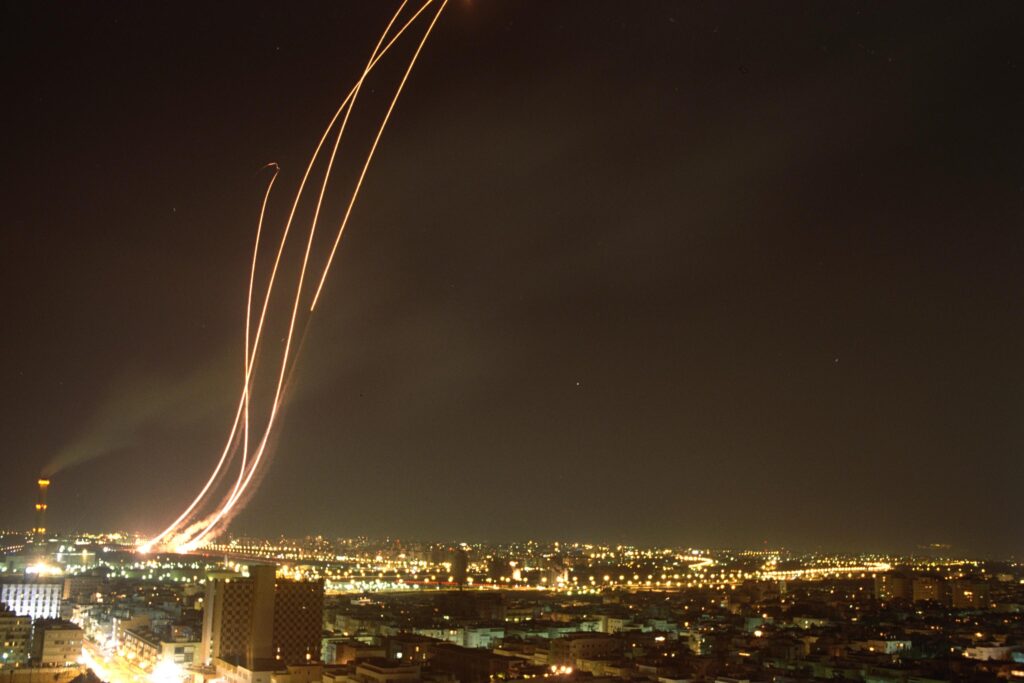
Twelve people are dead, more than 300 are wounded, and Riyadh’s international airport is closed. But the detail that explains everything about Saturday’s catastrophe came in a single Associated Press dispatch: Saudi Arabia is running low on missile interceptors — and has asked France, Britain, Pakistan and Egypt to deploy air-defence support to the kingdom.
Regional officials told the AP that the kingdom’s interceptor stockpiles have been running down for months. The request for foreign air-defence help, one official noted, was made last month — well before Saturday’s strike. Another official added a sobering parallel: the United States has seen its own interceptor stockpiles dwindle during its war with Iran.
Saturday’s missile struck King Khalid International Airport, killing four Saudi nationals, two Bangladeshis, and one person each from the United States, Egypt, Jordan, Syria, Palestine and Sudan, according to Saudi Arabia’s civil aviation authority. It was the third missile attack on the airport in a single week — the two earlier strikes killed four people and badly damaged a Saudi passenger plane on the tarmac. Hospitals were flooded with the wounded, some arriving by helicopter.
The Iran-backed Houthis have claimed responsibility. A senior Houthi official, Nasr al-Din Amer, wrote on X: “We shut down Riyadh international airport.” The Saudi-led coalition called the attack a war crime and vowed a decisive response.
US President Donald Trump, asked outside the White House whether Washington would join Saudi strikes on the Houthis, said: “We may. We’re going to look at it. We just found out about the recent attack. We will make a decision. We move very quickly.” He added that he would be speaking with Saudi Crown Prince Mohammed bin Salman, and called the Saudis “good fighters” — while conceding, “the attack was a terrible thing.”
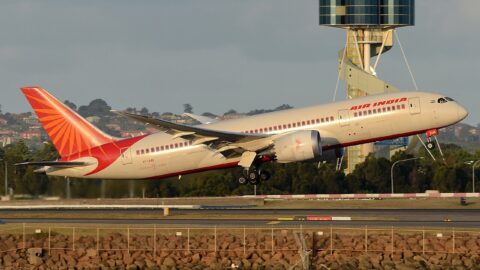
Behind the scenes, the consequences are already spreading. The Houthis issued a warning to international airlines this week, telling them “for the last time” about the consequences of operating in Saudi airspace. Air India, FlyDubai, Lufthansa Group and Pakistan International Airlines had already suspended flights to Riyadh and other Saudi airports before the latest strike. The European Union Aviation Safety Agency expanded its guidance on Saudi airspace, warning that the Houthis can now strike deeper into the kingdom — including Riyadh — with “a greater focus on aviation infrastructure.”
The US Mission in Saudi Arabia issued a security alert on Sunday directing American citizens to avoid King Khalid International Airport and cautioning about possible flight cancellations, airspace restrictions and travel disruptions. US government personnel in Saudi Arabia now need special authorisation to use the airports in Riyadh, Jeddah and Dammam.
Why this matters is bigger than one airport. The interceptor shortage is a strategic confession: after years of fighting the Houthis — a war Saudi Arabia entered in 2015, saw calm under a 2022 ceasefire, then watched explode again in July when the truce unravelled — the kingdom’s air-defence cupboard is visibly thinning. Saturday was the deadliest attack on Saudi soil in more than a decade, and it landed despite all the hardware Saudi Arabia has bought. Missile defence is a magazine war, and both sides know it: the Houthis, with Iranian help, keep building cheaper missiles and drones faster than anyone can build the interceptors to knock them down.
For Saudi Arabia, the ask is now diplomatic as much as military. Foreign Minister talks with Oman’s counterpart on Saturday emphasised “supporting diplomatic solutions to de-escalate tensions” — Oman has played mediator before. But with Trump weighing US entry, airlines pulling out, and 309 wounded in the hospitals, de-escalation looks a long way off.

8 Comments