A fire in a single room at one of America’s most sensitive nuclear complexes set off a chain of alarms on Wednesday evening that reached from the laboratory floor to the airspace above South Carolina — and left the public with two very different messages to reconcile.
The fire broke out at the Savannah River National Laboratory, on the US Department of Energy’s Savannah River Site near Aiken, South Carolina. Site officials declared a Site Area Emergency on Wednesday evening, October 28. An emergency dispatch from the scene reported an “unfiltered ground-level radiological release” — language that, within hours, had the Federal Aviation Administration restricting flights overhead under a notice local media described as citing a “U.S. Gov’t Nuclear Incident.”
Then came the reassurance. In its second news release of the night, issued at 7:30 p.m., the Savannah River Site said the fire had been extinguished and that “no contamination has been reported outside the affected facility.” Officials added that there was no indication of consequences beyond the site’s boundaries. Employees in the laboratory’s Area A sheltered in place for about half an hour; entrances were closed to incoming traffic, and rail, river and air traffic around the site were restricted as a precaution.
By 9:45 p.m., the emergency was over. In a third release, the site said the Site Area Emergency had been terminated, protective actions lifted and barricades reopened — and that radiological surveys indicated no detectable levels of contamination. Oncoming shift workers were told to report to work as usual on Thursday.
What has not been explained is the gap between the night’s first message and its last. Officials have not said what material was involved in the release described by dispatchers, how much of it there was, or whether any worker was exposed. The cause of the fire is also unknown. The site’s statements said only that the fire was confined to a single room and that more specific information would follow.
The aviation restrictions underscored how seriously the incident was taken in its first hours. According to local media reports, the FAA’s temporary flight restriction covered a 15-nautical-mile radius around the facility up to 10,000 feet, and was scheduled to remain in place until midnight Thursday. Residents nearby were advised to monitor local radio and television for any instructions from state officials.
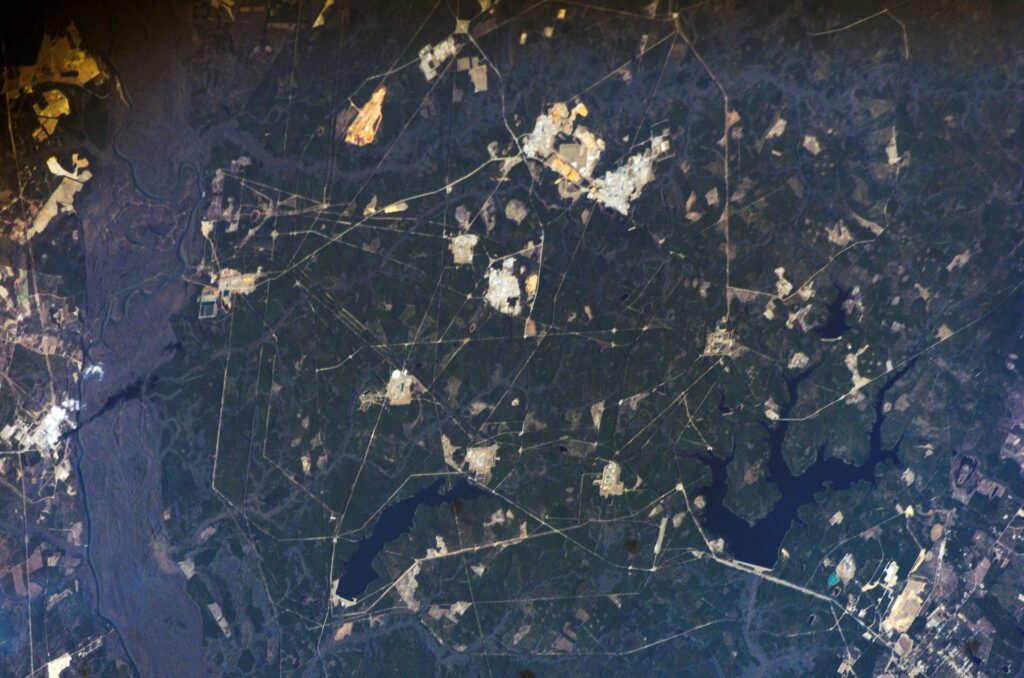
The Savannah River Site is not an ordinary industrial park. Built in 1951 at the height of the Cold War, the 310-square-mile complex produced plutonium and tritium for America’s nuclear weapons. Its five reactors have long since shut down, but the site remains central to the country’s nuclear enterprise: it is the United States’ only operating radiochemical separations facility and its sole source of tritium, a key ingredient in nuclear weapons. It also holds vast quantities of legacy nuclear waste, and much of its current work is environmental cleanup. More than 10,000 people work there.
That history is precisely why an incident like this travels fast. A “radiological release” at a place built to handle the most dangerous materials in the American arsenal sounds, to most ears, like a catastrophe in progress. The official account so far describes something narrower: a room fire, a release contained within one facility, no contamination detected beyond it. Both things can be true at once — and the public record does not yet let anyone confirm which parts of the dispatcher’s alarming language reflected measured radiation and which reflected worst-case emergency classification.
It is worth remembering that the Savannah River Site has been here before in a smaller way. Earlier this year, workers found a wasp nest on the site measuring 1,667 becquerels of beta and gamma radiation — legacy contamination, officials said, not a loss of control. That episode ended as a curiosity. Wednesday’s fire will not be judged the same way, because the questions it raises are about the systems meant to prevent exactly this kind of event: fire protection inside a laboratory handling radioactive material, and the speed and candour with which the public is told what happened.
For now, the known facts are these: a fire, a formal emergency declaration, a reported release, an all-clear within about four hours, and surveys finding no detectable contamination. The cause, the material, and the dose, if any, are still to come from the Department of Energy. Until they do, the most honest summary is also the simplest: something serious enough to shut down the airspace happened at Savannah River on Wednesday night, and by bedtime officials said the danger had not left the building — and their own survey teams found nothing to contradict that.
Related reading: our earlier coverage of drone strikes at Ukraine’s Zaporizhzhia nuclear plant, and our explainer on how Russia’s floating nuclear reactors work.
Source: Savannah River Site Emergency Response Organization, News Release #2 (October 28, 2026) and News Release #3 (October 28, 2026)