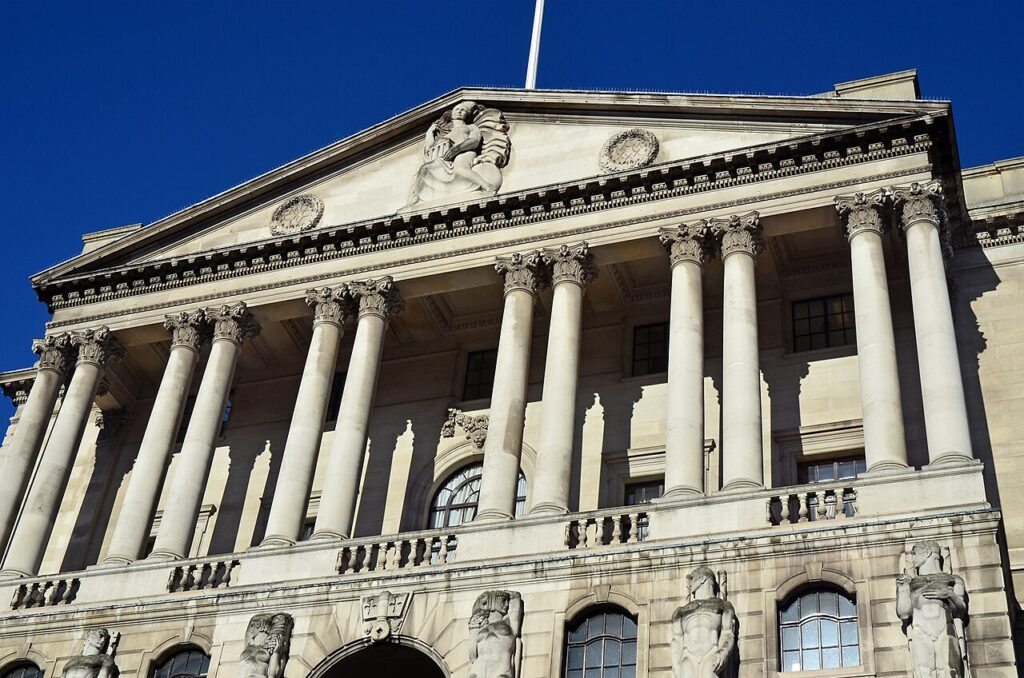
The Bank of England has raised interest rates for the first time in more than three years, lifting its benchmark rate to 4% as the war in the Middle East pushes energy prices — and British inflation — sharply higher.
The Bank’s nine-member Monetary Policy Committee (MPC), the group that sets the rate, voted 8–1 on Thursday to raise Bank Rate by a quarter of a percentage point, from 3.75%. The decision, announced at noon in London, ends a run of six meetings without a change and follows the Bank’s last cut in December 2025.
The one dissenter wanted to go further. Catherine Mann, an external member of the committee, voted for a half-point rise to 4.25%, arguing that inflation risks were becoming “non-linear” — the Bank’s shorthand for a situation where prices could jump suddenly rather than drift up gradually.
Inflation is the reason for the move. Prices in Britain rose 3.5% in the year to September, up from 3.1% in August, and the Bank now expects them to climb to around 5% by the middle of next year. That is more than double its 2% target. In its Monetary Policy Summary, the Bank put it plainly: “the degree of inflationary pressure in the pipeline is now sufficient to warrant an increase in Bank Rate.”
The driver is energy. The conflict in the Middle East is now in its ninth month, and global energy prices have kept climbing from an already elevated level. The Bank’s staff expect the energy shock to feed into household bills and business costs through the winter, and the rate rise is meant to stop those higher costs from becoming embedded in wages and other prices.
It may not be the last increase. Deputy Governor Clare Lombardelli said there was likely to be a case for a further rise “in the near term” unless evidence of weaker inflation emerges. Financial markets expect another quarter-point rise in February, according to the Bank’s own survey of market participants, and the Bank has warned that at least one more increase is likely if the US-Iran conflict continues.
The Bank also lifted its growth forecasts, expecting the British economy to expand 1.6% this year and 1.3% next — stronger than the government’s own budget watchdog predicted last week. The pound barely moved on the news, trading at about $1.35 after the announcement.
For households, the decision cuts both ways. Bank Rate is the rate the central bank charges other banks, and it sets the floor for borrowing costs across the economy — so the rise will feed through to mortgage rates and business loans, while savers should eventually see slightly better returns on deposits.
The timing is awkward for Britain’s new government. Prime Minister Andy Burnham took office promising to ease the cost of living, and now faces a central bank warning that inflation will get worse before it gets better. The Bank expects inflation to return to its 2% target only in late 2028.
The next decision comes on 17 December. Between now and then, the committee will be watching one thing above all: whether the energy shock stays contained in fuel bills, or starts showing up in pay packets and shop prices. If it does, the Bank has made clear it will act again.
Why this matters
Britain is not alone in this squeeze. Eurozone inflation hit 4% this week, its highest in three years, and central banks on both sides of the Atlantic are now tightening policy in response to the same shock: a war that has sent oil surging past $110 a barrel. For anyone watching the global economy, the Bank of England’s move is the clearest sign yet that the era of cheap money is not coming back soon — and that the cost of the Middle East conflict is now landing in ordinary household budgets far from the battlefield.