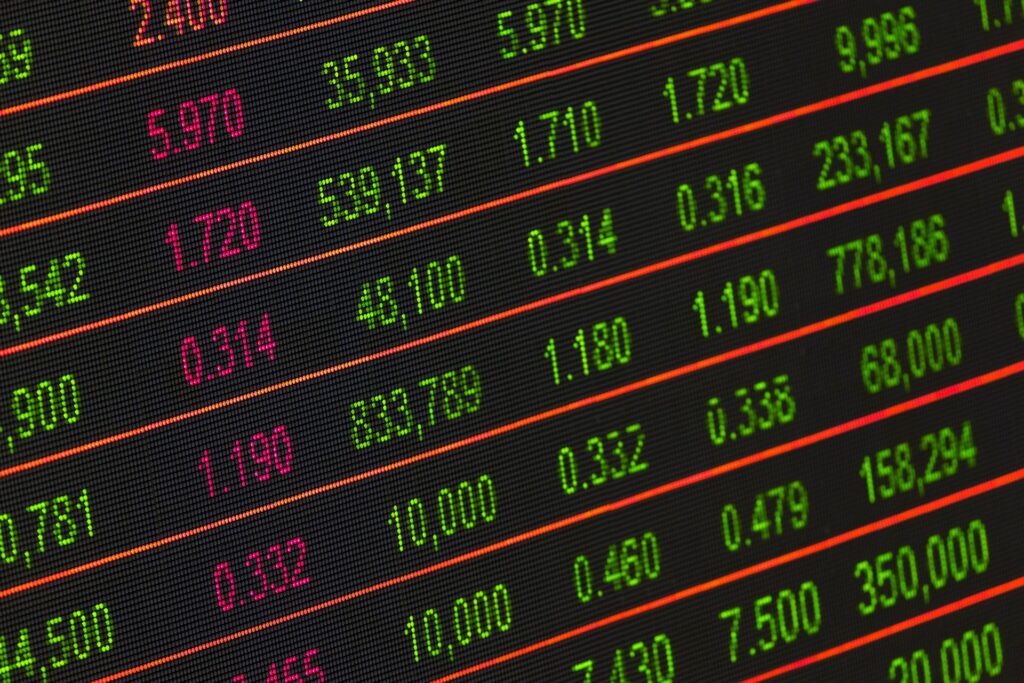
Friday was the kind of day on Wall Street that makes fund managers cancel their weekends. Technology stocks shed more than $1 trillion in value in a single session, as a brutal selloff in chipmakers and AI-linked companies collided with the sharpest oil-price spike in months.
The Nasdaq 100 — the index that holds most of America’s largest tech and AI companies — fell 2.5 percent. It now sits about 7 percent below the all-time high it set just last week. For the week as a whole, the Nasdaq lost roughly 4 percent, its worst weekly drop since June. The broader S&P 500 slipped 1.1 percent, while the Russell 2000 fell 1.6 percent.
The epicenter of the damage was semiconductors. The Philadelphia Semiconductor Index plunged 3.8 percent on Friday, its eighth consecutive day of losses — the longest losing streak for the chip benchmark since 2008, the year of the global financial crisis. AMD, Broadcom and Intel dropped between 4 and 6 percent each. Memory-chip makers Sandisk, Western Digital and Seagate fell 7 percent or more in a single night. Oracle shed another 5 percent and is now hovering near its 52-week low.
But the stock that embodied the panic best may have been one most people have never heard of. CoreWeave, the AI data-center company that has been the poster child of the AI building boom, crashed 11 percent on Friday and is down 25 percent for the week. Its total debt has now climbed to $51 billion.
The AI bubble question nobody can avoid anymore
For months, Wall Street has asked a single anxious question: are the trillion-dollar bets on artificial intelligence built on real cash flows, or on cheap debt? Friday’s trading suggests investors are no longer comfortable with the answer.
Tech giants and startups alike have been borrowing enormous sums to build AI data centers — vast warehouses of chips that cost billions to construct and enormous amounts of power to run. The fear now is twofold: that Chinese competitors are closing the gap with cheaper alternatives, and that some of these companies will struggle to repay what they borrowed. The VanEck Semiconductor ETF fell 3 percent on Friday and 10 percent for the week — its worst weekly performance in 18 months.
Market anxiety showed up in the numbers everywhere. The VIX, Wall Street’s “fear gauge,” climbed above 22 for the first time since June — a level that signals genuine nervousness, not routine profit-taking.
Not everyone is convinced the AI story is over. Jensen Huang, the chief executive of Nvidia — currently the world’s most valuable company — continues to argue the benefits will eventually outweigh investor doubts. “It’s going to be transformative. It’s going to impact in a very positive way every single industry and every single country,” he told Bloomberg this week. “There’s no question it will continue, and we’re at the beginning of that.”
Then came the oil shock
If the tech rout was the first blow, energy prices delivered the second. Brent crude — the global benchmark that shapes what drivers pay from London to Lagos — broke above $110 a barrel on Friday afternoon, ending the week at $109.86, its highest closing level since May. West Texas Intermediate, the US benchmark, jumped 3.5 percent to $101.41, crossing the psychologically important $100 mark for the first time since September.
Diesel futures rose more than 1 percent — a detail that matters more than it sounds. Diesel powers the trucks, tractors, ships and trains that move the world’s food and goods, and its price has been climbing faster than regular gasoline for months.
The surge has two causes. The Middle East remains the primary one: attacks around the Strait of Hormuz and on Saudi and Yemeni energy targets have kept a risk premium in every barrel, months after fighting first disrupted shipping through the chokepoint earlier this year. The second is the escalating Russia-Ukraine war, which has hammered Russian refineries and diesel exports.
Rising energy costs make life harder for central banks fighting inflation. The Federal Reserve already raised interest rates by a quarter point in September after oil and gas prices pushed inflation back up — and traders now expect another hike before the year is out. The US federal deficit, meanwhile, has swollen to nearly $2 trillion for fiscal 2026, keeping government borrowing costs elevated: the 10-year Treasury yield sits at 5.10 percent.
Why this matters beyond the United States
A bad Friday on Wall Street is not an American problem anymore — it is a global one, for three reasons.
First, US tech stocks are not just American assets. Pension funds, sovereign wealth funds and ordinary retirement accounts from Toronto to Tokyo hold trillions of dollars in these companies. When more than $1 trillion in market value evaporates in a day, the losses land in retirement statements everywhere.
Second, the oil price is the most democratic tax in the world. A $110 barrel raises transport, food and energy costs simultaneously — and it hits hardest in developing economies that import fuel. Countries already squeezed by a fragile global recovery the IMF warned is losing its cushion now face a fresh cost-of-living shock.
Third, if the Fed raises rates again to fight energy-driven inflation, borrowing gets more expensive worldwide — for governments, businesses and anyone with a variable-rate loan. Emerging markets with dollar-denominated debt get hit twice: by higher rates and a stronger dollar.
For now, investors are watching three things: the coming earnings reports from the biggest AI spenders, the next Federal Reserve decision, and whether oil holds above $110. If the answer to all three is bad, this week’s selloff may turn out to be the beginning of something bigger.



2 Comments