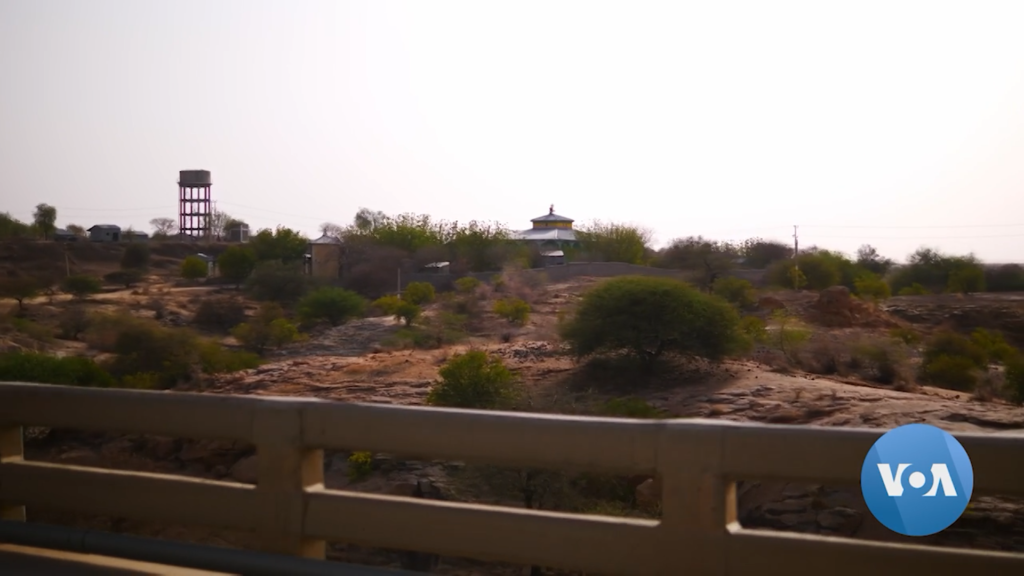
Two armies are standing about five kilometers apart in a town most people outside the Horn of Africa have never heard of — and diplomats across the region are scrambling to keep it from becoming the spark of a second Ethiopia-Eritrea war.
The town is Zalambessa, home to roughly 15,000 people, sitting at Ethiopia’s northernmost edge in the Tigray region, hard against the Eritrean frontier. By Tuesday, Ethiopian government forces had reached it after weeks of driving Tigrayan rebels north in a grinding counter-offensive. And on Wednesday, a resident told the AFP news agency that the Ethiopian army was camped about five kilometers (three miles) south of the town — while the Eritrean army was positioned on its northern outskirts.
Nobody knows how long two hostile armies can stare at each other across that distance without someone firing.
Reuters first reported the advance on Tuesday, citing six sources: four people in touch with residents, a diplomat, and an expert on the conflict who is in contact with the warring parties. The town had been under the control of Tigrayan rebels before the government’s counter-offensive pushed them back from a string of towns further south.
The picture is murky. Witnesses and a conflict monitor told Reuters that Eritrean troops crossed into Zalambessa last week in support of the rebels, though it was unclear whether any were still there on Tuesday. A member of a pro-government militia told AFP on Wednesday that the Eritrean soldiers had since withdrawn. “Villages near the town are held by the defense forces,” he said, adding: “No Ethiopian troops have crossed into Eritrea.”
A spokesperson for the pro-government militia would not confirm that the military had taken control of the town. Ethiopia’s military and Prime Minister Abiy Ahmed did not respond to requests for comment.
Two Letters, Two Accusations
Each side is telling a story in which it is the victim — and both have taken their cases to the United Nations.
Asmara flatly denies sending troops into Ethiopia and has asked the UN to take deterrent measures against Addis Ababa, calling Ethiopia’s accusations of an invasion a “declaration of war.” Ethiopia, in turn, has written to members of the Security Council saying Eritrean troops advanced up to 60 kilometers (37 miles) inside Ethiopian territory. Eritrea’s foreign minister, Osman Saleh, answered with his own letter invoking Chapter VII of the UN Charter — the provision that allows measures ranging from sanctions to military action. On Tuesday, Security Council members held a closed-door meeting on the crisis under the council’s Greek presidency.
Eritrea’s information minister, Yermane Gebremeskel, told AFP that rumors of Ethiopian troops crossing the border were “absolutely false.” But the Zalambessa resident who spoke to AFP sounded less reassured: the situation, he said, “is causing deep concern among residents, who fear the town could become a battlefield.”
The History That Makes This Terrifying
For a global reader encountering Zalambessa for the first time, the name is new. The pattern is not.
The Tigray People’s Liberation Front — the TPLF — is the political movement that dominated Ethiopia’s ruling coalition for nearly three decades before falling out with Abiy Ahmed’s government. On September 23, a TPLF-led rebel alliance launched a major offensive, reigniting a war that killed hundreds of thousands of people between 2020 and 2022. The rebels have since been pushed back from Mekelle and other northern towns, with pro-government forces retaking ground near the border.
Ethiopia and Eritrea were once a single country. Eritrea won its independence in 1993, and the two fought one of Africa’s deadliest wars along this exact border from 1998 to 2000 — Zalambessa itself was a battlefield. In 2018, Abiy and Eritrea’s President Isaias Afwerki signed a surprise peace deal that ended two decades of frozen hostility and earned Abiy the Nobel Peace Prize. Eritrea then fought alongside Ethiopia’s federal government in the 2020–2022 Tigray war. Now the two are on opposite sides again, and relations have collapsed so completely that they severed ties this month.
Underneath the battlefield maneuvering sits a dispute about something Ethiopia calls an existential question: sea access. Landlocked since Eritrea’s independence, Ethiopia argues it needs a route to the Red Sea. Eritrea accuses Addis Ababa of planning to use this conflict as a pretext to invade and seize the Eritrean port of Assab.
Why This Matters Far Beyond the Horn of Africa
A war between these two countries would not stay inside them. The last one cost tens of thousands of lives. This time the region is already under strain: conflicts are raging elsewhere in the area, and earlier this month Egypt, Sudan, Eritrea, and Somalia signed the El Alamein declaration as the wider Ethiopia conflict escalated.
Eritrea’s coastline sits on the southern Red Sea, overlooking one of the world’s busiest shipping corridors. A full interstate war there — while the Red Sea and the Strait of Hormuz are already under pressure — would land directly on global energy prices and supply chains that are stretched thin.
The warnings are already coming. The TPLF’s vice president, Amanuel Assefa, told AFP that a military alliance of groups opposed to the federal government “will succeed” and warned the fighting could “evolve into a regional conflict.” London-based think tank Chatham House cautioned that continued fighting, combined with international inaction, could result in what it called “dangerous regional escalation.”
For now, everything hinges on a five-kilometer gap in a dusty border town — and on whether the diplomats working the phones this week can keep it from closing.


One Comment