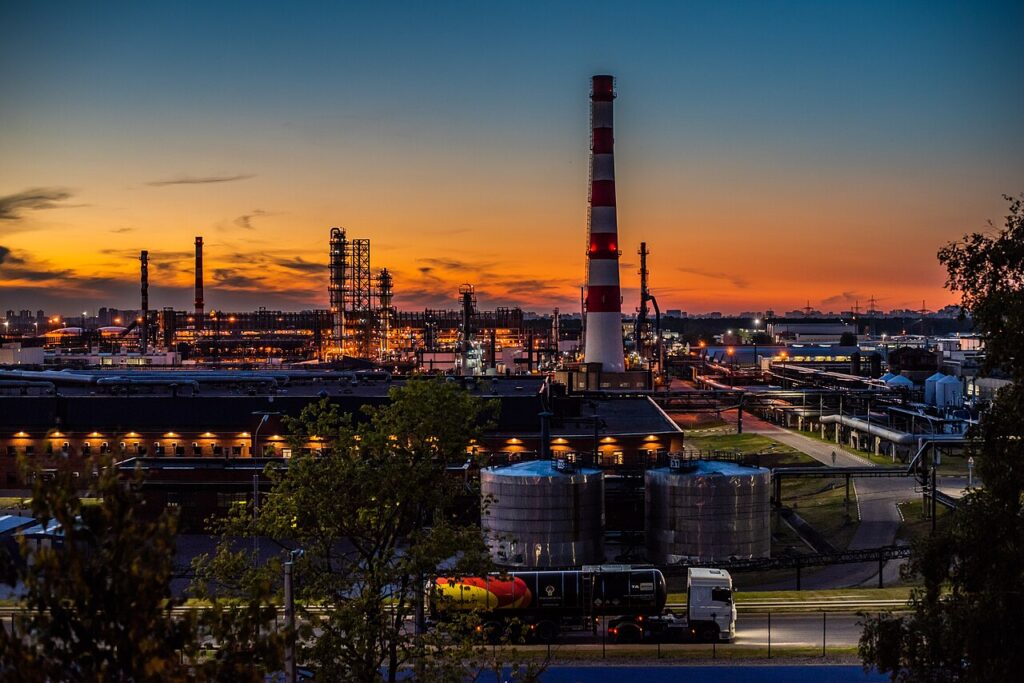
Ukraine’s military has paused its strikes on Russian oil refineries after weeks of pressure from United States President Donald Trump, the Wall Street Journal reported on Thursday, citing people with knowledge of the operations.
Ukrainian units carrying out long-range strikes were told in mid-October that the campaign against refineries was effectively on hold, once missions already in motion were completed, the Journal reported. The unofficial pause is expected to last until after the US midterm elections on November 3, and potentially deeper into November.
Kyiv has not announced any pause. The Journal’s account has not been independently confirmed: Reuters, reporting the Journal’s story, said it could not immediately verify it.
What is on the record is more qualified than a halt. President Volodymyr Zelensky told reporters in Kyiv on Tuesday that Ukrainian forces had been acting with extra caution, but that no ban was in place. “Our guys tried to be a little more careful during these days. But they do not have an order” not to hit refineries, he said.
According to the Journal, Defence Minister Evgeniy Khmara told Zelensky that the military sensed it was best to hold off given the delicate diplomatic situation. Zelensky accepted that, the report said, while stressing that the military remained free to strike refineries again if it chose to.
The pressure behind the pause built over weeks. Trump has repeatedly pressed Kyiv to stop hitting Russian energy infrastructure, blaming the strikes for high fuel prices at home and abroad. Energy analysts cited by the Journal largely attribute those prices instead to the US-Iran war. Trump went further, announcing a deal to buy diesel from Moscow and waiving sanctions on Moscow authorised by a bill he signed in September.
US envoy Jared Kushner repeated Trump’s demand to stop the refinery strikes at a meeting with Zelensky in Oslo on October 20, the Journal reported, citing two US officials. Some of Kyiv’s staunchest European backers also nudged Zelensky to pause until after the midterms, according to a European official cited in the report.
The last attack on Russian oil infrastructure recorded by the Journal was also on October 20: a strike on an oil pumping station on the Druzhba pipeline in Russia’s Tambov region. Nothing since then has been reported in the campaign that, for months, was one of Ukraine’s most effective ways of hitting Moscow’s war economy.
That campaign matters because it was Kyiv’s answer to a war it cannot fight symmetrically. Ukraine has said its long-range drone strikes on refineries, fuel depots and other energy sites deep inside Russia are its only viable response to years of Russian bombardment. Zelensky has made any lasting halt conditional on Moscow stopping its own attacks on Ukraine’s energy grid, and on Ukraine receiving more air defences — he offered a 30-day refinery pause in exchange for Patriot missiles earlier in October. Russia, meanwhile, has stepped up its attacks on Ukrainian energy and civilian infrastructure as winter approaches, according to Reuters.
Why this matters beyond the battlefield is the bargain it implies. A pause costs Ukraine leverage just as Washington tries to revive peace talks — a trilateral round with Russia and Ukraine is expected in Abu Dhabi in mid-November. It also tests whether restraint buys Kyiv anything: steadier American intelligence-sharing, satellite links and air-defence missiles, all of which Ukraine depends on the US for. If Moscow keeps hitting Ukraine’s power grid while Kyiv holds its fire, the pause will look less like diplomacy and more like a one-sided concession — and Zelensky’s careful wording, that his forces have no order not to strike, leaves him room to end it fast.
The pause, then, is best read as a signal, not a settlement. It is unannounced, unofficial and, by Zelensky’s own account, reversible at any moment. How long it holds will say as much about the state of US-Ukrainian relations — and about what Washington is prepared to offer in return — as it does about the war itself.