Key takeaways
- MSCI launched a consultation on October 15 to move Indonesia’s indexes from Emerging Market to Standalone status — skipping a frontier-market downgrade entirely, because, in MSCI’s words, “a reclassification to Frontier Markets would not properly recognize the depth of the market problems.”
- Jakarta’s benchmark plunged 8% at Friday’s open, triggering a 30-minute trading halt; after resumption it fell to around 11% down — the worst one-day drop since early 1998. The rupiah sank to about 18,035 per dollar, near its all-time low.
- Standalone status would force passive funds tracking MSCI indexes to sell Indonesian holdings — a direct blow to President Prabowo Subianto’s push to draw foreign capital into Southeast Asia’s largest economy.
- The decision lands on or before June 30, 2027, with client feedback due April 30, 2027. Indonesia has one last window to fix what MSCI calls broken market governance.
On Thursday, MSCI — the index company whose classifications quietly decide where trillions of passive investment dollars can go — told Indonesia it has run out of patience. The firm launched a formal consultation on reclassifying the MSCI Indonesia Indexes from emerging-market to standalone-market status, a rare and severe demotion that would put the world’s fourth-most-populous country in the same bucket as Argentina, Lebanon, and Palestine.
The trigger was not a single scandal but, in MSCI’s phrase, persistent “market dysfunction.” The statement was blunt: “Despite the announced reforms, significant concerns remain around market dysfunction, including continued suspected coordinated trading behaviour and lack of evidence of meaningful enforcement.” MSCI added that it “considers Indonesia’s continued classification as an Emerging Market no longer appropriate” — and that it “expects to proceed with the proposed reclassification unless the consultation identifies clear evidence of material improvements in market governance and functioning.”
A warning nine months in the making
This did not come from nowhere. In January, MSCI issued an initial warning after a partial market freeze, sparking a historic stock rout. In June, at its Market Classification Review, it flagged “persistent opacity in shareholding structures and suspected coordinated trading behavior,” warning that if sufficient progress was not evident by the November 2026 Index Review, a consultation would follow.
Jakarta did respond. The authorities announced reforms: disclosure of shareholders above 1%, more granular investor-classification data, a published list of stocks with high shareholding concentration, and a roadmap toward a 15% minimum free-float requirement. MSCI’s verdict on Thursday: not enough. While the consultation runs, an index freeze stays in place — no increases to foreign inclusion factors or share counts, no new additions to the Indonesia index, no upward size-segment migrations, and deletions for concentration-flagged securities.
Notably, rival index provider FTSE Russell recently reaffirmed Indonesia as an emerging market — so the two giants now disagree about the same country.
What standalone means — and why markets panicked
“Standalone” is MSCI’s category for markets that meet neither emerging nor frontier criteria. The practical consequence is mechanical: funds that track MSCI’s emerging-market and frontier indexes would have to sell their Indonesian holdings. Indonesia would be the first Asian market ever given the designation — and the largest economy ever so classified.
Friday’s reaction showed what that prospect is worth. The Jakarta Composite Index fell 8% within minutes of the open, triggering an automatic 30-minute trading halt, and deepened to roughly 11% down after resumption — the worst single day since early 1998 and the lowest level since 2020. The index is now down about 40% for the year, the worst performance in Asia. The rupiah weakened to around 18,035 per dollar, near its all-time low; the 10-year bond yield barely moved.
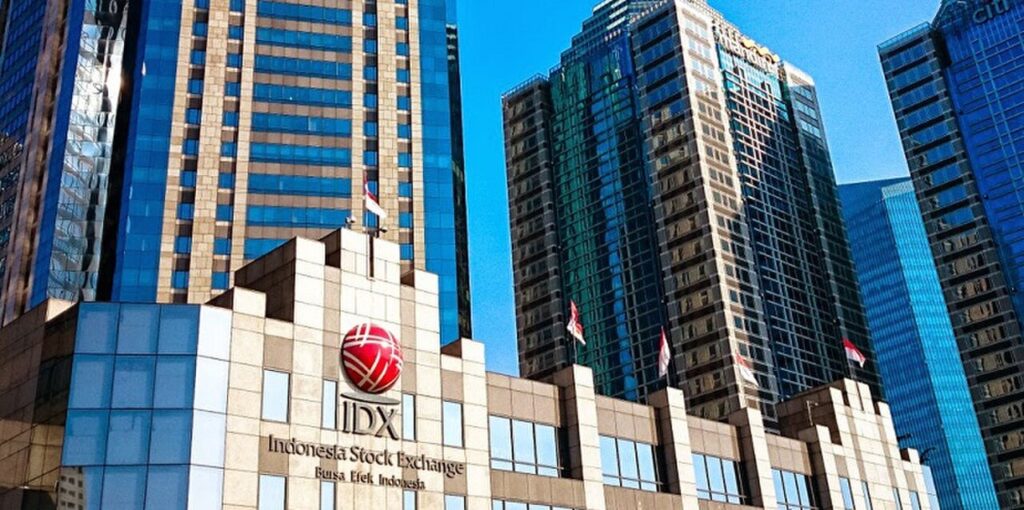
The Indonesia Stock Exchange said it would seek clarification from MSCI on the rationale and criteria, insisting the country has made “significant progress and reform measures.” Its CEO, Jeffrey Hendrik, fronted the response; the finance ministry and regulator had not commented at the time of reporting.
Why this matters beyond Jakarta
Index classification sounds like plumbing, but it is one of the most powerful gatekeeping mechanisms in global finance. A demotion is not a verdict on Indonesia’s companies — it is a verdict on whether foreign investors can trust the market’s rules. For President Prabowo Subianto, who has made attracting foreign capital central to his economic agenda, the timing could hardly be worse: the same week the IMF’s October warning that the global economy’s cushion is thinning, Indonesia is fighting to prove its market works.
The consultation gives Jakarta until April 30, 2027, to present evidence of “material improvements in market governance and functioning,” with a final decision by June 30, 2027. That is a long runway — and a very public exam.
For now, the message from New York is unmistakable: reforms announced are not reforms delivered. And in MSCI’s index consultation process, the burden of proof has shifted to Jakarta — while the cost-of-living shocks still squeezing households worldwide remind everyone what is at stake when capital stops flowing.




One Comment