VERDICT: FALSE. The viral clip of an asylum seeker demanding “more money and more freedom” is AI-generated. The man in it never said those words — the BBC, whose real interview was used as the raw material, has said the fake quote does not match anything he told them.
The claim
A short video clip has been circulating on Facebook, X and TikTok in which a man, presented as an asylum seeker living in a UK hotel, looks into the camera and complains about his treatment. “I’m not happy with the way we are treated,” he says. “I want more money and more freedom. The UK is not looking after us and we need proper homes.”
Posts sharing the footage present it as proof that asylum seekers are ungrateful for the support they receive. Many viewers took it at face value, and screenshots of the original shares show angry comments from people who believed the demands were real — exactly the reaction the clip was designed to provoke.
The facts
1. The footage carries an AI watermark. The clip contains a SynthID watermark on both its audio and video tracks. SynthID is Google’s system for marking content made or altered with its AI tools — a fingerprint of synthetic generation that a genuine phone recording would not carry.
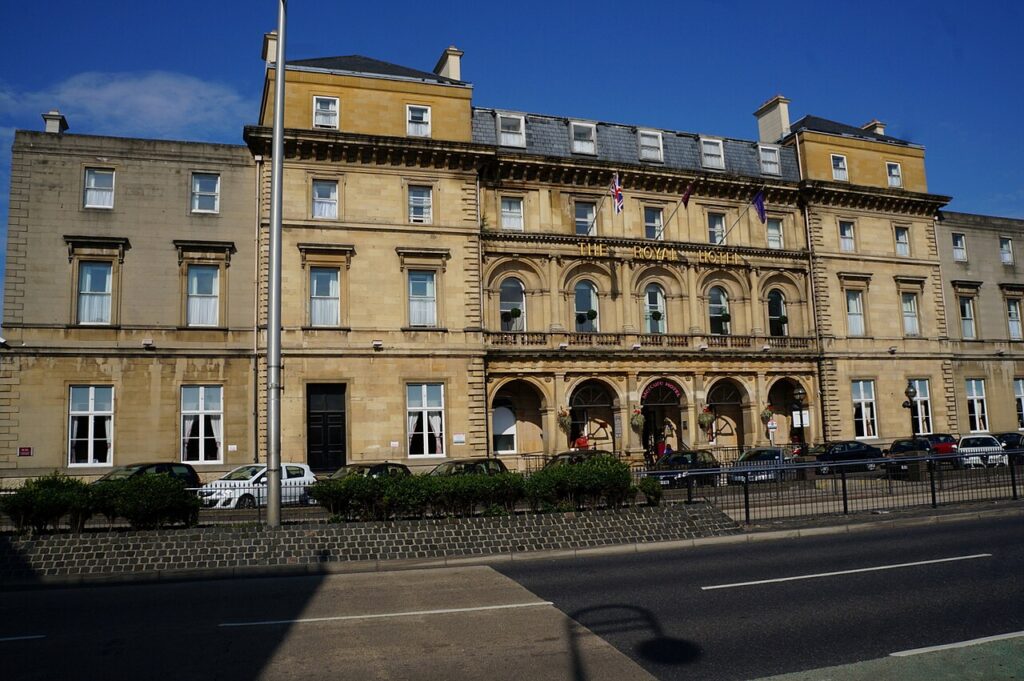
2. The man in the clip is a real person — but the words are not his. The man closely resembles a 27-year-old from South Sudan, called Anei, who was interviewed by the BBC in May 2025 for a report on the Royal Hotel in Hull, in northern England. The hotel had housed asylum seekers for about five years and became a flashpoint during the riots of summer 2024, when its windows were smashed and the people inside hid in fear.
In that genuine interview, Anei said he had fled South Sudan after his parents died, when he was given the choice of joining a militia or being killed, and had arrived in Britain by small boat three years earlier. Describing the night of the riots, he said: “Everyone was scared.” He and others stayed inside because they feared that if they went outside, they would die. He said he had been beaten up in Hull, had taken no job, and — having been given the right to remain — wanted to work and pay back the country that had helped him.
That is the opposite of the viral clip’s message. The BBC told Reuters that the “more money and more freedom” quote “does not align with what he told the BBC during his interview.”
3. The details match, the voice does not. The clothes the man wears and a distinctive distortion in the railings behind his right ear match the BBC footage — fingerprints of the original video reused as the base for a synthetic version. But the voice in the circulating clip is audibly different from the voice of the man the BBC interviewed. The face moves like the original; the words are new.
4. No mainstream outlet has ever carried the clip as real. No credible news organisation has published the “more money” version as genuine footage, and no other evidence has emerged that the man said anything like it. The only version of him on the record is the BBC interview — and it says the reverse.
Verdict
FALSE. The clip is an AI-generated fake built on a real BBC interview. The SynthID watermark, the BBC’s denial to Reuters, the mismatched voice, and the absence of any genuine source for the quote all point the same way. The man in the video did not demand more money, more freedom, or better homes. He said he was scared, that he had taken no job, and that he wanted to work and repay the help he had received.
Why it matters
Britain’s debate over housing asylum seekers in hotels is already one of the country’s most divisive arguments, and the Royal Hotel in Hull sits at its centre. A fabricated clip that puts entitled demands into a real asylum seeker’s mouth does two kinds of damage at once: it hardens public anger against people living in the hotel system, and it steals a real person’s identity to do it. Anei’s actual story — fleeing after his parents’ deaths, hiding from a mob, asking for the chance to work — was replaced with a caricature designed to be shared in anger. Every share of the fake version makes the real one harder to hear, and makes the next fake easier to believe.
Sources: Full Fact’s investigation of the clip, which identified the SynthID watermark and reported the BBC’s statement to Reuters.
Related fact-checks: No, rioters did not strip an elderly couple in Paris — the viral photo is AI-generated and No, nobody hung a Palestinian flag from the top of the Eiffel Tower — the viral video is AI-generated.


One Comment