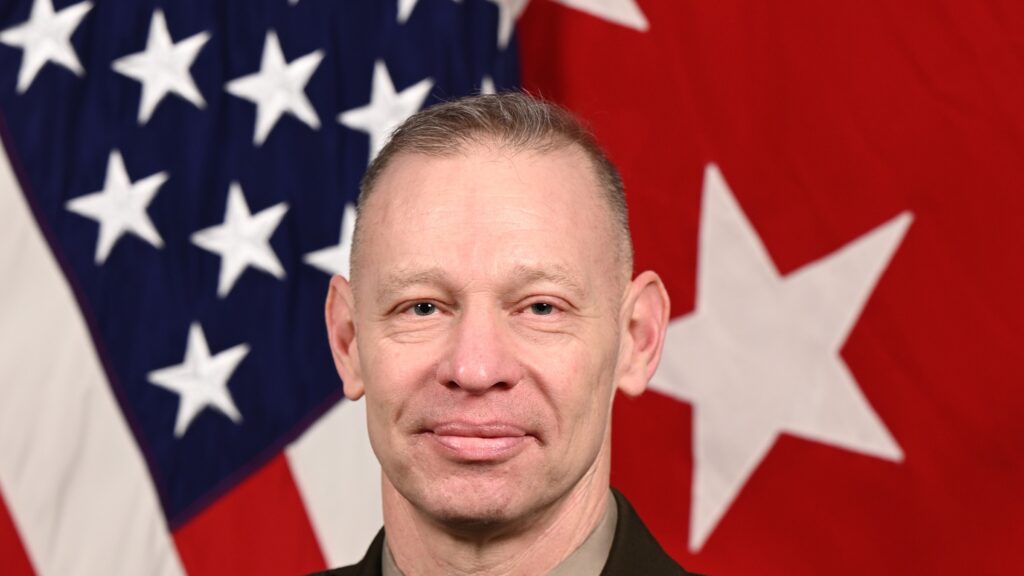
US Defense Secretary Pete Hegseth has fired Army Lieutenant General Brett Sylvia, the Pentagon’s director for strategy, plans and policy, over accusations that he leaked classified information about the wars in Iran and Ukraine to journalists. The dismissal, confirmed by Pentagon officials on Thursday, is one of the most senior casualties yet of Hegseth’s sweeping hunt for leakers inside the military establishment.
Sylvia ran the Joint Staff’s J-5 directorate, the office that shapes long-term military strategy and advises General Dan Caine, the chairman of the Joint Chiefs of Staff, the United States’ most senior military officer. He had held the post for only 11 months, after commanding the Army’s 101st Airborne Division at Fort Campbell, Kentucky, until May 2025. He is the second director of the J-5 to be removed under Hegseth.
A senior Pentagon official, speaking on condition of anonymity, accused Sylvia of failing three polygraph examinations about disclosures of classified information. The official said Sylvia had begun meeting journalists outside the Pentagon after Hegseth imposed a policy requiring reporters inside the building to be escorted at all times, and that the leaks covered both the Iran war and Russia’s war in Ukraine.
“The extent of his leaking became so critical that Secretary Hegseth took immediate action and fired Sylvia in order to protect national security,” the official said. “Urgent action was needed and could not wait another second.”
The Pentagon’s chief spokesperson, Sean Parnell, said the decision followed an extensive investigation by the Air Force Office of Special Investigations. “This matter, along with others, have been referred to the Justice Department for potential further legal action,” Parnell said. “Classified information is not personal property. Leaking it for personal, political or professional gain is a betrayal of the trust placed in those responsible for keeping it.”
President Donald Trump weighed in on Thursday, saying the government was “very much looking for leakers” — while mistakenly referring to Sylvia, a man, as a woman. “She’s going to have big problems, long-term problems,” Trump told reporters.
The Joint Staff initially issued a statement thanking Sylvia for 32 years of service, then withdrew it. A spokesperson said the statement “did not appropriately reflect the full circumstances” and declined further comment, citing the ongoing personnel process. Sylvia could not immediately be reached for comment, and the allegations against him have not been independently verified.
The firing fits a pattern. Three senior defence officials — Dan Caldwell, a former senior adviser to Hegseth; Darin Selnick, his former deputy chief of staff; and Colin Carroll, a former chief of staff to the deputy defence secretary — were placed on leave and then dismissed last year amid leak accusations. Hegseth has also set up a Pentagon task force to trace leaks, subjected senior officials to polygraph tests, and introduced a media policy last year that press organisations said raised legal concerns, revoking the credentials of journalists who refused to sign it.
One Pentagon official stressed a point of precision: Sylvia was not the central planner of the Iran war. That role belongs to US Central Command and its commander, Admiral Brad Cooper. The J-5 shapes strategy across the board rather than running a single campaign — which makes the choice of target, and the message it sends, broader than one war.
The timing is what gives the dismissal its edge. It comes as Trump weighs a resumption of intensive bombing in Iran after next week’s midterm elections on November 3, a campaign he has called “another little Epic Fury.” The administration has fumed for months about leaks on Iran war planning, including the expenditure of munitions: Reuters reported this week that an internal military analysis put the cost of restocking weapons used against Iran so far at more than $29 billion, the bulk of the more than $47 billion spent on the war. Trump had previously blocked a planned Israeli strike on Iran in October, reportedly because he did not want a new war flaring before the midterms — a decision that exposed the fault lines between Washington and its allies.
Why this matters goes beyond one general’s career. The United States is fighting, or backing, wars on two fronts while its defence secretary conducts what amounts to a loyalty and secrecy purge at the top of the officer corps. Every removal narrows the circle of senior officers willing to speak candidly, inside the building or out — and it does so just as the president may be about to order the most consequential military decision of his second term. For allies watching from Europe, the Gulf and Asia, the question is not only what Sylvia is accused of leaking, but whether the Pentagon’s senior leadership is stable enough to plan, and explain, the wars it is already fighting. Hegseth, meanwhile, has made his own position plain. As Parnell put it: “We vowed to find you, and we meant it.”
Related: Trump Blocked Netanyahu’s Oct 10 Plan to Strike Iran Over Midterm Fears, FT Reports | Hegseth Flew to Israel in Secret to Meet Netanyahu a Week Before the Election