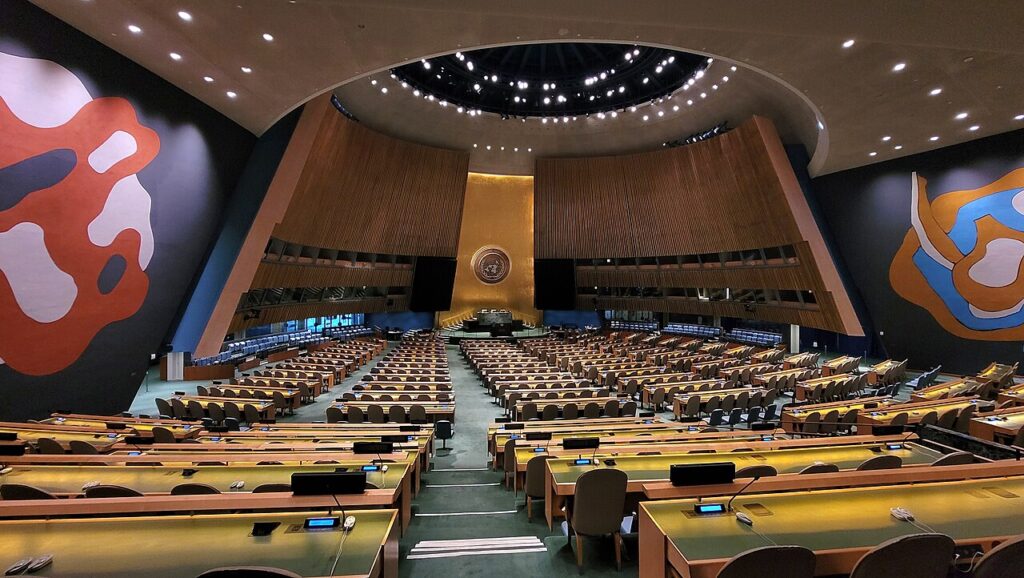
The United Nations General Assembly voted on Wednesday to condemn the United States embargo on Cuba for the 34th time — but the margin told a different story from the ritual. The resolution passed 130 to 17, with 25 abstentions, after one of the most aggressive American lobbying campaigns in the vote’s history peeled away 35 supporters from last year’s total.
A year ago, the same resolution passed 165 to 7, with 12 abstentions — already its weakest showing in two decades. This year, 10 more countries voted against it and 13 more abstained. The United States and Israel were among the 17 voting no. Lithuania, Slovenia and the United Arab Emirates broke from their historic positions to vote against the text, while Costa Rica, Colombia, Trinidad and Tobago, Honduras and Chile — all traditional backers of Cuba’s position — either opposed it or abstained.
The shift was the product of a pressure campaign run out of Washington and led at the United Nations by Ambassador Mike Waltz. Secretary of State Marco Rubio personally pressed foreign leaders for months, including El Salvador’s President Nayib Bukele, and spoke with the presidents of Panama, Argentina and Colombia about UN-related issues. Cuba’s foreign minister, Bruno Rodríguez Parrilla, accused American officials of threatening tariffs, visa denials for officials and their families, and the suspension of US assistance for countries that did not vote Washington’s way. He presented no concrete evidence for the claims, but the vote itself showed the campaign had moved votes.
The debate itself turned ugly a day before the vote. As Waltz addressed the Assembly, showing images he said exposed corruption among Cuba’s leadership, Rodríguez Parrilla walked to the podium demanding a point of order. “He’s not going to intimidate me in the United States of America like he tries to intimidate political prisoners,” Waltz shot back, telling the Cuban delegation to back away. “You are a liar,” Rodríguez Parrilla retorted. The Assembly president briefly suspended the session. Waltz later said Rubio had signed an order expelling a Cuban diplomat who allegedly shoved and tried to assault a member of the American delegation during the confrontation.
Havana’s case to the Assembly rested on what it calls an unprecedented squeeze. The draft resolution, numbered A/81/L.5, was the first to address the fuel and energy blockade Washington imposed in January 2026, and Cuba’s accompanying report claimed more than $8 billion in losses and damages from the Trump administration’s maximum-pressure sanctions. Cuban officials say fuel shortages have crippled power generation, transport, hospitals and food distribution. India’s representative told the Assembly that restrictions on fuel exports had aggravated the island’s energy crisis, disrupting health care, education, water, food and transport. Mexico’s ambassador, Héctor Vasconcelos, said using unilateral measures to pressure a sovereign state was “incompatible with the principles enshrined in the charter of this organization.”
The resolution is not legally binding, and it changes nothing on its own: only the US Congress can lift an embargo in place for more than six decades. The Assembly opened its annual debate on Tuesday, and Wednesday’s vote was the 34th time it has adopted the text since 1992. What changed this year was the size of the majority — and what it signals. Washington failed to defeat a resolution the world has backed for three decades, but it proved it can shrink that majority, vote by vote, when it is willing to spend diplomatic capital and threaten consequences. The administration has been wielding sanctions threats across several fronts this month — it waived a sweeping Russia sanctions bill days earlier rather than let its tariffs bite — and Havana now knows the cost of holding its coalition together is rising.
For ordinary Cubans, the vote changes nothing this week. The fuel blockade stays, the sanctions stay, and the shortages stay. What the count shows is that the embargo debate, long a near-unanimous ritual, has become a contested vote — and next year’s tally, not this one, is now the number both capitals will be watching.