Washington has sanctioned Rwanda’s defence ministry. Not a general, not a militia commander — the ministry itself, plus a financial institution that serves the country’s security forces. It is the sharpest American move yet against an ally it spent last year trying to turn into a peacemaker, and it amounts to an admission: the peace deal the United States brokered for eastern Congo is not holding.
The US Treasury Department’s Office of Foreign Assets Control announced the measures on Wednesday, alongside the State Department. The targets are Rwanda’s Ministry of Defence and Zigama Credit and Savings Society, a major financial institution serving Rwanda’s security forces, accused of facilitating military procurement and financial transactions for those forces and for the M23 rebel group.
“Today, the United States makes good on President Trump’s promise to hold Rwanda accountable for its commitments under the Washington Accords for Peace and Prosperity,” Treasury Secretary Scott Bessent said. “Rwanda must halt its support for M23 and withdraw its troops from eastern DRC.”
According to the Treasury statement, Rwanda’s military deployed thousands of troops across eastern Congo’s North and South Kivu provinces, where they operate alongside M23 and supply the group with military equipment, supplies, logistical support and training. Washington also accused Rwanda of introducing advanced weaponry to the battlefield, including surface-to-air missile systems and jamming equipment — kit that, the statement said, creates risks for civilian aviation in eastern Congo.
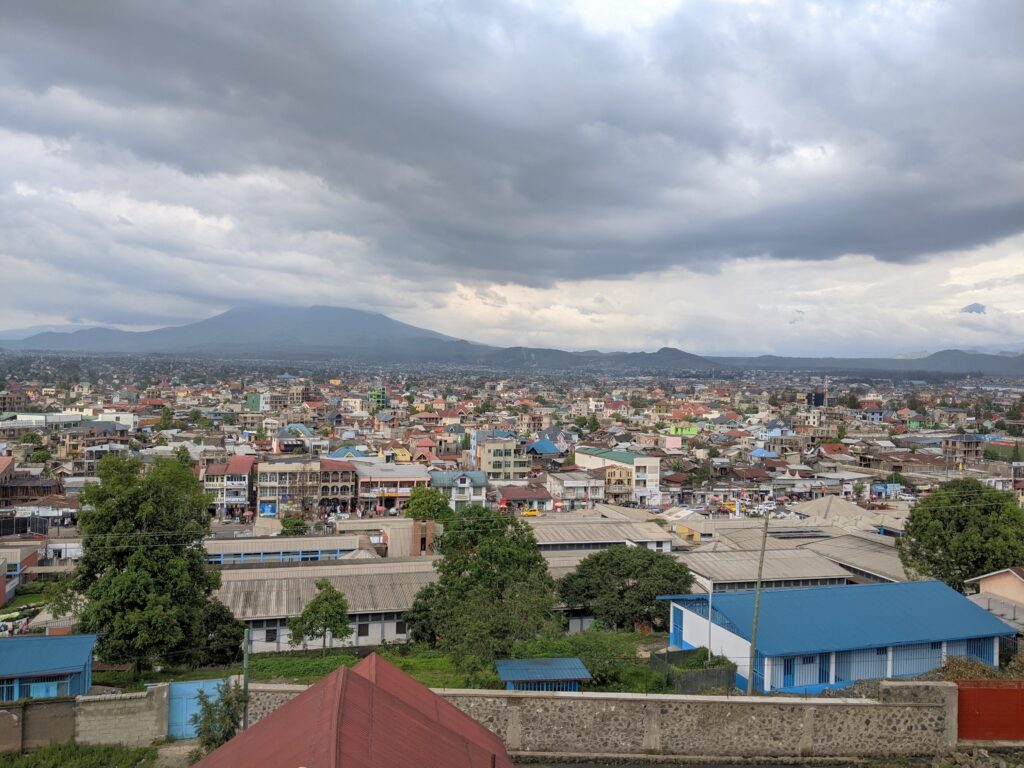
The sanctions land less than a year after the Washington Accords were signed on 4 December 2025 by Congolese President Félix Tshisekedi and Rwandan President Paul Kagame, with President Donald Trump present. Trump declared at the time: “Today, we’re succeeding where so many others have failed.” Fighting on the ground has barely paused since. M23 captured Goma and Bukavu, the provincial capitals of North and South Kivu, in early 2025, and has since held mineral-producing ground including gold mines in South Kivu and the Rubaya coltan area in North Kivu.
Kigali denies backing the rebels, who now call themselves the Refoundation of the Nation, formerly AFC-M23. Rwandan government spokesperson Yolande Makolo said the Washington Accords contain commitments on neutralising the FDLR — a Hutu militia rooted in the 1994 genocide — that remain unmet. “Rwanda remains ready to fully implement the Washington Accords, concurrently with the willingness of the DRC to fulfill those commitments, and with the mediator holding all parties accountable,” she said.
Congo’s foreign ministry welcomed the sanctions. “These sanctions send a clear message that Rwanda cannot act with impunity,” it said, calling on Kigali to honour the Accords, respect the UN Charter and “withdraw its tens of thousands of troops from the DRC”. Washington has also accused M23 of human rights abuses in areas under its control, including extrajudicial killings, unlawful detention, torture and forced labour.
Why this matters beyond Congo: eastern Congo sits on minerals the whole world now wants — coltan for electronics, gold, tin, tungsten — and the fighting there has displaced millions in a region already battered by overlapping crises, from armed conflict to disease. When a peace deal signed in Washington cannot survive contact with the battlefield, it also damages the credibility of American mediation elsewhere. Sanctions on a defence ministry are rare precisely because they are hard to walk back. The question now is whether Kigali treats this as a warning shot or as a rupture — and whether the troops Washington says are in North and South Kivu start moving home.
What happens next: watch for Kigali’s formal response, for any move by the Congolese government to press its advantage, and for whether the sanctions bite on the financial plumbing — Zigama’s role is the part of this package designed to hurt quietly, by complicating how Rwanda’s security establishment moves money.