Israeli Prime Minister Benjamin Netanyahu had his bombers ready. On the weekend of October 10, the Israeli military stood prepared to launch a multi-day bombing campaign against Iran — bigger than anything seen in the eight-month-old US–Israeli war with Tehran. The targets were already chosen: Iran’s nuclear facilities, its power plants, and the civilian energy infrastructure that had been spared until now.
Then Donald Trump said no.
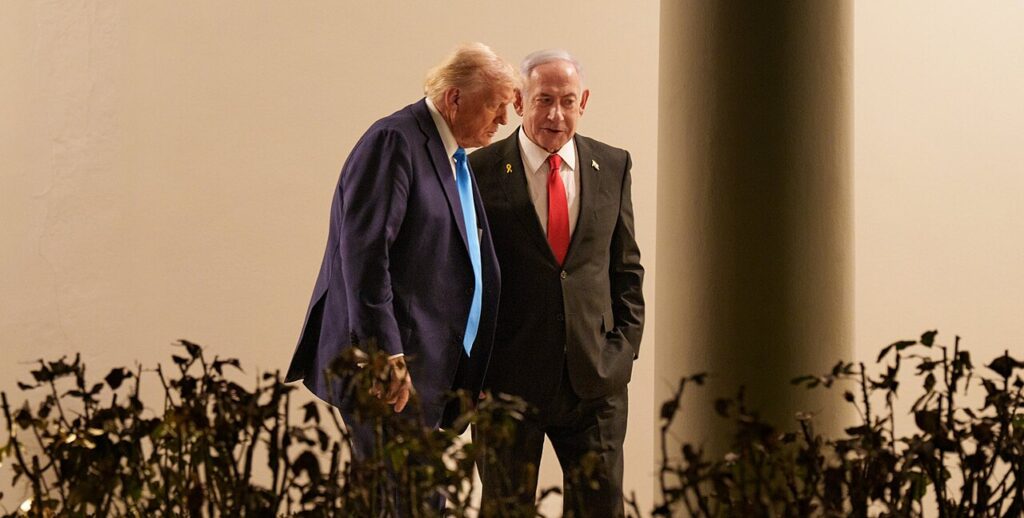
The US president opposed the operation because he did not want to reignite a full-scale war in the Middle East ahead of the November 3 midterm elections, the Financial Times reported on Wednesday, citing three people familiar with the plans. The Israeli strike went ahead with nothing at all — the operation was shelved, and the region’s most dangerous rivalry stayed in its uneasy holding pattern.
Netanyahu had instructed the Israel Defense Forces to prepare a campaign that would have surpassed the intensity of February’s Operation Roaring Lion, the joint US–Israeli offensive that opened this year’s war on February 28. According to the report, Israeli planners had drawn up a new bank of targets — including power plants and other civilian infrastructure sites that were never hit during the earlier campaign.
One of the sources told the newspaper it remained “not an unreasonable scenario” that the two countries would restart strikes together in the coming weeks. “There will either be a deal or an attack,” the person said — a line that captures Washington’s current posture: squeeze Tehran toward an agreement on its nuclear program and its grip on the Strait of Hormuz, or hit it again.
A decision with two elections on it
What makes the report remarkable is the calculation it exposes. Two elections are in play. In the United States, voters go to the polls on November 3 for the midterms, and Trump — who has made no secret of his desire to keep the Republican majority intact — decided a renewed war with Iran was a risk he would not take beforehand. The White House confirmed as much on the record. Spokesperson Anna Kelly said Iran was in “extremely poor economic and military condition,” that the US blockade of Iranian ports was succeeding, and that the United States would not strike Iran before the midterms.
In Israel, Netanyahu faces his own clock. The Knesset election on October 27 — the first since Hamas’s October 7, 2023 attack — has the prime minister’s coalition projected to lose its majority in the polls. For Netanyahu, a military operation against Iran before the vote would have been the ultimate show of strength. Earlier this month, the IDF’s chief of staff, Lt. Gen. Eyal Zamir, reportedly told his American counterparts that an attack could even cause the Israeli election to be postponed.
Trump’s veto lands in a weeks-long pattern of escalation and restraint. On October 9, Trump publicly said Washington would not attack Iran before the midterms — days after reports that the IDF had been pressing the case for action. On Monday, US Defense Secretary Pete Hegseth made a secret visit to Israel, meeting Netanyahu at Ovda Air Base in an unannounced trip that was only revealed afterward. And Iran’s foreign minister, Abbas Araghchi, has been daring Trump to strike again, writing: “Be our guest.” His dare is here.
Why this matters
The episode answers a question that has hung over the Middle East for months: who decides when Israel goes to war? On paper, Jerusalem is a sovereign power fighting its own enemies. In practice, the FT report suggests the decision to restart the Iran war sits with one man in Washington — and that man is weighing gasoline prices and voter turnout as heavily as uranium centrifuges.
That is a sobering read for the world beyond the region. The Strait of Hormuz, through which roughly a fifth of the world’s oil supply passes, has already seen a string of mine and drone incidents this year. A renewed US–Israeli bombing campaign — now explicitly dangled as “not an unreasonable scenario” for the coming weeks — would not just threaten Iranian cities. It would send oil prices past records, squeeze shipping insurance across the Gulf, and force every government that buys fuel to pay more. For now, Trump’s election calendar has bought the region a few weeks of quiet. What happens after November 3 is anyone’s guess.
Sources: Financial Times reporting via The Jerusalem Post, The Times of Israel, Ynet, and the Indian Express.