Britain has imposed sanctions on eight Israeli construction and property firms involved in building settlements in the occupied West Bank, and on an activist group that blocks humanitarian aid to Gaza — the first penalties since London shifted its policy on Israel’s actions in the territory.
Foreign Secretary Ed Miliband announced the package on Tuesday. The eight companies face asset freezes and their directors are barred from holding company posts. The named firms include Har Hevron Development Company Ltd, Hemdat Shomron Ltd and S.A.G. (Velvel) Construction and Development Ltd, which build and develop homes in the West Bank. Five more firms were designated alongside them.
Britain also sanctioned Tzav 9, an Israeli activist movement the Foreign Office says has blocked humanitarian aid trucks heading into Gaza.
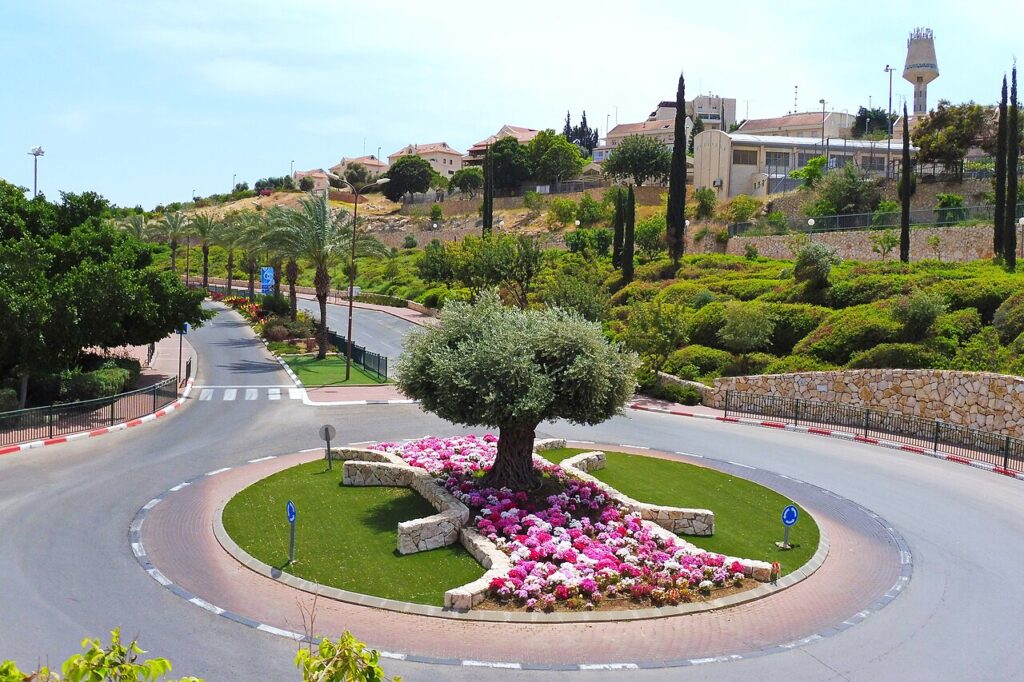
The timing is deliberate. The sanctions were announced two days before the review of tenders begins for homes in the E1 development — a planned settlement area on roughly twelve square kilometres of hills between East Jerusalem and the settlement of Ma’ale Adumim. Critics say E1 would bisect the West Bank and cut it off from East Jerusalem, fragmenting the land Palestinians hope will form the heart of a future state. More than 1,200 housing units are planned for the corridor.
“Protecting the two-state solution is the North Star of this Government’s approach,” Miliband said in a statement. His message to prospective bidders, delivered ahead of the November 19 tender deadline, was blunt: “do not bid, do not build, and do not profit from the destruction of the two-state solution.” He has called the E1 plans “unconscionable” and said they are “destroying the prospects of a two-state solution”.
The package follows Miliband’s pledge in September to respond to settlement expansion, part of a diplomatic “reset” in which Britain formally acknowledged the entire Israeli occupation of the West Bank as unlawful, following the International Court of Justice’s advisory opinion of July 2024. The sanctions were imposed under the UK’s expanded Global Human Rights and International Humanitarian Law sanctions regime.
Whether the measures will bite is an open question. The Guardian reported that the practical impact remains uncertain, because the extent of the companies’ reliance on British financial services has not been established. And the policy faces awkward questions at home: an Al Jazeera investigation reported that the British public sector has awarded £10.7 million in fresh procurement contracts to firms linked to settlement enterprises since the reset was announced — on top of £2.1 billion in prior public business.
The sanctions land in a West Bank already raw with violence. In October, masked settlers beat a Washington Post photographer during the olive harvest, and weeks later attacked a convoy of European diplomats. Netanyahu cast doubt on the attack, calling it a “coordinated smear campaign”, even as his own military condemned it. The US Secretary of State, Marco Rubio, has told Israel to crack down on settler violence.
Why this matters: Sanctions on settlement builders are a step Britain has long avoided, and the choice of target is the message. By naming companies rather than politicians, London is treating settlement expansion as a commercial enterprise that can be priced out of the market — asset freezes and director bans are the tools of financial enforcement, not diplomacy. But the E1 tender opens on Thursday regardless. If developers bid anyway, and if the firms’ exposure to British finance turns out to be small, the package will read as a statement of principle rather than a deterrent. The test is not the announcement. It is the tender.
What happens next: Watch the November 19 tender review, and whether any bidder withdraws citing the sanctions. Also watch Israel’s response: the government has not yet publicly answered the package, and its reaction will show whether London’s reset has any leverage left — or whether Britain is now simply documenting a two-state solution it cannot protect.