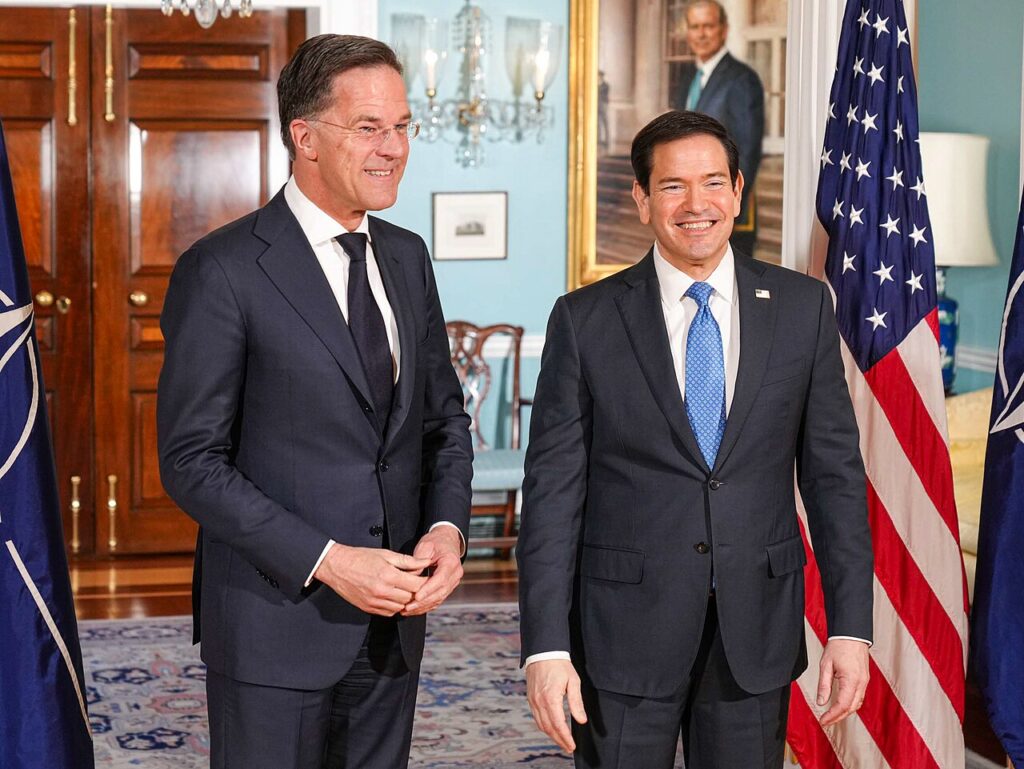
The United States wants Israel to do more to stop attacks by Israeli settlers in the West Bank. That was the message from Secretary of State Marco Rubio on Saturday, in what amounts to the sharpest American warning yet on a wave of harvest-season violence that has injured diplomats, journalists and Palestinian civilians.
Rubio spoke to reporters at Joint Base Andrews before boarding a flight to Uzbekistan. The trigger, he said, was video that has circulated widely this weekend showing masked men beating Heidi Levine, an American photojournalist with the Washington Post, on Friday.
“We’re very disturbed by those images and what we’re seeing,” Rubio said. “We’ve asked the Israelis and continue to ask them to crack down on that stuff.”
“Not a good look”
Levine was one of at least two people hurt in the Friday incident, which took place as Israeli settlers attacked Palestinian civilians near the West Bank olive harvest. Levine underwent surgery after the assault and is being treated for a broken vertebra.
Rubio lingered on what happened to her. “It was an American reporter, maybe a photojournalist, who was caught behind where some of these groups came in and was beaten, and there was video of that,” he said. “The whole thing was just disturbing. Not a good look.”
He added that President Donald Trump does not want to see “friction or any crisis” in the West Bank, and said the State Department has formally asked about the Levine attack. Rubio said he expects to hear back from the US Embassy in Jerusalem by Sunday.
A pattern, not an incident
Friday’s assault on Levine was not isolated. Israeli settlers in the West Bank have carried out at least 170 attacks on Palestinians since September 27, according to Yesh Din, an Israeli monitoring group that tracks settlement activity. The violence has followed the rhythm of the annual olive harvest, when Palestinian farmers return to their groves and confrontations with settlers spike.
Just hours before Rubio spoke, Prime Minister Benjamin Netanyahu’s office cast doubt on a separate attack — this one on a diplomatic convoy from France, Belgium and Poland in the Christian village of Taybeh, during which a Belgian consul’s car window was smashed and a French mayor assaulted. The prime minister’s office called reports of the attack a “coordinated smear campaign,” even as Israel’s own military said it “strongly condemns” what it called a severe act of violence.
Washington is no longer staying quiet
Rubio’s warning is not the only American voice in the fray. The US ambassador to Israel, Mike Huckabee — who has publicly expressed support for the settler movement — said Israel must prosecute the attackers who beat Levine, calling the assault an act of settler “terror.”
Huckabee’s condemnation landed with force precisely because of who said it. In August, he publicly called settlers who besieged two Palestinian families in the village of Qusra “Israeli terrorists.” His office has also been pressing Israeli authorities over a five-day siege of the home of an American citizen in the West Bank, after a Palestinian-American activist said the White House had intervened.
Why this matters
The West Bank — territory Israel has held since the 1967 war, home to around three million Palestinians and more than half a million Israeli settlers — is where American diplomacy in the region has always been most fragile. For years, Washington has criticized settler violence mostly behind closed doors. A secretary of state saying it on camera, at an air base, before a foreign trip, is a different signal: the administration believes the footage is forcing its hand.
The timing sharpens the stakes. While Israel fights a grinding war with Iran and trades strikes with the Houthis across the Red Sea region, an uncontrolled second front in the West Bank would stretch its military and its alliances alike. Europe is already moving — Belgium’s foreign minister is pressing for EU sanctions against violent settlers, saying “impunity must end.”
For now, Rubio’s deadline is the practical one to watch: the State Department expects answers from its Jerusalem embassy by Sunday. What Israel does with the request to “crack down” will show whether Washington’s public pressure can succeed where its private requests have not.