Two Russian missiles and a suspected drone came down in Poland on Friday, during the biggest Russian air attack on Ukraine in weeks — and Warsaw is not treating it as an accident.
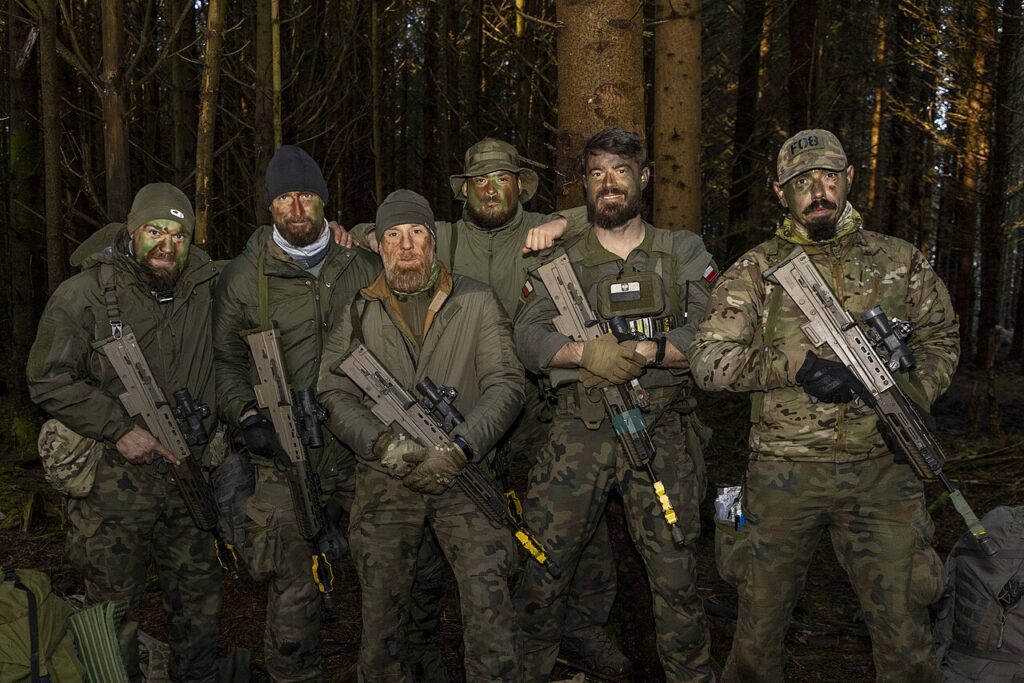
Polish Prime Minister Donald Tusk said it appeared that “we are dealing with an intentional provocation” by Russia. The weapons landed in south-eastern Poland while thousands of European troops were taking part in a two-week military exercise nearby, rehearsing for a possible post-war mission in Ukraine.
NATO Secretary-General Mark Rutte called the incident a “grave violation” of Polish airspace and said the alliance stands “in solidarity with Poland and will continue to strengthen our ability to deter and defend.”
What landed, and where
Polish Defence Minister Władysław Kosiniak-Kamysz confirmed three objects came down in the Lublin and Subcarpathian regions, near the Ukrainian border:
- A Russian Kh-101 cruise missile at Nowy Lipowiec, roughly 50 kilometres (30 miles) from the Ukrainian border.
- A second suspected missile near Rudnik nad Sanem, about 35 kilometres from the site of the military exercise.
- What officials believe was a jet-powered drone at Mołodycz, some 30 kilometres from the border.
No casualties were reported in Poland. Emergency services and military personnel secured the crash sites, and Polish and allied aircraft — including two NATO AWACS surveillance planes — were operating over the country on Friday morning.
The timing is the point
The incursions happened during a Russian bombardment of Ukraine that President Volodymyr Zelenskyy called “one of the largest attacks” of the war: more than 400 drones and over 110 missiles fired overnight, killing at least eight people. Some of the weapons hit the Austrian embassy in Kyiv and landed near the Netherlands embassy, prompting France to call for a meeting of the United Nations Security Council.
But it is the timing inside Poland that Warsaw is highlighting. The objects fell during KOALICJA 26.2, a multinational exercise that began on 9 November and runs until 22 November, involving forces from 11 countries in the so-called Coalition of the Willing. The exercise, held at the Nowa Dęba training range in south-eastern Poland, is designed to prepare European troops to help stabilise Ukraine and rebuild its military once the war ends.
Tusk was blunt about what he thinks Moscow was doing. “We know that what landed on Polish soil came from Russia,” he said. “It does not look like an accident.”
Investigators have not yet established whether the weapons crossed into Poland deliberately or as a consequence of their flight paths during the attack on Ukraine. That distinction matters legally — and Warsaw is not waiting for the answer before acting. Kosiniak-Kamysz said Poland would formally ask NATO for additional forces and surveillance capabilities for Operation Eastern Sentry, the alliance’s air-defence mission on its eastern flank.
Why this matters
Poland is a NATO member, and the alliance’s founding treaty says an attack on one member is an attack on all 32. Nobody in Warsaw or Brussels is invoking that collective-defence clause, Article 5, over three crashed weapons that hurt no one. But the incident lands in a pattern that is getting harder to dismiss as coincidence: Russian drones and missiles keep straying across NATO borders — a suspected drone exploded over Lithuania last month, and Poland has scrambled jets to Russian incursions before.
Each incident forces the same uncomfortable question on the alliance: at what point does a “violation” become something that demands a response beyond words? Tusk’s answer, for now, is to treat this one as a deliberate test — and to ask NATO to put more eyes and more jets over Poland’s eastern border.
The timing also undercuts the diplomacy of the past 48 hours. On Thursday, Donald Trump, Xi Jinping and Vladimir Putin met in Shenzhen and issued a four-point “declaration toward peace” that mentioned no war at all. Zelenskyy dismissed the summit as a failure. On Friday, Russia answered with its largest air attack in weeks — and its weapons landed on NATO soil.
A suspected drone exploded over Lithuania last month, and Ukraine struck the Kerch Bridge days before the Shenzhen summit. The war, in other words, is not pausing for the peacemaking — it is spilling over its borders.