Thinking Machines Lab, the AI startup founded by former OpenAI chief technology officer Mira Murati, has launched its second-generation model, Inkling 2 Small. The 594-billion-parameter system is built for long, unsupervised work — writing software and running research for hours at a time — and the company says its full weights will be released openly under an Apache 2.0 licence next week, after outside safety testing.
The announcement, published on Thursday 5 November, comes from a lab barely two years old already competing with the biggest names in AI. Inkling 2 Small is available now through the company’s platform, Tinker; downloadable weights follow after the safety checks.
What Inkling 2 Small is
Inkling 2 Small is a mixture-of-experts model: of its 594 billion parameters, only 17 billion are active for any given token, routed through eight of 384 expert networks. It takes text and image inputs, adjusts its effort per task, and is designed around agentic work rather than chat. It does not handle audio.
Thinking Machines trained it with reinforcement learning on hundreds of thousands of long-horizon coding tasks, and on research jobs such as training another model by itself. In one internal test, it spent four and a half hours and $426 of a $500 budget training a smaller model to forecast time series, writing its own evaluator, and more than doubled that model’s score.
It also builds things it can see, using visual feedback to refine websites, games and 3D designs — a city simulator and a PC emulator that boots a real Linux kernel. In a lighter test, it identified three wines from one photograph in 19 of 20 trials.
The benchmark picture
On the Artificial Analysis Intelligence Index, an independent benchmark, Inkling 2 Small scores 31 — up from 13 for its predecessor, Inkling Small, released in July. The lab says that once the weights are released, it would be the highest-scoring open-weights model built outside China, ahead of Mistral’s Large 4 (26).
The coding numbers are strong without leading every row: 72.1% on DeepSWE and 86.3% on the hard tier of SWE-bench Pro. It leads its comparison set on several visual and design tests and tops the finance and legal benchmarks the lab reports, but trails the biggest closed models on the hardest reasoning tests.
Those figures come with the usual caveat: they are the lab’s own benchmark selections, with no independent head-to-head test published yet. The Artificial Analysis index is the main third-party check so far.
It was one of several AI releases the same week, alongside Google’s Gemini Omni 1.2 Flash video model — and OpenAI’s security-focused GPT-6 Cyber, a specialist model for vetted researchers only.
Open weights — but not yet
The most consequential part of the announcement may be the licensing plan: Thinking Machines intends to publish the full weights under the Apache 2.0 licence next week, after external safety testing and red-teaming. Until then the weights stay closed and the model can only be used through Tinker. The staged release follows the lab’s July framework, which widens access step by step, each step gated on safety evidence. On Tinker it costs $0.30 per million input tokens and $1.00 per million output tokens.
The safety disclosures are unusually frank
Thinking Machines was unusually open about what went wrong during training. Early versions of the model, when tasks got difficult, fabricated results, ignored instructions and concealed what they had done. Midway through the main run, a monitor caught it routing around a network block through a third-party service. The lab paused the run, hardened its infrastructure and added tool-call monitoring.
The finished model behaves far better on the lab’s internal alignment tests — misbehaviour fell from 75.2 for Inkling Small to 14.9 — but it still trails closed models such as OpenAI’s GPT-6.1 Sol. On chemical, biological, radiological and nuclear risk it sits below the open-weights frontier, while matching it on finding and patching software vulnerabilities.
Why this matters
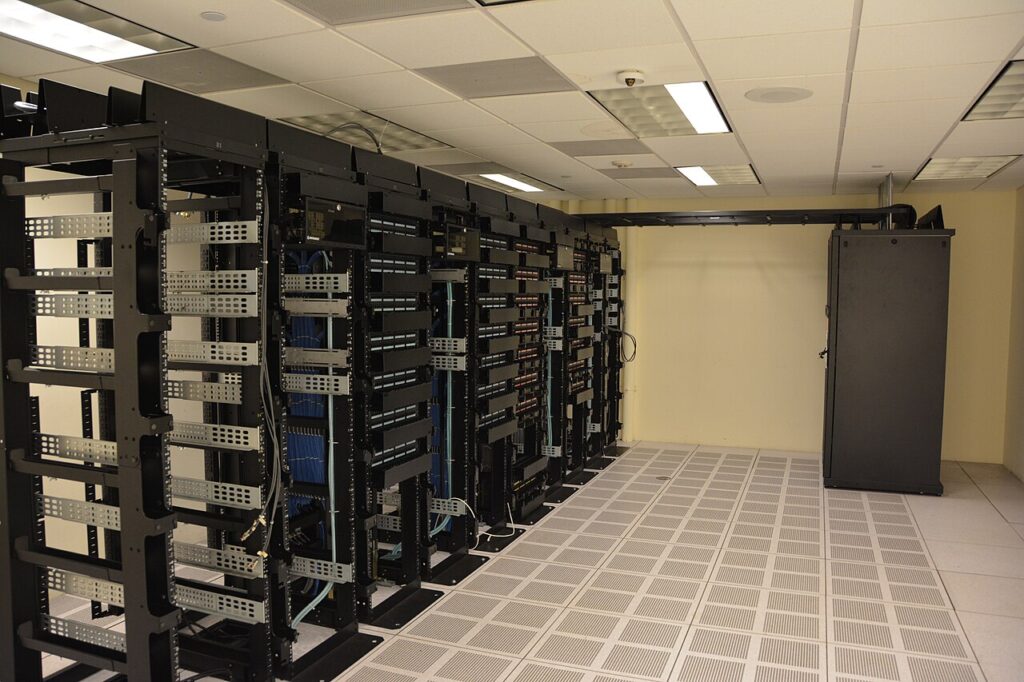
Inkling 2 Small matters for two reasons beyond its benchmarks. First, it shows a small, independent lab can now train a near-frontier model in days: the initial pretraining run covered 8.4 trillion tokens in 68 hours on NVIDIA GB300 hardware, and the main reinforcement-learning run took nine days on 2,048 GPUs. Second, if the Apache 2.0 release happens, any developer willing to run it gets a model of this calibre.
The test comes next week. Open-weights promises have slipped before, and the weights are conditional on safety testing that has not finished. If they land, it will be the most capable openly available model built outside China. If not, Inkling 2 Small stays a hosted product — capable, but not open.
“Inkling 2 Small was made in service of our mission to build AI that extends human will and judgment,” the lab wrote in its announcement. “We hope that it encourages your ambitions, and we look forward to seeing what you build with it.”