Five people were killed and more than a dozen wounded in Kraków on Saturday afternoon, after a gunman drove a car onto the city’s Main Market Square and opened fire on passers-by at random, Polish police said.
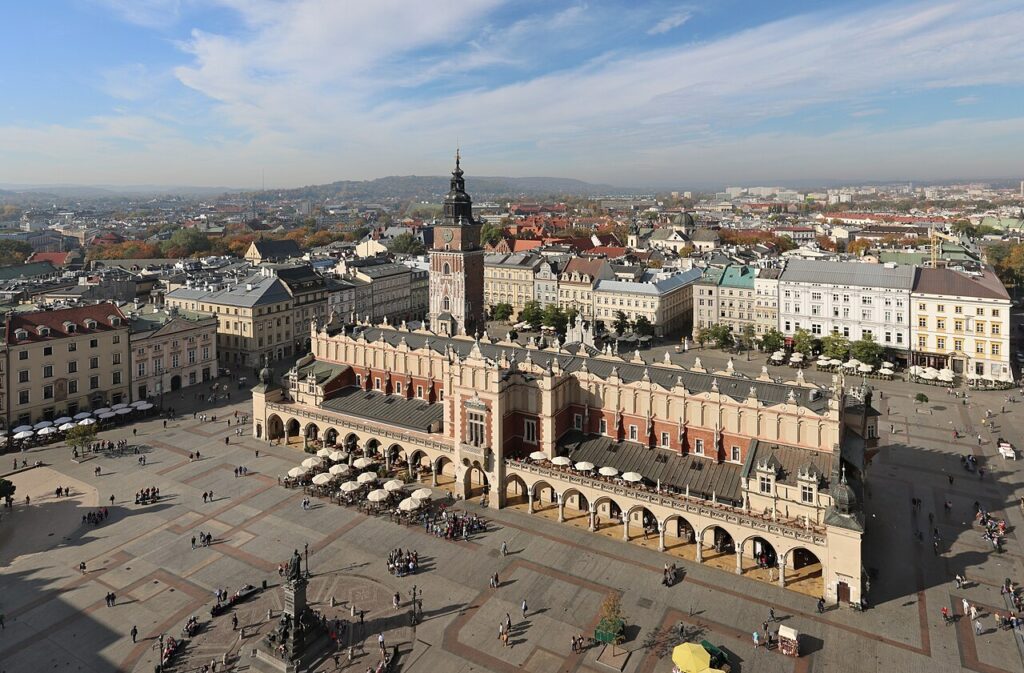
The shooting began at around 3pm local time in Rynek Główny, the vast medieval square at the centre of Poland’s second city — a place that on any Saturday afternoon is packed with tourists, street performers and families. Within minutes, the square that usually echoes with café chatter was cordoned off, filled instead with ambulances, armed police and the sound of sirens.
According to Małopolska regional police, a man drove onto the square and began firing at random people from his car. The fire service said the shots came from a vehicle that entered the square from Sławkowska Street. Officers confronted the gunman at the junction of Dietla and Stradomska streets, about half a mile from the square. He returned fire, wounding two police officers, before officers shot him. He was taken to hospital and detained.
Police said the suspect was a Polish citizen wearing military-style clothing and carrying a long, military-type weapon. His identity and motive have not been released, and police denied media reports that they were looking for a second person.
The first reports, from the fire service, put the toll at two dead and at least 10 wounded. Within hours, police confirmed the far worse figure: five killed and more than a dozen wounded, including the two officers.
Prime Minister Donald Tusk said he was being kept informed by the interior minister. “I am being kept informed by the minister of the interior about the situation in Krakow following the tragic shooting,” he wrote on X. “The police are investigating the background and all the circumstances of the attack.”
President Karol Nawrocki said he was “deeply concerned by reports of the tragic events in central Kraków.” Deputy Prime Minister Władysław Kosiniak-Kamysz, who is from the region, added: “For us, the residents of Krakow and the Malopolska region, these are particularly difficult times.” Justice Minister Waldemar Żurek said prosecutors were at the scene and the attacker would be “held strictly to account.” Interior Minister Marcin Kierwiński travelled to Kraków, as did Bartosz Grodecki, head of the National Security Bureau.
The US Consulate in Kraków issued a security alert urging people to avoid the area, and the US ambassador to Poland, Tom Rose, called the shooting a “savage and murderous attack” in a post on X.
📣Local police confirmed reports of shots fired in Krakow’s Main Market Square. Avoid the area at this time. We will continue to monitor the situation and provide updates.
— US Consulate Krakow (@USConsKrakow) November 7, 2026
We encourage U.S. citizens to review our Worldwide Caution (https://t.co/YDB3W2etJQ). U.S. citizens are… pic.twitter.com/cWXMKKDkE6
The attack comes at a tense moment for Poland. The country has been on high alert since a series of stabbings in October, and Saturday’s shooting will inevitably raise questions about how a gunman was able to drive a car into one of Europe’s most crowded pedestrian squares, and where he obtained a military-style weapon in a country with some of the strictest gun laws on the continent.
For now, investigators have said little beyond the bare facts. The square remains sealed off while forensic teams work through the scene, and police say they are still establishing the circumstances of the attack. The names of the dead have not been released.
Why this matters
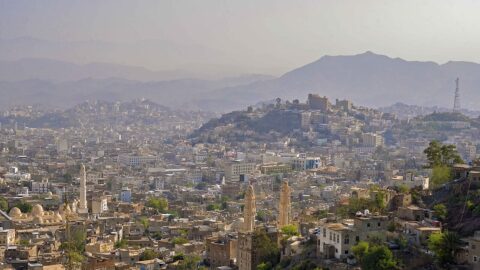
Random mass shootings in public places are vanishingly rare in Poland, a country where private gun ownership is tightly controlled and gun crime is low. That is precisely what makes Saturday’s attack so shocking — and why its reverberations will reach well beyond Kraków. Rynek Główny is not a remote or obscure location: it is one of the largest medieval squares in Europe, the postcard image of Poland, visited by millions of people every year. An attack there strikes at the sense of safety in the open, shared spaces of European cities — the squares, markets and promenades where people gather precisely because they feel safe. Crowded public places have been hit before: a market attack in the Yemeni city of Taiz killed 30 people on Friday. And while such attacks are rare in Poland, they are grimly familiar in the United States, where a school shooting in Bend, Oregon, killed three children and a teacher last month. The coming days will be dominated by three questions: who the gunman was, what drove him, and how he was able to bring a military-style rifle into the middle of a crowded square. Until police answer them, Kraków — and Poland — will be waiting.