Quantum computers have a dirty secret: up to 95% of the machine can end up doing nothing but housekeeping. On Thursday, Google Quantum AI announced it had demonstrated a technique called “magic state cultivation” on its Willow processor that slashes that tax — producing near-perfect quantum “magic states” with roughly 40 times fewer errors than before. The result was published in the peer-reviewed journal Science, and it attacks a bottleneck researchers have known about for about twenty years.
So what did Google actually do? Start with the housekeeping problem.
The science, in plain English
A quantum computer can perform some operations cheaply, but the operations needed for genuinely useful calculations — the so-called T-gate family — require a special, perfectly clean helper state: the magic state. Think of it as a perfectly calibrated tool bit. Each use consumes one, and if it is even slightly defective, the calculation fails.
The old way to make them is called distillation. You start with thousands of noisy, imperfect magic states and repeatedly purify them, throwing most away — like squeezing thousands of grapes for a single glass of juice. Estimates have long suggested this could eat up to 90–95% of a fault-tolerant quantum computer’s total physical-qubit capacity, leaving a sliver for actual computing. That cost has been known since around 2004. Hence the “20-year bottleneck.”
Cultivation flips the approach. Instead of mass-producing flawed states and purifying them, Google’s method grows a single state carefully in a small patch of the chip and checks for errors at every step:
- Injection: a rough magic state is created in a small region of the processor.
- Filtration: repeated error checks detect flaws and abort bad attempts early.
- Growth: the survivor is grown into a pure T-state.
- Grafting: the finished state is converted from its color-code encoding into the surface-code encoding the rest of the machine uses.
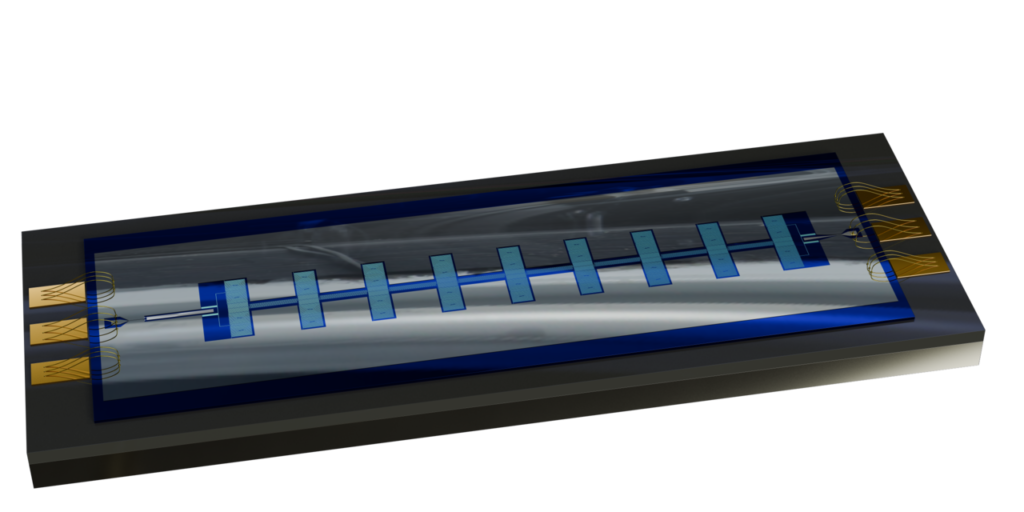
Less waste, a fraction of the chip real estate. The theory was proposed by Google researchers Craig Gidney, Noah Shutty, and Cody Jones in 2024; this is its first demonstration on real hardware. The experiment used at most 54 of Willow’s 105 physical qubits, achieved a record 99.99% logical fidelity for the T-states, and transferred states from a distance-3 color code to a distance-5 surface code. About 8% of cultivation attempts passed every check — a low yield, but each success was dramatically cleaner.
Getting there was not smooth. Early runs were distorted by environmental noise — micro-variations in room temperature, electrical equipment drift — that threw off the benchmarks. Research scientist Emma Rosenfeld and the team added tighter hardware controls and invented a self-referential benchmarking technique: using the cultivation process itself to measure its own accuracy.
What it isn’t
This is a resource-efficiency breakthrough, not a near-term quantum computer. The demonstration ran at small scale, the 8% yield needs to improve, and Google says larger-scale demonstrations are still needed, with no timeline offered for genuinely useful machines. For a sense of the remaining distance: breaking RSA-2048 encryption would require magic states roughly a million times cleaner than what was demonstrated.
Why it matters
Fault-tolerant quantum computing has always had two problems: keeping qubits alive, and affording the magic states. The second problem just got its first credible shortcut. If cultivation scales, the machines of the 2030s could spend their qubits computing instead of cleaning up after themselves — which is the difference between a quantum computer that works in principle and one that works in practice.
It is also a reminder of where Google Quantum AI’s research blog sits in the company’s week: alongside Google’s other big research bet this week: Gemini 4 Argon, the search giant is placing large, public wagers on both artificial and quantum intelligence. One of them just paid off in peer review.