Pope Leo XIV is going home.
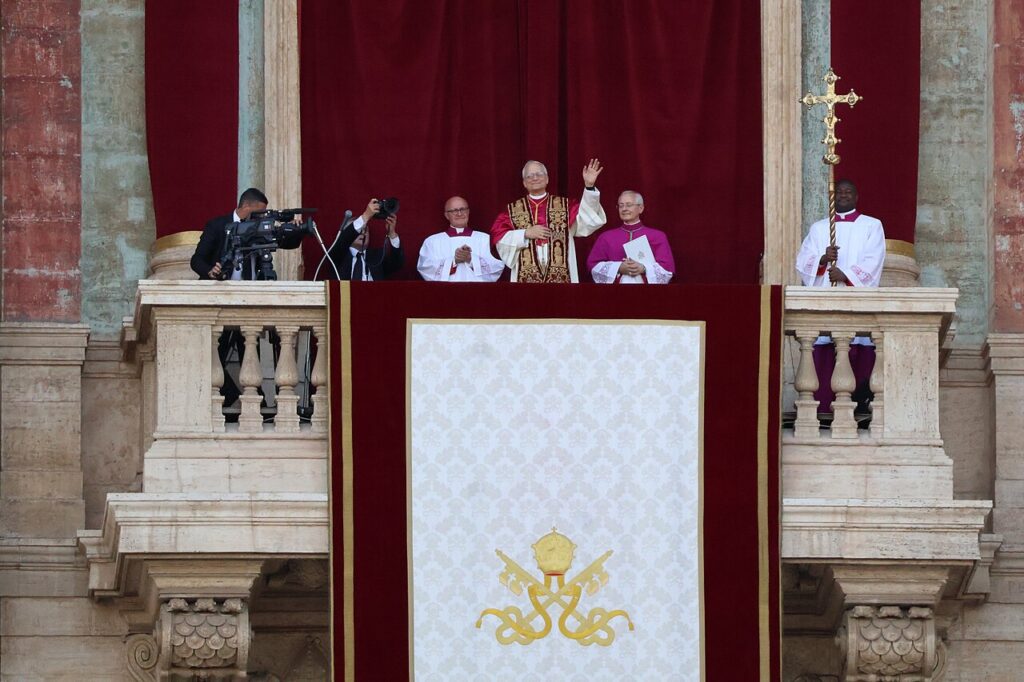
Four days after surgeons removed the lower lobe of his right lung, the 71-year-old pontiff has been declared fit to leave Rome’s Gemelli Hospital. The Vatican announced Saturday that the pope would be discharged in the early afternoon and return to his residence — and that on Sunday he will do something no one would have dared predict when the diagnosis landed this week: deliver the traditional noon blessing from his apartment window, in full view of the faithful gathered in St. Peter’s Square.
His doctors reached the decision after blood tests and a chest X-ray taken Saturday morning. “In light of the blood tests and the chest X-ray performed this morning, and following an assessment of his clinical status, the Holy Father has been deemed fit for discharge,” wrote his personal physician, Dr. Luigi Carbone, and the surgeon who operated on him, Professor Stefano Margaritora.
It is a startlingly fast turnaround — and a deliberately public one. The Holy See, the Vatican’s governing body, has published near-daily bulletins since the pope went into hospital on Tuesday, a transparency that recalls the very different approach taken during the drawn-out illnesses of his predecessor, Francis.
The sequence has moved quickly. Leo himself broke the news to the public last Sunday, during the Angelus — the midday prayer that the pope traditionally leads each Sunday from that same apartment window — telling the crowds in the square that a routine medical examination had found a nodule in his right lung and that doctors had recommended removing it. Two days later, surgeons operated at the Gemelli, and the Holy See then announced what the preoperative tests had already suggested: the nodule was pulmonary adenocarcinoma, the most common form of lung cancer, when the Vatican confirmed the lung-cancer diagnosis.
Notably, the pope has not been idle in his hospital room. Medical bulletins indicated he could carry out normal daily activities independently, and on Friday he called Vladimir Putin from his hospital bed, urging a ceasefire in the Russian-occupied Ukrainian city of Oleshky. That same day, the Vatican released the first images of Leo since the operation: the pontiff celebrating Mass in a hospital chapel, dressed in green vestments, distributing Communion to medical staff and thanking them for their care.
What the Vatican has not said is as significant as what it has. The doctors have not disclosed the size of the tumor, whether the cancer had spread to nearby lymph nodes, or what further treatment — if any — the pope will need. Those details, oncologists note, are what will determine his prognosis. They have also kept him on a tight rein: all of his private audiences are suspended until Tuesday, October 20.
One big question now hangs over the recovery: a papal voyage to South America, scheduled for November 6 to 17, with stops in Uruguay, Argentina and Peru. The trip remains on the Vatican’s website, and Leo — who spent two decades as a missionary in Peru and holds Peruvian citizenship alongside his American one — is said to be eager to go. But some Vatican officials have quietly suggested the journey will depend on how quickly he heals.
For the world’s 1.4 billion Catholics — Catholicism being the world’s largest single Christian denomination, and the pope its global spiritual leader — this is more than a health bulletin. It is the first serious illness of the first American-born pope, elected only in May 2025. A pontificate that began with talk of “big plans” is suddenly shadowed by the same questions of age and longevity that dogged Francis’s final years.
And it reaches beyond the Church. A pope is a head of state — the Vatican City is a sovereign state, and the Holy See maintains diplomatic relations with more than 180 countries. Leo’s Friday call to the Kremlin shows that even from a hospital bed, his voice carries weight in the diplomacy around Ukraine. His health, in other words, is not merely a private matter or a matter of faith. When a leader who speaks to 1.4 billion people goes under anesthesia, the whole world listens for the bulletin. That statement came in a statement from the Holy See Press Office.
Sunday’s blessing, then, will be watched closely — not just by the faithful in the square, but by everyone wondering how much of a recovery this really is. For now, though, the Vatican’s message is simple: the pope is coming home, and he will be at his window at noon.