Six people are dead, 108 have been pulled from the water alive, and 129 are still missing after a passenger ferry capsized in rough seas in Indonesia’s Java Sea early on Sunday.
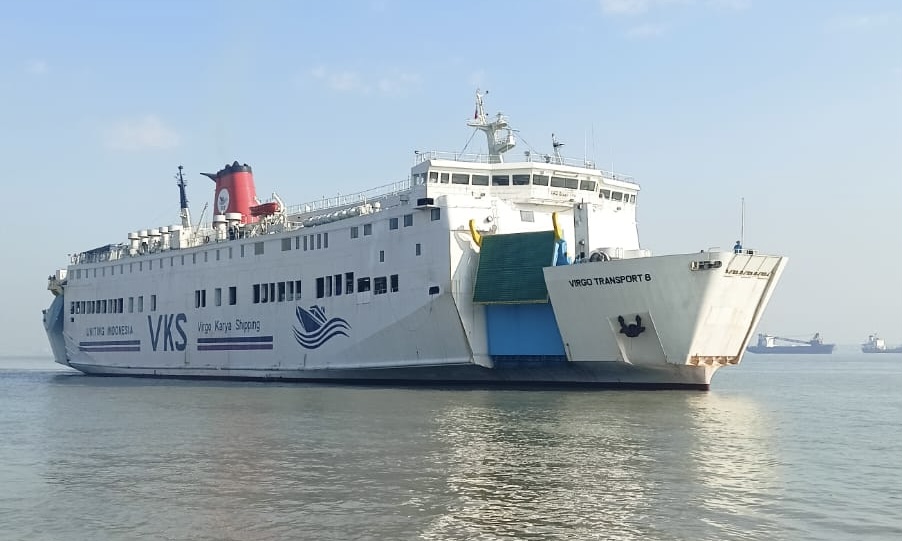
The vessel — the Virgo Transport 8, a 119-metre roll-on/roll-off ferry — was sailing from Surabaya in East Java to Banjarmasin in South Kalimantan, on the island of Borneo, when it overturned. Its manifest listed 243 people on board: 213 passengers and 30 crew members.
Contact with the ferry was lost at about 2:00 a.m. local time on Sunday, when the ship was roughly 150 kilometres from its destination. The operator raised the alarm about two hours later.
Before the signal cut out, the captain had reported waves of up to three metres and told the vessel’s owners the ship was listing, according to I Putu Sudayana, who heads the Banjarmasin search and rescue office. A distress message followed. Then came word that the ferry had turned over.
By Sunday afternoon, a helicopter had spotted the vessel: the 119-metre hull was floating upside down, but it had not sunk. “The ship capsized but has not sunk,” Transport Minister Dudy Purwagandhi told reporters in Banjarmasin. “As of 3:00 pm it had not sunk yet, but it was capsized.”
That fact shapes the rescue. Officials do not yet know whether the missing are trapped inside the upturned hull or scattered across the surrounding sea.
A massive search in dangerous seas
Indonesia’s national search and rescue agency, Basarnas, has mounted one of its largest operations this year: some 280 personnel, a dozen vessels including four navy ships, and two helicopters are working the Java Sea around the ferry’s last known position. Nearby tugboats and passing ships have joined in.
The weather is making the work treacherous. Rescuers have been battling waves of up to 2.5 metres — and conditions were worsening into Sunday evening, with strong winds keeping some vessels from reaching the site. “It is extremely risky for vessels. Even our Basarnas vessel, which is 40 metres long, is at great risk,” Sudayana said.
The first rescue ship carrying survivors reached a pier in Banjarmasin before nightfall. An AFP reporter watched survivors being carried off on stretchers and loaded into waiting ambulances; others were pushed in wheelchairs or needed help walking. By the latest update, 108 people had been rescued and six bodies recovered.
A command centre at the city’s Trisakti port has become a magnet for anxious families. Relatives scanned a whiteboard of rescued names for anyone they knew. Jenah, 26, came looking for her older brother, who was travelling alone. “I am saddened and very shocked,” she said. “Until now, I haven’t received any more information. He was travelling alone. I hope he survives.”
Heri Purwanto, who heads the Banjarmasin Sea Port Authority, said authorities were focused on one thing: “Our main focus and top priority at this time is the safety of everyone on board the ship, and we are deploying a coordinated rescue operation.”
The ship and what happened
The Virgo Transport 8 is a 390-foot vessel built in Japan in 1987, where it sailed until last year before being sold to its current operator, PT Virgo Karya Shipping. Indonesian-registered passenger ferries of this vintage are common on inter-island routes — and older hulls in heavy seas are a known risk combination.
The ferry left Surabaya at 10:33 a.m. on Saturday and was due in Banjarmasin on Sunday afternoon. It was also carrying 89 vehicles. As officials routinely caution in Indonesia, the actual number of people aboard may differ from the paper manifest — which means the tally of the missing could still move.
Transport Minister Purwagandhi said the incident would be investigated by Indonesia’s National Transportation Safety Committee. The ministry’s emergency response page says it is coordinating the search-and-rescue and evacuation operation.
Why this matters
Indonesia is an archipelago of more than 17,000 islands, and ferries are not a quaint convenience — they are the transport backbone, cheaper and more accessible than flying for hundreds of millions of people. That dependence makes ferry safety a matter of national survival, and the record is grim: inconsistent enforcement of safety standards has made marine accidents a regular occurrence. The country’s worst modern ferry disaster, the 2018 sinking of the Sinar Bangun in Lake Toba, killed more than 160 people.
It has been a brutal week for Indonesia’s disaster-response system: rescue teams on Flores island are still recovering bodies from a magnitude-7.7 earthquake that struck just days ago. Now a second mass-casualty operation is under way at sea.
For the wider world, the pattern matters because it repeats. Overloading, aging vessels, unreliable manifests, and bad-weather sailings are not Indonesian peculiarities — they are how mass-casualty ferry disasters happen across much of the developing world. Each investigation tests whether a state with one of the planet’s most complex maritime geographies can regulate it. The answers tend to come slowly, and usually after the next disaster.
With 129 people unaccounted for as night fell, the search resumes under the same punishing conditions that sank the ship. The coming hours will decide whether this becomes another entry in Indonesia’s long list of ferry tragedies — or a rescue story the country can still salvage.