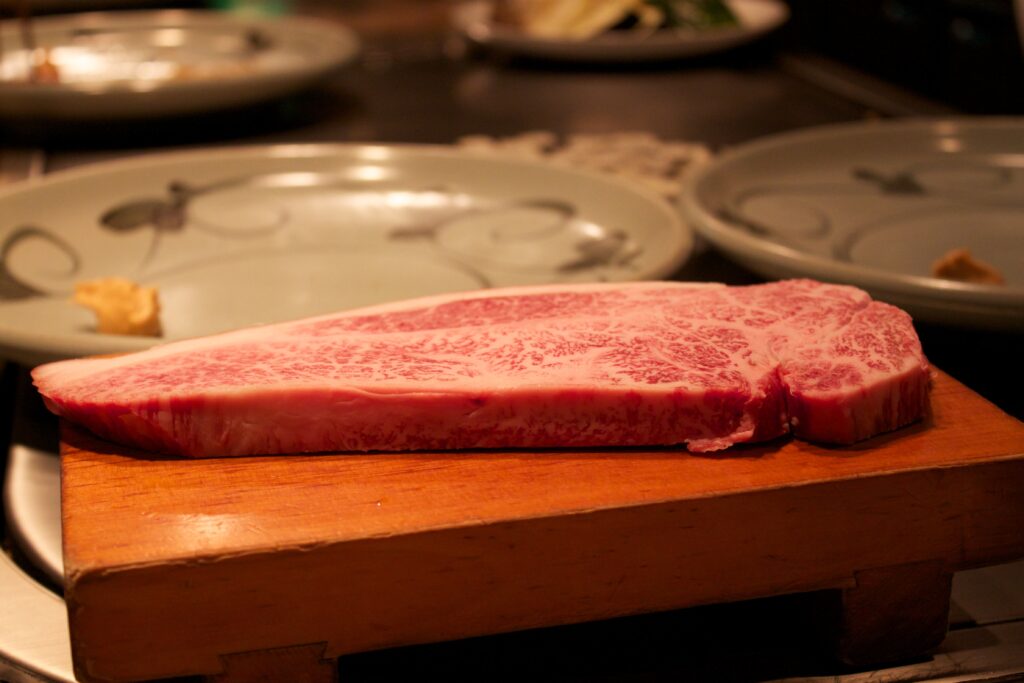
On a February evening in Kuwait City, chefs at the SAKURA Japanese restaurant sliced into cuts of A5 wagyu — the highest grade Japan produces — and served them to restaurant owners, hotel operators, and food importers. Nothing about the scene was unusual except one thing: every slice was halal.
The tasting capped months of negotiation. Japan’s ambassador to Kuwait, Mukai Kenichiro, told the gathering that Japanese and Kuwaiti authorities had finally concluded the talks allowing halal-certified wagyu into the Kuwaiti market. The deal had been blessed months earlier, when Prime Minister Shigeru Ishiba met Kuwait’s Crown Prince Sheikh Sabah Al-Khalid Al-Sabah in New York and both sides agreed to clear the way for Japanese beef.
Kuwait is only the latest stop. Across Japan, wagyu producers who once sold almost everything at home are retooling their businesses for Muslim-majority markets — getting halal-certified slaughterhouses, reformulating products, and learning certification regimes in Jakarta and Kuala Lumpur.
The most striking example comes from Kumamoto, on the southern island of Kyushu. There, a family-run producer called Sugimoto-Honten began shipping its premium Kurohana wagyu abroad with halal certification in 2021. Within three years, its exports had crossed 1 billion yen — about $6.7 million. Japan’s agriculture ministry was impressed enough to name the company a “flagship producer and exporter,” a designation that comes with state backing for further expansion.
Sugimoto-Honten is not alone. Miyazaki prefecture, another wagyu heartland, has been promoting halal-certified beef across the Middle East and Southeast Asia, including a tasting event in Doha. A meat processor in Tokushima is expanding overseas on the same bet: that Muslim consumers will pay a premium for the real thing. Around 200 slaughterhouses across Japan now hold halal certification.
The push is not just about ambition. It is about necessity.
Japan’s domestic market for premium beef is sagging. Earlier this year, Nikkei reported that top-grade A5 wagyu was saturating the Japanese market — inflation-hit shoppers are steering away from expensive food, leaving producers with a glut and forcing them to compete with each other on price abroad. Japan’s population has been shrinking for well over a decade, and the home market is not coming back.
So producers are looking outward, and the arithmetic is hard to argue with. The world’s Muslim population is roughly 2 billion people — about a quarter of humanity — and it is still growing. Japan’s food exports are already climbing: farm, fishery, and food shipments hit a record 897.7 billion yen in the first half of 2026, up nearly 11 percent from a year earlier.
Regulation is accelerating the shift. Indonesia’s halal product assurance law is phasing in mandatory certification for imports, with deadlines now landing — the one for cosmetic raw materials falls this month. For Japanese ingredient suppliers selling into Indonesia, halal certification has stopped being a marketing choice and become a condition of market access.
The halal wave is reaching beyond beef. In Fukui prefecture, a soy sauce maker teamed up with the local prefectural university to develop Fukumurasaki, an alcohol-free soy sauce-like seasoning aimed at Muslim consumers at home and abroad — ordinary soy sauce carries trace alcohol from fermentation, which Islamic dietary law does not allow. Even the infrastructure of daily Muslim life in Japan is growing: the country now has nearly 150 mosques, a figure that would have seemed implausible ten years ago.
Why this matters goes beyond one country’s export strategy. Japan is showing how a food culture with no Islamic tradition can systematically adapt to halal rules — separate production lines, certified slaughter, reformulated recipes — without diluting what makes its products desirable. If the model holds, expect more of it: Japanese producers have learned that authenticity sells, and halal certification is simply the paperwork that lets authenticity cross borders. For Muslim consumers, the payoff is concrete — the world’s most famous beef, finally on the menu.