Informopedia Explains: when climate negotiators gather in Antalya next week for COP31, one phrase will be repeated until it loses all meaning: “the adaptation gap”. Strip away the jargon and it is a simple, brutal arithmetic — the distance between what it costs vulnerable countries to live with a warming world, and what the world actually pays to help them do it. That distance is measured in hundreds of billions of dollars a year, and it is growing.
Adaptation is not mitigation
Mitigation means cutting emissions: solar panels, electric cars, closing coal plants. Adaptation means living with the warming that is already locked in: seawalls and storm barriers, drought-resistant crops, early-warning systems, cooling centres for heatwaves, water storage for longer dry seasons. A country can do everything right on mitigation and still drown, because the carbon already in the atmosphere guarantees decades more warming. That is why adaptation is not a consolation prize for failed climate policy. It is the other half of it.
The numbers that define the gap
The United Nations Environment Programme’s Adaptation Gap Report series is the standard yardstick. Its 2025 edition estimated that developing countries will need between $310 billion and $365 billion a year by 2035 for adaptation, depending on how the need is counted — modelled costs give the lower figure, countries’ own stated needs in their climate plans give the higher one. Against that, international adaptation finance flows from developed countries reached just $35 billion in 2024 — roughly a tenth of what is needed. That ratio, need versus flow, is the gap.
Two more numbers frame it. First, the world is no longer on track to limit warming to 1.5°C: the world is now on course for about 2.8°C of warming under current policies, which means the adaptation bill will keep rising as the climate worsens. Second, at COP30 last year, countries agreed to triple adaptation finance for developing nations by 2035 — a commitment that sounds bold until you notice it is still far below the $310–365 billion need, and that nobody has yet agreed what baseline the tripling is measured from. That baseline fight is one of the live arguments heading into Antalya.
Why the money does not arrive
The gap is not only about generosity. It is about plumbing. Much climate finance arrives as loans, not grants, which means the countries least able to pay are asked to borrow to survive a crisis they did not cause. Projects stall because a flood defence or a water system needs engineering studies, land rights and maintenance budgets — not just a cheque — and the poorest governments often lack the staff to prepare proposals that big funds will approve. Money also pools in a few middle-income countries with strong institutions, while the most vulnerable states, including small island nations and conflict-affected countries, receive the least. And adaptation is hard to photograph: a seawall that works produces no ribbon-cutting moment, only an absence — a flood that did not happen. Maintenance is the quiet part of the bill nobody wants to fund: a seawall nobody maintains is a ruin waiting for a storm, and a funder who pays for construction but not upkeep has bought a photograph, not protection.
What good adaptation actually looks like
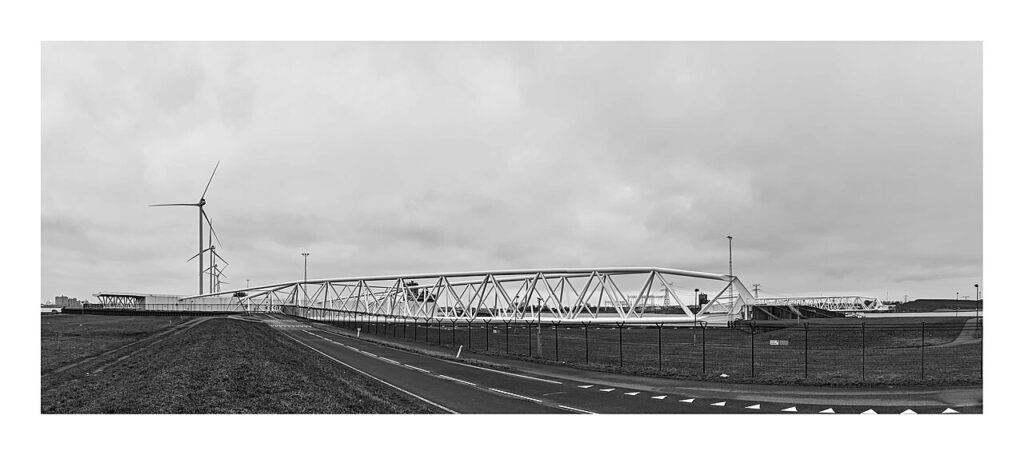
It looks, at the grand end, like the Maeslantkering in the Netherlands: two enormous steel arms that swing shut to seal Rotterdam’s harbour against storm surges, protecting millions of people and one of Europe’s largest ports. At the other end, it looks like mangroves replanted along a coastline, absorbing wave energy for a fraction of a seawall’s cost while nursing fish stocks back to life. It looks like early-warning texts that reach a farming village before a river bursts, like heat-action plans that open cooling centres before a heatwave peaks, like crop varieties bred for shorter rains. The best adaptation is often boring, local and unglamorous — which is precisely why it struggles for funding in a system built for flagship announcements.
Adaptation is not loss and damage
One distinction that confuses even seasoned climate watchers: adaptation is money spent to reduce harm before it happens, while “loss and damage” is money for harm that can no longer be avoided — homes already washed away, farmland already salted, heritage already lost. The two funds sit in different pots and are negotiated in different rooms, which means a country can win an adaptation argument and still go home empty-handed on the losses it has already suffered. Keeping the two separate matters, because blurring them lets donors count the same dollar twice and lets everyone claim progress while the gap quietly widens.
What to watch at COP31
Three questions will show whether Antalya narrows the gap or just redescribes it. First, will negotiators agree on the baseline for the tripling pledge, so progress can actually be measured? Second, will the Global Goal on Adaptation — the framework meant to track resilience through 59 indicators — move from negotiation to implementation? Third, will money start reaching communities directly, rather than stopping at national ministries and international agencies? COP31 opens in Antalya in eight days, billed as a test of delivery, not promises. India says it hit its 2030 clean-energy target five years early — proof that targets can be beaten when the economics align. Adaptation has no such economics yet. Until the gap is funded, the world’s most vulnerable people will keep paying for climate change twice: once in the disaster, and again in the debt taken on to recover from it.