It lasted about as long as a social media post.
On Sunday evening, Donald Trump took to Truth Social to announce that the war between Russia and Ukraine now had an “energy ceasefire.” “Effective immediately,” he wrote, “there is an ENERGY CEASEFIRE in the War between Russia and Ukraine. Both parties have agreed. Do not break it!”
He offered no details. No duration. No verification mechanism. No list of what counted as energy infrastructure. Just the announcement, in capital letters, with a warning not to break it.
Volodymyr Zelensky learned about it the way most people did: on the internet.
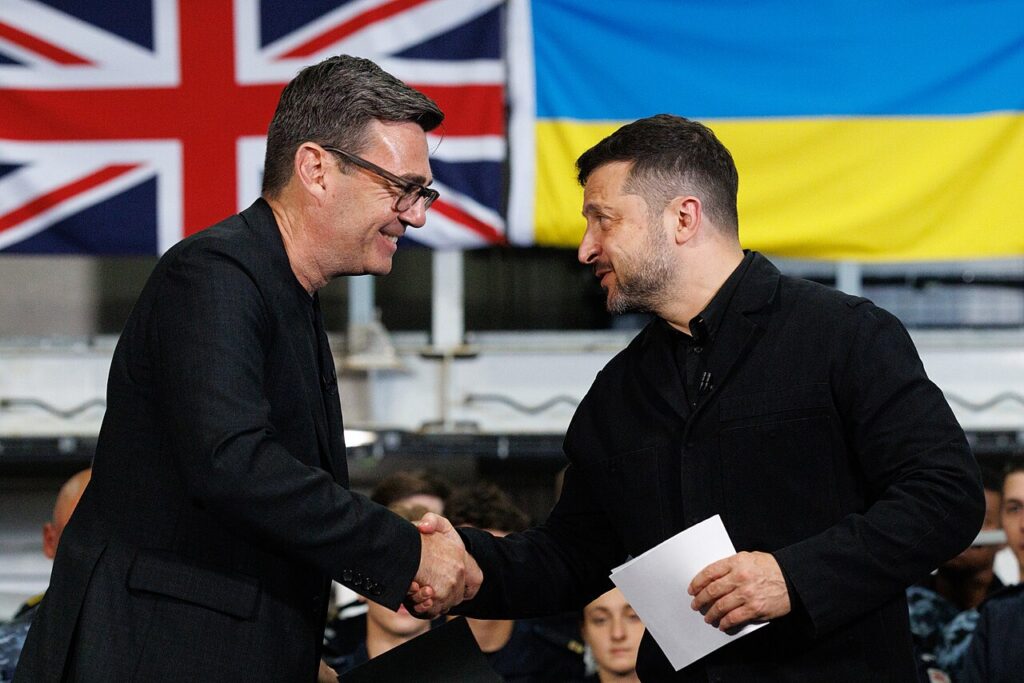
Speaking by video link to the Warsaw Security Forum on Monday, the Ukrainian president said Kyiv had found out about the supposed deal through media reports. He called the strikes that followed horrible — and then delivered the line that will travel: “It was clear that [Russian President Vladimir] Putin does not read Truth Social.”
The jokes wrote themselves, but the substance is grim. Within hours of Trump’s post, Russia struck a combined heat and power plant in Kharkiv, Ukraine’s second-largest city, along with a gas production facility and a civilian gas station, according to Zelensky. Ukraine, for its part, held back overnight: Zelensky said his forces did not hit any Russian refineries while Russia’s Shahed drones kept coming.
The Kremlin has said nothing about any truce. No confirmation, no denial — silence, which in Moscow’s language usually means no.
There is a wrinkle, too. An unnamed White House official told Axios that Trump’s announcement concerned only oil refineries — not the broader energy grid. A wider ceasefire covering the power plants that keep Ukrainian cities warm “could come next,” the official said. That would be news to Zelensky, who pointed out the asymmetry: “In Ukraine, we have just one oil refinery. And it was badly damaged by Russian strikes long, long ago.” For Kyiv, a refinery-only pause means giving up its one piece of leverage while Russia keeps hitting the grid.
Zelensky also left the door open. “We support it,” he said of the truce, “but I have not heard approval of this proposal from the Russian side.” If Moscow agreed, Ukraine would comply. He noted he had proposed similar energy pauses himself earlier this year.
This is not the first time Trump has announced a ceasefire on energy targets that nobody else had heard of. On September 14, he posted a similar claim that both sides had agreed “not to hit” each other’s energy infrastructure. That one evaporated just as quickly.
The backdrop is a week of escalating friction between the two presidents. On Friday, Trump struck a deal with Vladimir Putin to bring Russian diesel into Western markets — a move Zelensky compared to “a birthday present for Putin.” Trump, pressed about fuel prices with midterm elections weeks away, has blamed Ukrainian strikes on Russian refineries for pushing diesel costs up. Zelensky’s counter: blaming Kyiv is easy when everyone knows the real price pressure comes from the Middle East. The row turned personal when Trump told reporters Ukraine needed “a new leader”; Zelensky shot back that if Putin gave Ukraine 60 days of real ceasefire, he would organize elections.
Why this matters: a ceasefire announced on social media, contradicted within hours by the war itself, tells you something about how this peace process actually works — not through negotiated agreements with verification, but through declarations. And declarations don’t stop Shahed drones. Winter is coming to a Ukrainian grid that Russia has spent years degrading; the gap between Trump’s posts and the strikes on Kharkiv is the space where Ukrainians live. If there is ever a real energy truce, it will be the first one Russia signs, not the first one Trump announces.