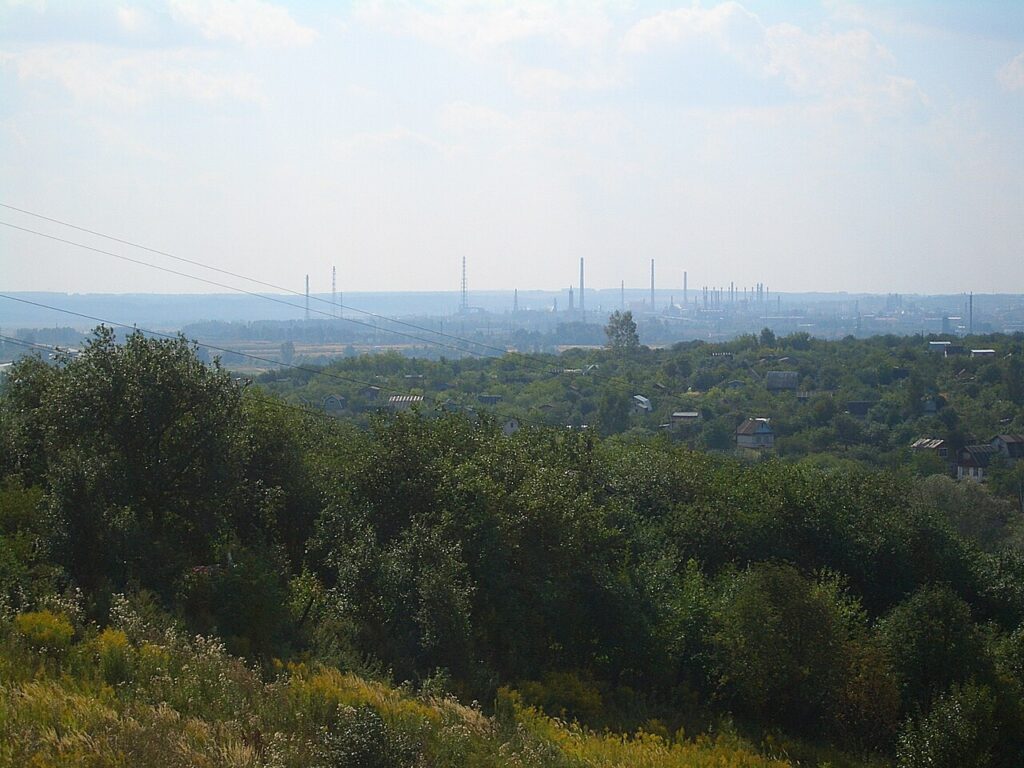
Ukrainian drones struck an industrial site in the Kstovo district of Russia’s Nizhny Novgorod region overnight, setting fire to part of one of the country’s largest oil refineries, according to the regional governor and Ukrainian monitoring channels.
Gleb Nikitin, the governor of the Nizhny Novgorod region, said a “massive drone attack” was under way overnight and into Sunday morning, with more than a hundred drones destroyed over the region. “According to preliminary information, there are no casualties. An industrial enterprise in the Kstovsky district sustained significant damage,” he said in a statement.
The governor did not name the facility. Ukrainian monitoring channels, including ASTRA and Exilenova+, identified it as the Lukoil-Nizhegorodnefteorgsintez refinery at Kstovo, widely known as NORSI, and circulated videos showing flames rising from the site. One Ukrainian defence outlet noted that the adjacent SIBUR-Kstovo petrochemical plant, which stands next to the refinery, could not immediately be ruled out as the burning site — a reminder that the first hours of such strikes rarely produce a clean picture.
What is not in doubt is the scale of the target. NORSI processes around 17 million tonnes of crude a year, making it Russia’s fourth-largest refinery and a major supplier of diesel and aviation fuel. It sits roughly 400 kilometres east of Moscow, far from the front lines, and has been hit before — including strikes earlier this year that forced temporary shutdowns.
Russia’s defence ministry gave a lower overnight count than the governor, saying 85 Ukrainian drones were destroyed across Russia, 20 of them over the Nizhny Novgorod region. The gap between the two figures — the governor’s “more than a hundred” against the ministry’s 85 nationally — is typical of the fog around these raids, and neither side has yet published a damage assessment. Emergency services were reported working at the site on Sunday morning.
The Kstovo raid was not an isolated strike. The same overnight wave hit a petrochemical plant at Sterlitamak in Bashkortostan, where the city’s mayor confirmed an explosion in a workshop, and drew a “massive” attack warning from the governor of the Smolensk region. Substations in the Volgograd and Kursk regions were also reported hit. It was, by several counts, one of the largest Ukrainian drone operations of recent weeks.
The timing matters. The strike comes days after Ukraine resumed attacks on Russian refineries following a brief pause that Washington had pressed for, a turn this site covered when strikes resumed on October 30. That pause had followed an American push for restraint, after Kyiv offered a 30-day halt in exchange for air-defence missiles — an offer reported when Ukraine first paused the campaign. Kstovo shows the pause is firmly over, and that the target list is widening again to the biggest plants in the country’s interior.
For readers outside the region, the significance is practical rather than symbolic. Refineries like NORSI feed both Russia’s domestic fuel market and its export trade, and repeated hits on them have already forced Moscow to restrict fuel exports at times this year. Each successful strike tightens that squeeze a little further — and raises the price of diesel and other refined products well beyond Russia’s borders, including in Europe, which still feels every disruption to global refining capacity.
There is also a military logic that gets less attention. NORSI’s output includes the aviation fuel and diesel that keep Russian forces moving, and Ukraine’s campaign has consistently aimed at that supply chain rather than at symbolic targets. Hitting a plant 400 kilometres from Moscow, for the third time this year, is Kyiv’s way of showing that distance no longer protects Russia’s energy infrastructure.
What happens next depends on the damage assessment, which had not been published by Sunday morning. If the fire damaged processing units rather than storage tanks, the outage could last weeks and show up quickly in Russian fuel prices. If it was contained to one workshop, as the early official language suggests, the plant may be back within days. Either way, the pattern is now established: the refinery war, paused briefly for diplomacy, is running again — and Kstovo is its latest and one of its largest targets.