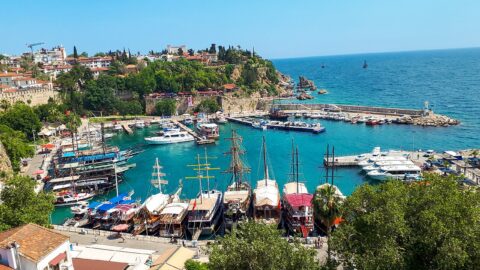
Two weeks of negotiations in Antalya ended on Sunday with nothing to show for them. COP31, the United Nations climate summit, collapsed without an overarching agreement — the first time a climate summit has failed to produce a cover decision since Copenhagen in 2009, and the longest such conference ever held.
After 44 hours of overtime, the presidency put a final text to the floor. The European Union, the United Kingdom, Norway, Panama and a group of small island states refused to endorse it. The draft ran to ten pages and never once mentioned fossil fuels — not coal, not oil, not gas, not even the word “phase-out”.
“I understand that there is no agreement on this text. For that reason, these decisions have not been adopted,” COP31 President Murat Kurum told the closing plenary. Earlier he had been blunter still: “There is nothing to do. We did all that we could.”
How a summit loses its subject in three days
9 November — COP31 opens in Antalya, co-hosted by Turkey and Australia, with a mandate to turn the promises of the Paris Agreement into delivery. Delegates arrive with a scientific briefing that puts human-caused warming at 1.37°C in 2025 — already past the 1.5°C threshold the Paris deal was meant to hold.
16 November — The presidency circulates its first draft of the cover decision. It reaffirms the 2023 Dubai commitment to transition away from fossil fuels “in a just, orderly and equitable manner” and goes further, calling for an “immediate transition away from fossil fuels in energy systems”. The word “fossil” appears six times.
19 November — The next draft appears. The word “fossil” appears nowhere. In its place: a declaration that the global transition to low emissions is “irreversible”, and a proposal to raise electricity to 35% of final energy use by 2035.
20 November — The summit’s scheduled close passes with no deal. Negotiations spill into overtime.
22 November — The final draft reaches the plenary. It refers back to the Dubai outcome but names no fossil fuel. A proposed $120 billion target for adaptation finance for poorer countries has also been dropped, leaving only a call to at least triple adaptation finance by 2035, with no baseline. The EU says it cannot accept a text that omits any reference to fossil fuels, calling the omission “unconscionable”. China and India accept the draft to keep the talks moving. It is not enough. Kurum concedes there is no consensus, and the summit closes with its main decision unadopted.
Who refused, and why
The refusal was not a single-country veto. The EU, the UK, Norway, Panama, Belize, the Marshall Islands, Vanuatu and Tuvalu all declined to endorse the text. Their argument was simple: a climate deal that cannot name the main cause of climate change is not a climate deal.
Russia, meanwhile, said it could not accept any fossil fuel wording at all. Saudi Arabia and other oil producers had pushed successfully for language on carbon capture instead — the draft set a target of capturing at least 500 million tonnes of CO2 a year by 2035.
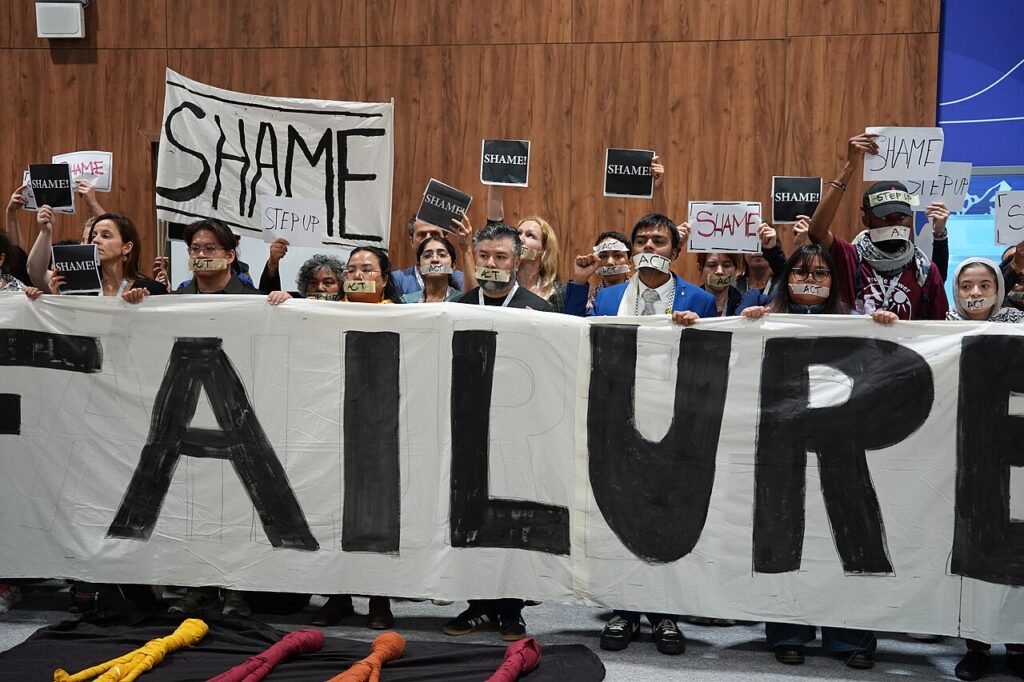
The World Resources Institute called the result “a failure of political leadership, not a failure of the Paris Agreement”, adding that it was “indefensible that countries could not agree on even mentioning fossil fuels”.
What actually survived
The collapse is not the whole story. Delegates did adopt a number of technical decisions, and more than 90 countries backed a separate initiative on electrification. The obligations agreed at previous conferences — including the Dubai commitment to move away from fossil fuels — still stand. Antalya added nothing to them, but it took nothing away either.
That is cold comfort for the countries that came to Antalya asking for money to adapt. With the cover decision rejected, even the weakened finance language in the final draft has no formal standing.
Why this matters
COP summits are often mocked as talk shops, and the mockery is not entirely unfair. But the annual conference is the one place where nearly 200 countries sit down together and decide, in writing, what the world will do about the one problem no country can solve alone. When it ends with no agreement at all, the signal is not just diplomatic. It tells investors, energy companies and governments that the political will to manage the transition is weaker than the science says it needs to be — and weaker than it was in Dubai three years ago.
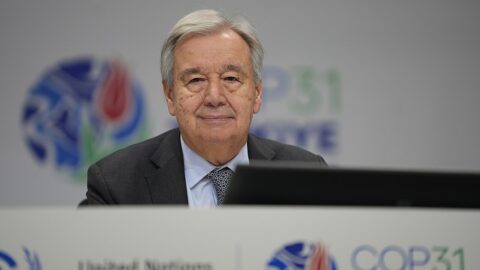
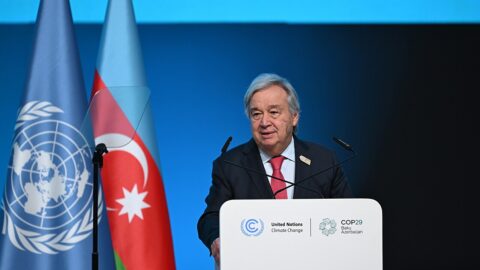
UN Secretary-General António Guterres put it in one sentence: “There may be no consensus in the negotiating room. There is no ambiguity in the science.”
What happens next
The next attempt is COP32, in Addis Ababa from 8 to 19 November 2027. Between now and then, the question hanging over the process is whether the format itself can still deliver. The draft deal that went to the vote on Sunday morning was already the weakest version of the text; the version that finally failed was weaker still, and it failed anyway.
When COP31 opened in Antalya, it was billed as the summit that had to deliver rather than promise. It delivered a record instead: the longest climate summit in history, and the first in 17 years to end with nothing.