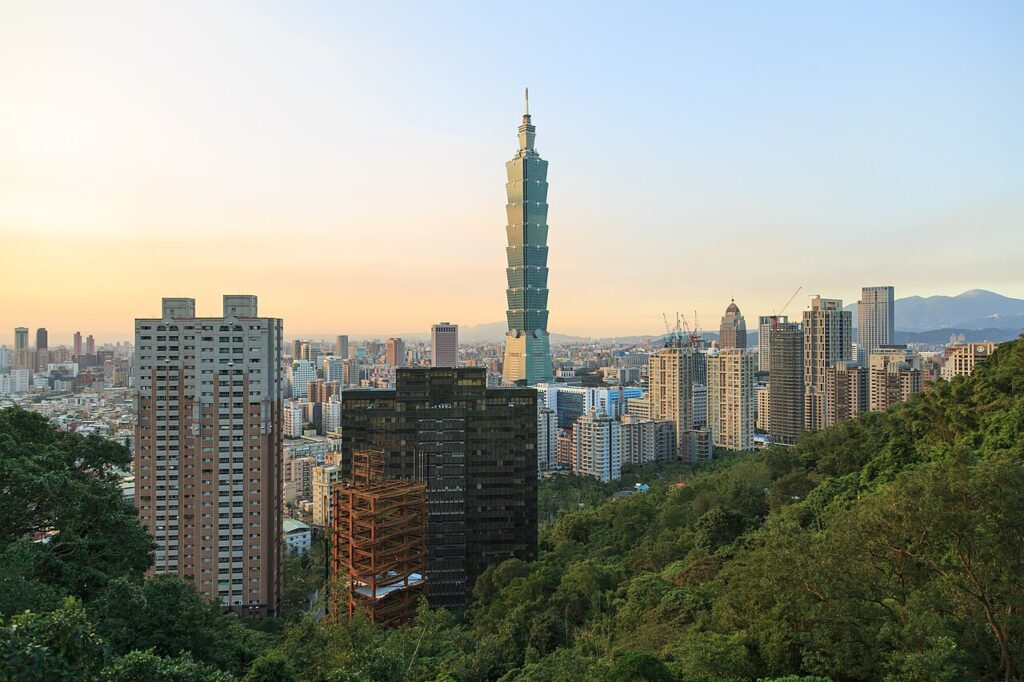
What happened? Taiwan’s stock market has just suffered its worst week in 35 years. The benchmark Taiex index fell 17.5% — 7,641.83 points — in the five trading sessions ending Friday 20 November, closing at 36,033.29. Friday alone took 2,393.60 points off the index, a 6.23% drop and the third-largest single-day point loss in the market’s history. More than 300 listed companies hit their daily limit-down levels in a single session.
How bad is that, really? Measured from its intraday record on 6 October, the Taiex has now given back 28.48% of its value. The last time the market fell this fast in a single week, it was January 1991. And this is the largest weekly point drop the index has ever recorded.
What did the regulator do? On Saturday 21 November, after an emergency meeting chaired by Premier Cho Jung-tai, Taiwan’s Financial Supervisory Commission announced its third round of market stabilisation measures in fifteen days. From Monday 23 November:
- No short sale of a listed or over-the-counter stock, or a Taiwan Depositary Receipt, may be executed below the previous trading day’s closing price — effectively a blanket ban on short selling falling stocks.
- The minimum margin required for short positions rises from 130% to 150%, making bearish bets much more expensive to hold.
- New applications to issue put warrants are suspended.
- Financial institutions are urged to stop lending shares and recall existing loans, and listed companies are encouraged to buy back their own stock.
It is the first broad short-selling ban in Taiwan since 2015. The regulator set no expiry date: the measures will be adjusted, it said, as conditions warrant.
Why is Taiwan being hit hardest? Because Taiwan is where the AI boom lives. The island makes the world’s most advanced semiconductors — the chips that power every data centre, every AI model, every smartphone. When investors started doubting whether the hundreds of billions being poured into AI infrastructure will ever pay off, the companies at the centre of that supply chain were the first to fall. Nvidia reported better-than-expected earnings on 17 November, and it made no difference: the selling continued.
Foreign investors pulled NT$218.7 billion out of Taiwanese stocks last week alone. Taiwan’s state stabilisation fund, which manages a NT$500 billion war chest, has been buying shares since 6 November — and the market kept falling anyway. The two earlier rounds of curbs this month, including cutting the intraday cap on short sales of borrowed shares from 30% of average daily volume to 3%, also failed to stop the slide. South Korea, whose market is similarly tied to the AI supply chain, held emergency talks of its own over the weekend.
What happens on Monday? The opening session is the first test of the ban. If the restrictions hold the line, the regulator will claim the medicine worked. If selling resumes, Taipei will have used up its most aggressive tool — a ban on profiting from falling prices — and will have to find another one. The fund is still buying. The question is whether anyone else is.
Why should anyone outside Taiwan care? Because this is no longer a local story. The AI trade lost $4 trillion in five days last week, and Taiwan is where that abstract number becomes concrete: factories, orders, jobs, and the chips inside everything. When the market that makes the world’s most important hardware falls 17.5% in a week, the doubt is not about one island’s stocks. It is about the whole bet the global economy has placed on artificial intelligence — and whether the returns will ever arrive. Bitcoin’s slide to a two-year low on the same week tells the same story from the other side of the market: risk appetite is draining out of everything at once.