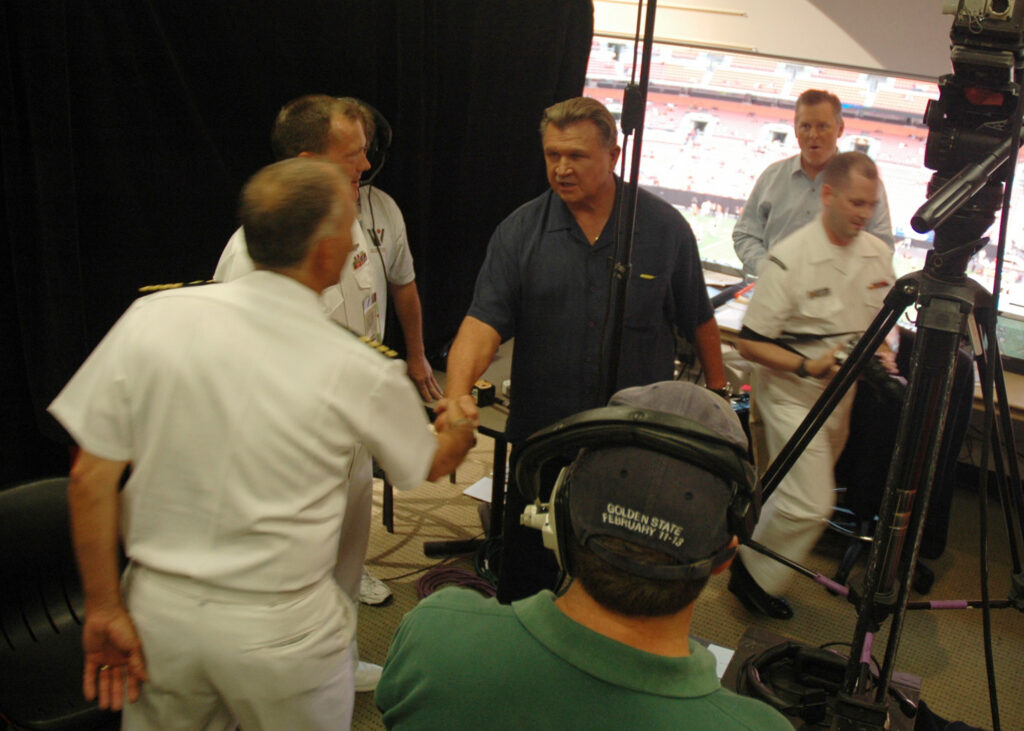
The mustache, the sweater vest, the temper. Football had characters before Mike Ditka and it has had plenty since, but it only ever had one “Da Coach” — and on Friday, October 9, 2026, Chicago lost him.
Ditka died at 86. His family announced the passing in a statement and did not give a cause of death.
“It is with profound sadness that we announce the passing of our beloved husband, father, grandfather, and friend, Mike Ditka,” the family said. The rest of the statement was simple: “Mike will be missed beyond measure and remembered forever.” The words were shared publicly by Jarrett Payton, the son of the late Bears running back Walter Payton, who played for Ditka on the greatest team in franchise history.
That was the 1985 Bears, and it remains the defining image of Ditka’s life in football. A team with a defense so ferocious it had its own nickname — the Monsters of the Midway — swaggered through the season, recorded a rap video called “The Super Bowl Shuffle” just to get the boast out of its system, and then backed every word of it up by demolishing the New England Patriots 46-10 in Super Bowl XX. It is still the only Super Bowl championship the Chicago Bears have ever won.
But Ditka was a legend before he ever held a whistle.
Born in the steel town of Aliquippa, Pennsylvania, and a star at the University of Pittsburgh, Ditka was picked fifth overall in the 1961 NFL Draft and immediately did something no tight end had ever done: he caught 1,000 receiving yards in a single season and was named Rookie of the Year. Until then, tight ends were supposed to block. Ditka blocked like a lineman and ran routes like a wide receiver, and the position has been chasing his shadow ever since. He became the first tight end ever inducted into the Pro Football Hall of Fame, in 1988.
His playing career spanned twelve seasons — six with the Bears, two with the Philadelphia Eagles, four with the Dallas Cowboys. He won the 1963 NFL championship with Chicago and a Super Bowl with Dallas. When he retired, he was second among all tight ends in career receptions.
He came back to Chicago in 1982 as head coach, and the city got the full force of him: eleven seasons, two Coach of the Year awards, seven playoff trips, and a sideline presence that was pure theater. His fiery, red-faced eruptions at officials became a national comedy bit — Saturday Night Live’s “Da Bears” sketch turned his name into a catchphrase and his look into a Halloween costume. He coached three more seasons with the New Orleans Saints in the late 1990s, famous there for trading away an entire draft to get running back Ricky Williams, then stepped away from the sidelines for good.
Off the field he was everywhere: restaurants bearing his name, his own line of cigars, long stints as a television analyst for NBC and ESPN, and — more quietly, but with real force — a campaign for better medical and retirement benefits for former players, a cause that mattered to him because he had seen what the game did to the men who played it.
The Chicago Bears called him “a legendary and treasured Chicago Bear” in a statement Friday. Fans started gathering outside his restaurant in Chicago within hours of the announcement, leaving flowers under the sign.
Why this matters
Ditka belonged to an era when football’s biggest figures were made on the field and in the locker room, not manufactured by a public-relations department. He was blunt in a sport that now fines players for what he did every Sunday — and people loved him for it because it was never an act. His importance goes beyond the 1985 season or the records: he invented the modern tight end as a position, then proved a coach could be a city’s entire personality. There are great coaches who won more games. There is no one who ever meant more to Chicago than Mike Ditka did.



One Comment