The European Union has pulled off something unusual in modern trade politics: it got China to agree to sell less — voluntarily.
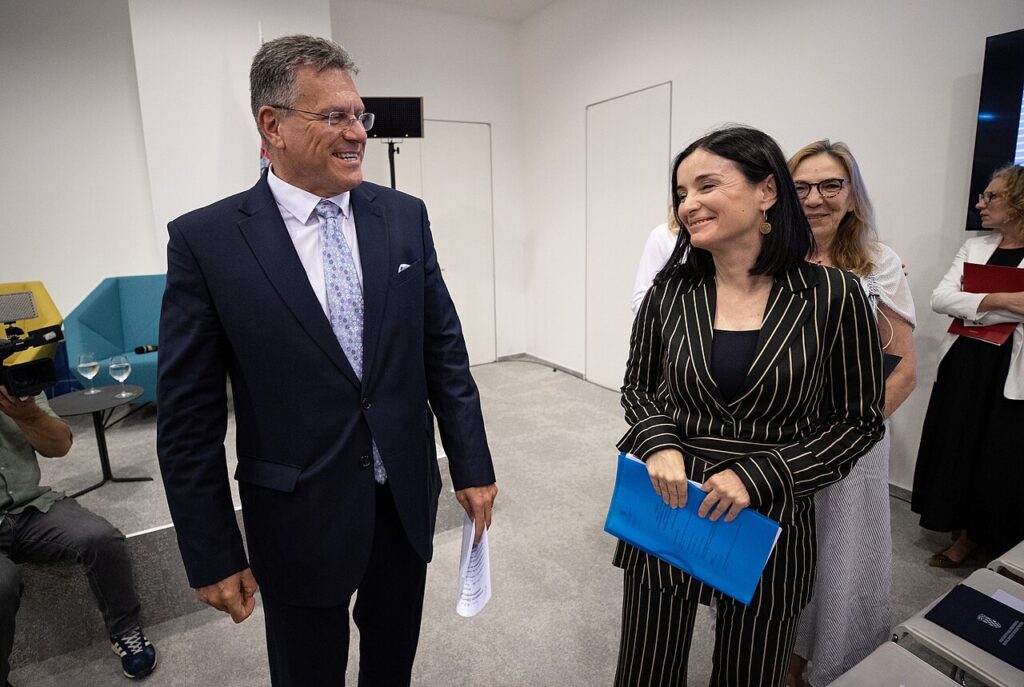
After two days of talks in Beijing with Commerce Minister Wang Wentao, EU Trade Commissioner Maroš Šefčovič announced Friday that the two sides had reached a “shared understanding” under which China will cut its exports of hybrid and plug-in hybrid vehicles to the EU by more than half over four years. By Šefčovič’s estimate, that means several million fewer Chinese cars on European roads than the market was on track for.
“This is the first time that China has accepted to moderate its exports without going through the phase of prior trade tensions,” Šefčovič told reporters. He called it “a crucial first step, but only a first step.”
How we got here
The backstory is the EU’s anti-subsidy tariffs on Chinese battery-electric vehicles, imposed in late 2024. Rather than retreating, Chinese manufacturers did what any rational exporter would do: they pivoted to hybrids, which fell outside the tariff wall. Chinese brands came to hold roughly a quarter of European hybrid sales and about a third of the plug-in hybrid market.
Brussels watched a familiar pattern repeat — the surge threatening, in Šefčovič’s words, “entire industrial sectors and thousands of European jobs” — and reached for a different tool: a negotiated export restraint instead of another tariff volley. The EU had been weighing unilateral safeguard measures such as tariff-rate quotas. The understanding avoids them, at least for now.
What Europe got — and gave
The package is broader than cars. Beijing agreed to keep fast-tracking export licence approvals for rare earths and permanent magnets through a “green channel” mechanism — critical for European manufacturers, since China imposed export licence requirements on rare earths in 2025 and has kept the controls in place. In return, the EU promised to work with member states on licensing issues for dual-use items exported to China, and both sides agreed to give advance warning of export controls and improve the transparency of how companies get listed and delisted.
China also agreed to lower import tariffs on seven product categories covering nearly €4 billion of European exports — car parts, olive oil, footwear among them — saving European exporters an estimated €225 million in duties.
Why this is bigger than hybrids
Step back and the deal reads as a test of whether the world’s two largest trading blocs can still do old-fashioned managed trade in an era of tariff wars. The numbers driving Brussels are stark: the EU’s trade deficit with China runs at over €1 billion a day, totaled nearly €360 billion in 2025, and is up another 12% this year.
Šefčovič was careful to stress what the understanding is not. The enforcement mechanism was not disclosed; it goes to EU leaders at a summit next week before anything is final. Outstanding files remain — price commitments as an alternative to tariffs in the EV anti-subsidy case, subsidies for European production, and the EU’s incoming inverter ban, which Brussels insists is not aimed at any particular country even as officials acknowledge it is meant to wind down heavy dependence on China. The two sides meet again in March 2027.
But the signal matters. Beijing accepted a WTO-compliant cap on its own exports — something it had previously resisted as inconsistent with trade rules — and described the talks as “equal, professional and constructive,” even as Wang voiced concern about the EU’s newly assertive trade stance.
Trade wars are usually described as lose-lose. This one may have just produced a win-draw: Europe protects its car industry without firing a tariff, and China buys itself four years of breathing room. Whether the understanding holds will be decided not in communiqués, but in export statistics.
Related: Why the world is fighting over the lightest metal on Earth