Manila — Apple has landed the biggest education deal in the history of the Mac: 172,654 MacBook Neo laptops for public school teachers and staff across the Philippines, with the first deliveries starting tomorrow, November 9.
Apple chief executive John Ternus announced the agreement during the company’s quarterly earnings call on November 2, calling it “our biggest education deal ever for Mac.” The Philippines’ Department of Education (DepEd) confirmed the exact figures the next day: 169,008 laptops for public school teachers and 3,646 for administrative officers, spread across more than 16,400 public schools.
The order is worth about ₱7.4 billion (roughly $117 million) at the negotiated price of around ₱43,000 — about $677 — per laptop. That is roughly ₱6,900 below the MacBook Neo’s Philippine retail price of ₱49,900 for the base 256GB model. DepEd said putting the contracts out to open bidding instead of negotiating directly saved taxpayers at least ₱1.4 billion.
Distribution runs from November 2026 through March 2027, with launch events for school clusters in Luzon, the Visayas and Mindanao. Each package includes delivery, productivity software, teacher training and a five-year warranty — five times the standard one-year retail cover. DepEd and Apple are also developing a training programme, GuroXL, run with the National Educators Academy of the Philippines.
DepEd has separately contracted 62,717 Windows laptops, bringing its total teacher-laptop awards to 231,725 machines under its computerisation programme.
What is the MacBook Neo?
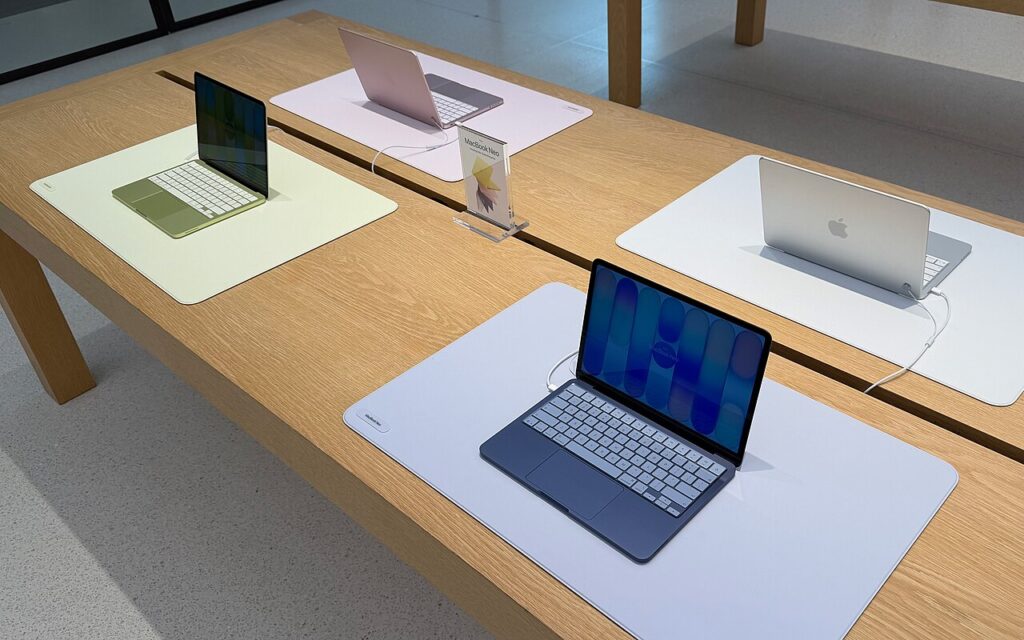
Apple introduced the MacBook Neo in March 2026 as its most affordable laptop — and the first Mac powered by an iPhone chip, the A18 Pro. The fanless aluminium machine has a 13-inch Liquid Retina display and up to 16 hours of video-streaming battery life, according to Apple’s specifications. It is built for everyday computing rather than demanding professional workloads — in other words, exactly the kind of work teachers do.
The Neo is Apple’s entry-level machine, sitting below the MacBook Pro — a line-up Apple has been refreshing aggressively this autumn, including the new hardware shown at its October ‘Welcome Home’ event. It also arrives as AI features become the selling point of every new machine: Google’s Gemini 4 Argon, launched the same season, shows how fast the classroom AI race is moving.
The deal is a statement of intent from Ternus, who took over as chief executive from Tim Cook on September 1. On the same earnings call, Apple reported a September-quarter revenue record of $114.5 billion, up 12 per cent on a year earlier — its best fiscal year ever. The Philippines order shows where Apple sees its next growth: institutions in emerging markets, where a cheaper Mac can win deals the MacBook Pro never could.
Why it matters beyond the Philippines
For the Philippines, the scale is the story. More than 170,000 teachers getting the same modern machine, with training and a five-year warranty, is one of the largest single technology rollouts in the country’s public education system. For Apple, it is proof that the iPhone-chip Mac strategy can open markets that were previously out of reach — and a template it will now pitch to education ministries elsewhere.
There is a caveat. Apple has warned that Mac supplies will remain constrained during the October-to-December quarter, which overlaps with the start of the rollout. DepEd has given suppliers until March 2027 to deliver every unit. Whether the laptops reach classrooms on schedule will be the first real test of the deal — and of Ternus’s promise that the cheapest Mac can carry Apple’s ambitions in the world’s classrooms.