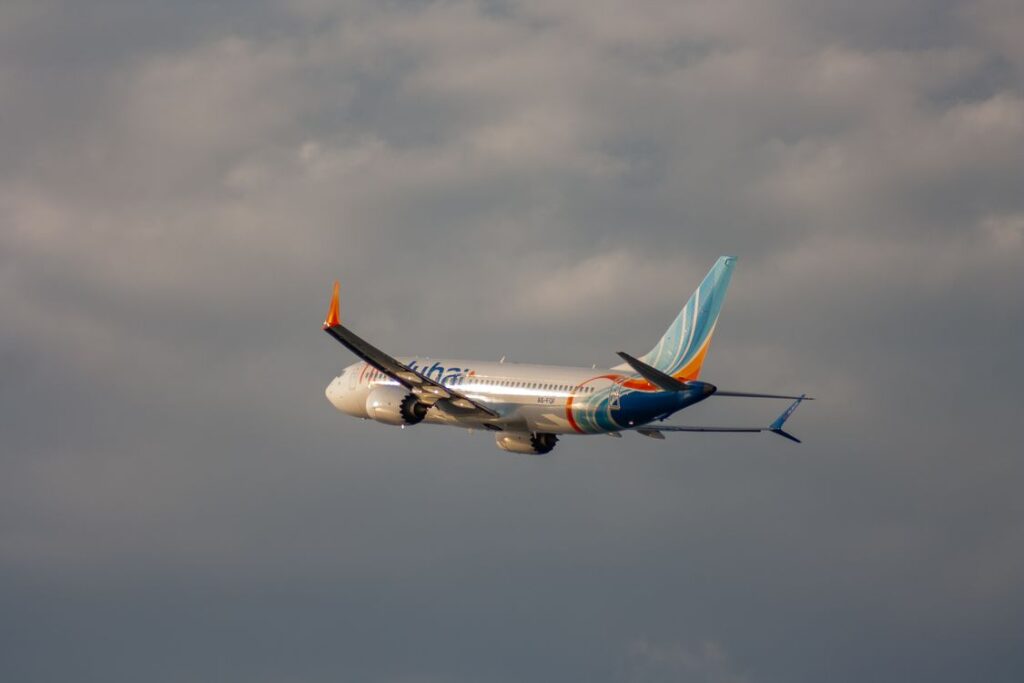
At 34,000 feet over Saudi Arabia, the first officer asked if he could pray. Captain Smit Machchhar, flying a flydubai Boeing 737 from Dubai to Tel Aviv, thought nothing of it. Then the younger man reached for the cockpit’s emergency crash axe — and the most routine of Middle Eastern commuter routes turned into a fight for nearly two hundred lives.
That is how the United Arab Emirates’ attorney general now describes what happened aboard flight FZ1073 on September 30. In a statement carried by the state news agency WAM on Friday, Attorney General Hamad Saif Al Shamsi said the 29-year-old Omani co-pilot had planned a suicide attack: seize the aircraft and crash it into the passenger terminal at Ben Gurion Airport in Tel Aviv, causing what prosecutors called “the greatest possible loss of life.”
The attack itself was brutal and fast. Prosecutors say the co-pilot struck Machchhar on the head with the axe, fought off the captain’s attempts to call for help, and disconnected the autopilot. The jet plunged nearly 16,000 feet in about 30 seconds. It did not fall out of the sky only because two other pilots — the captain and first officer of the return flight, travelling as passengers — forced their way into the cockpit with a crew member and several passengers, overpowered the attacker, and took the controls. They diverted to Tabuk, Saudi Arabia, and landed safely. The suspect was transferred to the UAE.
A confession, a 9/11 inspiration, and two rehearsal flights
The attorney general’s account, built on an investigation opened October 1, reads like a plot assembled over years. The suspect, identified in media reports as Hamam al-Hammami but not named in the UAE statement, gave a detailed confession in the presence of his lawyer, admitting he acted alone — a claim prosecutors say they are still verifying.
Al Shamsi said the man began drifting toward extremism in 2017 while studying in Melbourne, Australia, absorbing what prosecutors described as takfiri ideology through extremist literature and online content glorifying suicide attacks. He told investigators that the September 11, 2001, attacks in the United States inspired him — and that the idea of a similar operation is what led him to pursue aviation in the first place. He worked at Oman Air from 2020 to 2024, spent several months at Royal Air Maroc in early 2025, and joined flydubai in January 2026. Prosecutors found he had used two earlier flights to Tel Aviv to familiarise himself with the route and the airport, then struck on his third.
What will alarm aviation regulators most is the next line of the statement: investigators reviewed flydubai’s recruitment and found the co-pilot had met every professional and security requirement, held a valid licence, and produced a clean certificate of good conduct. “None of the procedures revealed any indications of his extremist views or his intention to carry out a terrorist plot,” Al Shamsi said.
A hero’s welcome, from Jerusalem to Abu Dhabi
Captain Machchhar, 38, is recovering in an Abu Dhabi hospital after surgery for his injuries; India’s foreign ministry says he is responding well to treatment. On Thursday, October 8, Israel’s President Isaac Herzog honoured the six Israeli passengers who helped subdue the attacker — Tali Manes, Zvika Manes, Yaniv Hayoun, Shota Musayev, Asaf Rajuan and Or Pardilov — with Israel’s Presidential Award for Civilian Heroism at a ceremony in Jerusalem, and announced that Machchhar will receive the same award once he recovers.
“Captain Machchhar’s sheer courage and bravery and sound professionalism helped avert this catastrophe. Once he regains strength, it will be my honour and privilege to award him, on behalf of the people of Israel, the State of Israel’s Presidential Award for Civilian Heroism,” Herzog said.
Why does this matter beyond one flight? Because the aviation industry spent a decade hardening cockpit doors after 9/11 and tightening screening after the Germanwings tragedy — and FZ1073 suggests the remaining vulnerability is the one no checklist can reach: a vetted insider whose radicalisation is invisible to every background check. The Dubai–Tel Aviv route is also the flagship of the Abraham Accords’ aviation story, kept running through the Gaza war while other carriers cancelled. An attack aimed at Ben Gurion’s terminal was aimed at that symbol as much as at the passengers. The miracle here is not that the plot was sophisticated — it is that it was stopped by an injured captain who refused to let go, and by strangers in the cabin who decided to fight.



One Comment