In brief
- The UN human rights office said on October 10 it was “concerned” by reports of “mass detentions” of demonstrators, protest leaders, lawyers and journalists before and during large-scale protests in Delhi.
- India rejected the statement within hours, calling it “misplaced” and an “unwarranted interference in the internal affairs of India”.
- Police detained thousands — media estimates ranged from nearly 3,000 to over 4,000 — trying to reach Jantar Mantar to demand the resignation of Chief Election Commissioner Gyanesh Kumar over alleged voter-list irregularities. Most were released; the protest organisers and YouTuber Dhruv Rathee remain in custody.
- The Supreme Court will open on a Sunday, October 11, to hear a habeas corpus petition against the detentions and a contempt petition over the shutdown of Delhi’s metro, buses and trains.
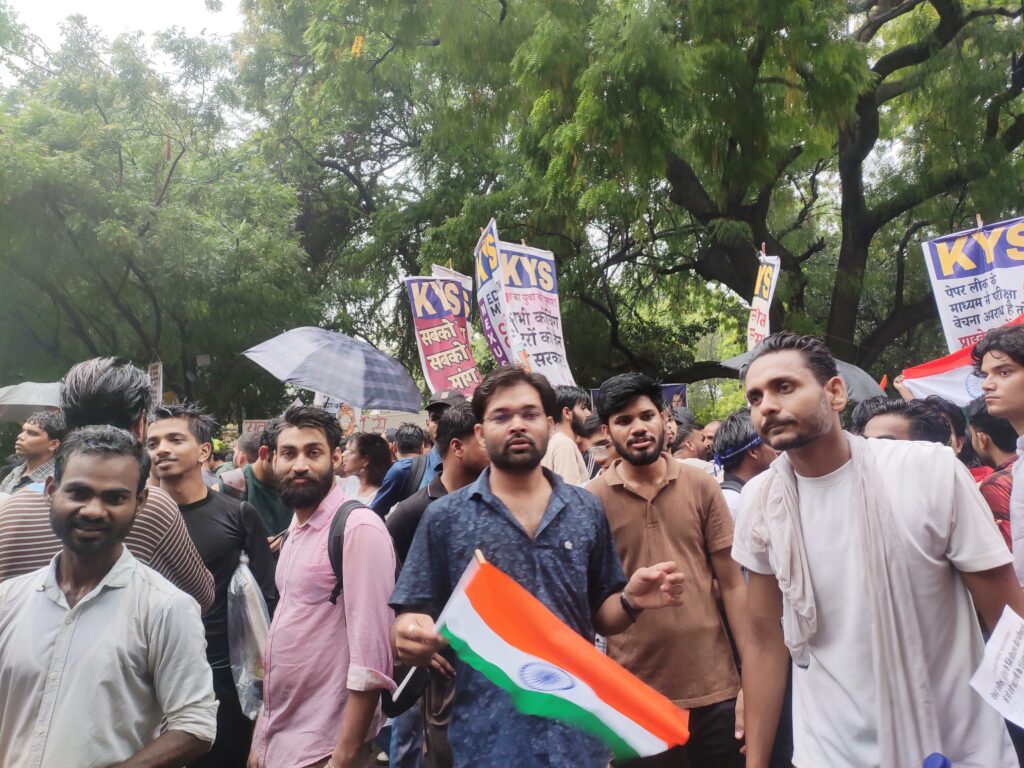
By Saturday evening, the fight over India’s voter rolls had gone international. Delhi Police had spent the day fanning out across the capital to stop a sit-in called by the Gen-Z-led Cockroach Janta Party (CJP) at Jantar Mantar, detaining thousands as they tried to converge on the protest site. The demonstrators want two things: a rollback of the Election Commission’s Special Intensive Revision (SIR) of electoral rolls, and the resignation of Chief Election Commissioner Gyanesh Kumar, whom they accuse of presiding over the manipulation of voter lists. The Commission and the ruling BJP deny the allegations.
What the UN said
The Office of the United Nations High Commissioner for Human Rights issued its statement on Saturday, and its language was unusually direct. Spokesman Thameen Al-Kheetan said the office was “concerned by reports of mass detentions in India of demonstrators, protest leaders, members of civil society organisations, lawyers and journalists, before and during today’s large-scale demonstrations in Delhi”.
He called on Indian authorities to ensure “the right to peaceful assembly is fully respected and fulfilled”, said restrictions on peaceful protests “must meet strict tests of necessity and proportionality”, and demanded that “all those arbitrarily detained must be immediately and unconditionally released”. He also urged law enforcement to exercise “utmost restraint” and asked New Delhi to “engage in meaningful dialogue to address the broadly held concerns expressed”.
The statement landed against a backdrop of an extraordinary security clampdown: barricades across central Delhi, internet curbs, cancelled trains, and metro stations shuttered across the capital to keep CJP supporters from pouring in. CJP founder Abhijeet Dipke and two other leaders, Saurav Das and Ashutosh Ranka, were detained shortly after their flight from Mumbai landed in Delhi — before they had even reached a protest site.
India’s sharp response
New Delhi’s reply came fast. Through its permanent mission in Geneva, India said the OHCHR’s concerns were “misplaced and constitute an unwarranted interference in the internal affairs of India”, adding that the office “would also do well to devote comparable attention to large-scale protests elsewhere, consistent with its mandate of impartiality and non-selectivity”.
The mission argued that the right to peaceful assembly is guaranteed by India’s constitution and policed by independent institutions, and that citizens exercise it “subject to reasonable restrictions in the interest of public order”, with courts available for any grievance. Whether the courts agree is about to be tested.
The court’s rare Sunday session
The Supreme Court is ordinarily closed on Sundays. It is not closed this one. A special bench of Justices Joymalya Bagchi and V. Mohana will sit on October 11 to hear two petitions that cut directly at the heart of Saturday’s crackdown.
The first, a habeas corpus plea filed by Rajya Sabha MP and senior advocate Menaka Guruswamy, challenges the preventive detention of opposition leaders — including four former chief ministers — alongside students, journalists, lawyers and other protesters. Guruswamy argues that preventive detention cannot be used to suppress the fundamental right to peaceful protest, and has questioned police picking up leaders from their residences and protesters off the streets.
The second, a contempt petition by advocate Shailendra Mani Tripathi, names Union Home Secretary Govind Mohan, Delhi Police Commissioner Anurag Kumar and Delhi Metro Rail Corporation chairperson D Thara, accusing them of wilfully defying the court’s own October 9 order. That order had said public transport should be regulated rather than shut down outright, and told authorities to publish traffic advisories and spare commuters hardship. Tripathi alleges 57 metro stations stayed closed and trains serving New Delhi and Hazrat Nizamuddin were cancelled; the metro operator had earlier revised its closure list down to 45 stations.
Why this matters
This is no longer just a street protest — it is a three-front contest over what dissent is allowed to look like in the world’s largest democracy. The UN statement gives the demonstrators international standing they did not have a week ago, and puts the government in the uncomfortable position of defending its policing on a global stage. But the Sunday hearing is the hinge that actually decides things. If the bench finds the detentions arbitrary or the transit shutdown disproportionate, Delhi Police will have to rethink how they handle the next rounds of protests — and there will be more, because the organisers have shown no sign of backing down. If the court sides with the authorities, the movement loses its strongest legal shield just as the pressure is peaking. Watch Sunday morning: what the bench orders on the detentions, and whether the CJP’s top brass are produced before it.