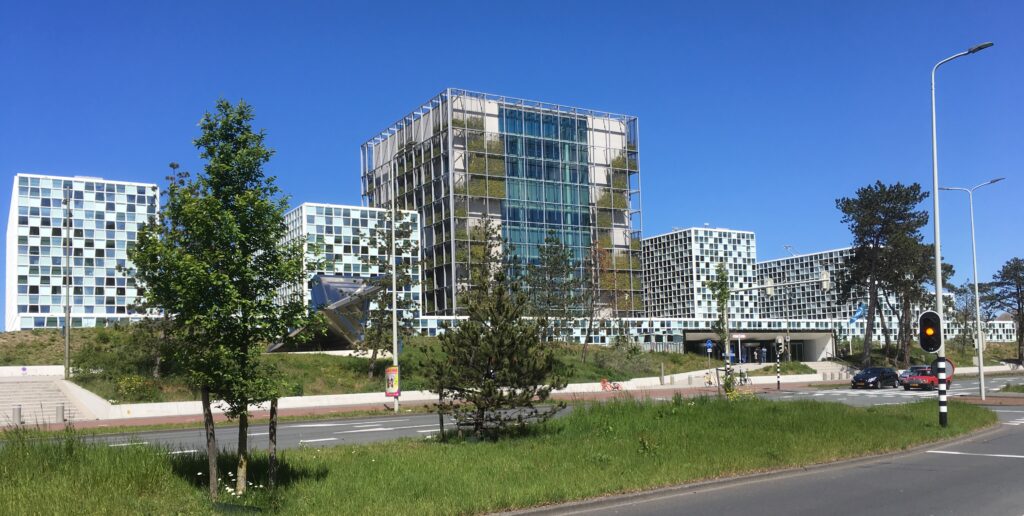
The United States did something on Friday that no country has ever done before: it placed the International Criminal Court itself under sanctions. The move came just hours after Navi Pillay, a former judge on the court’s Appeals Chamber, won the 2026 Nobel Peace Prize — a coincidence Washington said was planned long before the prize, and which the rest of the world’s diplomats found hard to miss.
The designation, announced by Secretary of State Marco Rubio, bars US-based transactions with the court and blocks any assets it holds in American jurisdictions. US companies and individuals doing business with the tribunal — banks, insurers, software providers — now have 180 days to wind those arrangements down. The Treasury issued four general licenses keeping the court’s phones, pensions, software and detention operations running — a carve-out that shows how broadly the sanctions would otherwise bite.
“President Trump will never allow the International Criminal Court to prosecute Americans,” Rubio said in a statement. He called the tribunal a “rogue court” and warned that Washington would cut off its resources and cripple its ability to operate.
Then he turned to America’s friends. “Either the ICC will end its threats, or we will end the ICC,” Rubio said, telling allies — many of them court members “that rely on American servicemembers for their defense” — to rein in the court themselves, or face an American campaign to dismantle it “brick by brick.”
An institution under siege
This was not the first American strike on the court. During Trump’s first term, Washington sanctioned individual prosecutors and judges; Biden rescinded those measures, and they were revived when Trump returned to office in January 2025. More than a dozen ICC officials are already under US penalties. Friday’s move is the first time the institution as a whole has been targeted — a leap from punishing people to starving the organization itself.
The court’s staff saw it coming and had spent months preparing: moving office computers onto open-source software, rearranging banking contracts, and asking the European Union to ready a “blocking mechanism” shielding European firms from the sanctions’ reach.
Why the hostility runs so deep comes down to two investigations. The first was the ICC’s examination of alleged crimes by US personnel in Afghanistan — a probe the court has since deprioritized. The second is the one that enraged Washington beyond repair: the arrest warrants issued against Israeli Prime Minister Benjamin Netanyahu and other Israeli officials over the conduct of the Gaza war. Rubio said only that the court had pursued “politically motivated” prosecutions of Americans and Israelis.
The timing raised eyebrows across Europe. Pillay, the South African jurist whose work on international criminal justice earned her the Peace Prize on Friday, sat on the ICC’s Appeals Chamber from 2003 to 2008. The Nobel committee said it had sought to “issue a reminder” at a moment when “judges and institutions of international law are under political attack.” Hours later, Washington sanctioned the institution she once served.
“History will judge this moment”
The court responded with language it has rarely had to use. The sanctions were “an unprecedented step,” the ICC said in a statement, “an attempt to obstruct the course of justice and to prevent the Court from doing what it was created to do.” It called the move “an assault on the rule of law and on the very foundations of the international legal order.”
Deputy Prosecutor Nazhat Shameem Khan said the court’s work would continue across all its cases. President Tomoko Akane urged the court’s 125 member states — which include every EU country and every NATO member except the United States and Turkey — to defend the institution. Several of those states, including Britain, said they “strongly disagree” with the sanctions.
Rubio said Washington had delayed the move hoping member states would address American concerns, and that the sanctions could be adjusted if the court “presents a solution.” Few in The Hague believe that window is anything more than formal.
Why this matters
Sanctioning people is ordinary statecraft; sanctioning a permanent international court is something else entirely. The ICC was created by treaty in 2002 precisely so that no single government could kill an investigation it disliked. Washington’s wager is that financial pressure can succeed where the treaty shield did not — that banks, cloud providers and insurers will do the dismantling work that diplomats cannot. If that succeeds, the precedent lands far beyond The Hague: any government with leverage over the global financial system will know exactly how to bend an international institution to its will. And if it fails — if the court’s member states hold together, if Europe’s blocking statutes work — then Friday’s sanctions will be remembered as the day America spent its leverage and came away with less of it.



One Comment