The key facts: At least 21 aircraft across Europe were targeted by hoax bomb threats on Thursday, 5 November — the second such wave in a single week. Fighter jets escorted airliners to the ground in France, Italy and Bulgaria. No explosives were found on any aircraft searched, and no one was hurt. The British government called the threats a “malicious hoax”.
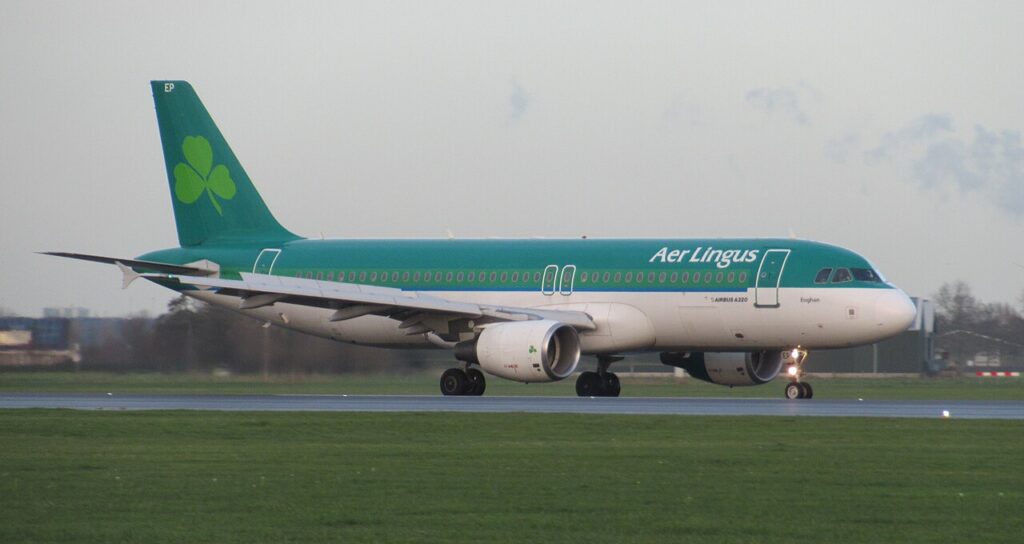
The passengers on Aer Lingus flight EI402 found out what had happened only after they had landed. The Airbus A320 had left Dublin for Rome on Thursday morning with 151 passengers and six crew on board. Somewhere over Europe, the flight was diverted — not to another airport, but to a military air base in Normandy. Two French Air Force fighters flew alongside it to Évreux-Fauville, a base the holidaymakers on board had never heard of, and would not have expected to visit.
Only on the ground did the passengers learn that their plane had been the subject of a bomb threat. They were later taken by coach to Paris, where another aircraft would carry them on to Rome. Theirs was one of at least 21 aircraft targeted that day, according to the BBC, while a Reuters count put the figure at 25 or more by Thursday afternoon. Flights bound for Austria, Belgium, Bulgaria, the Czech Republic, France, Italy, Poland and Romania were affected, along with several airports. Three aircraft were diverted in total. Every one landed safely.
It was the second wave in a week. Two days earlier, on Tuesday, at least seven European flights — including two from the UK — were searched after similar threats, and a cruise ship was targeted too. London’s Heathrow and Birmingham airports received warnings that were assessed as not credible. On Thursday the scale was far larger, and the response with it: Italian fighter jets escorted a Finnair flight from Helsinki to Rome, and Bulgarian jets escorted three Ryanair flights bound for Sofia. Iberia said two of its flights, Milan–Madrid and Rome–Madrid, were affected.
Who signed the threats?
The one signature investigators have comes from an email sent to Rome’s airport authority, signed “Fighters of the Male State” and threatening to “turn the skies red” with explosions. The message railed against what it called a “feminist regime”. The BBC reported that the name likely refers to a Russian group known as the “Male Legion”. But nobody has claimed responsibility for the campaign as a whole, and no government has attributed the threats to any person, group or state. The European Union’s transport commissioner said it was too early to say whether the incidents are linked at all, and experts caution that three days is too small a sample to tell coordination from copycats.
France has opened a judicial investigation into the Évreux diversion. The UK transport secretary, Heidi Alexander, called the incidents “malicious hoax threats” and said established processes exist for handling them. A UK government spokesperson later said threats reported in the early hours of the day had been resolved, without giving further details.
Why a hoax still costs so much
Nothing exploded. Nobody was injured. And yet the disruption was real: planes diverted, military jets scrambled, passengers held on board for hours, terminals searched, schedules torn up across eight countries. That is the point of a hoax at this scale. Aviation cannot treat a bomb threat as a bluff, however empty it turns out to be. Every warning has to be taken as potentially real, which means every warning costs the same as a real one — in fuel, in fighter hours, in police time, in missed connections — until it is proved false.
The question now is whether the threats stop, multiply, or turn out to be cover for something more dangerous. Two waves in one week, with no explosives found and no one claiming responsibility, is a pattern that investigators cannot ignore and cannot yet explain. Until they do, European aviation will keep flying with one eye on the inbox.
Europe has seen its airspace become a target before — drones have already struck ships in Bulgaria’s Black Sea waters this autumn, and hackers turned French supermarket freezers up to 50°C in a separate attack on civilian infrastructure. The bomb-threat wave fits a wider pattern of low-cost disruption aimed at everyday European life — and it is working, one diverted flight at a time.