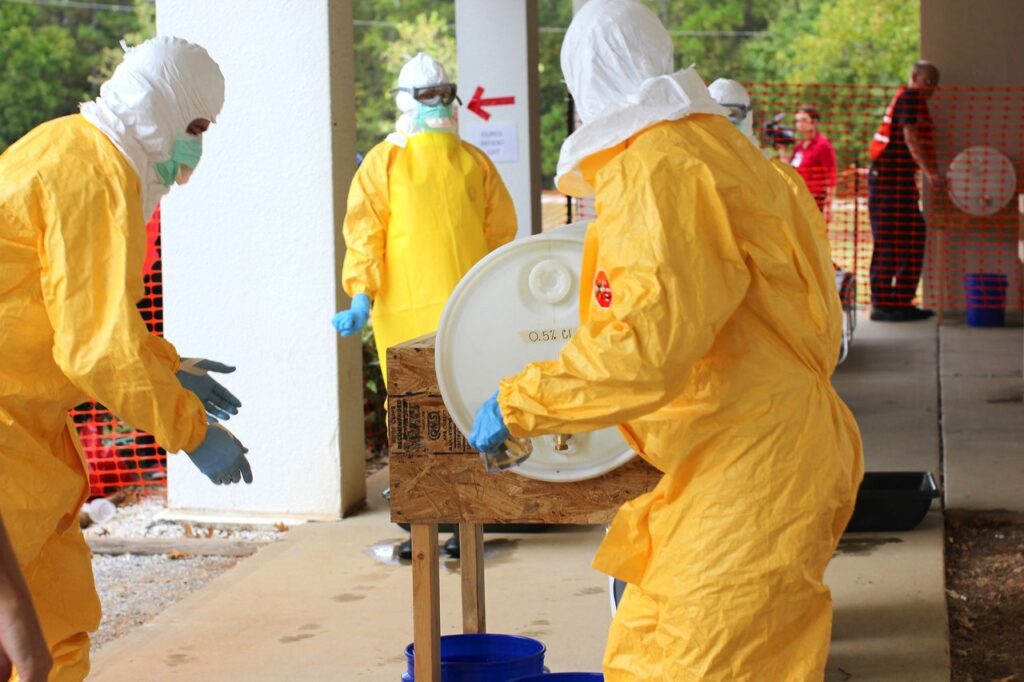
Kenya’s Ebola outbreak has more than doubled in a day. The health ministry confirmed on Saturday that four more people have tested positive for the Bundibugyo strain of the virus — taking the country’s total to seven — and three of the new patients are health workers who treated the first victim.
The three workers — two men and a woman, aged 29, 35 and 32 — managed the index patient on October 3 and 4, shortly after he arrived in Nairobi from the Democratic Republic of Congo. They had been in quarantine since October 9. The fourth new case is a male relative of the first patient, who had been in quarantine since October 6.
All four were already in quarantine when they developed fevers. They were isolated immediately, and laboratory tests at both the National Virology Reference Laboratory and the Kenya Medical Research Institute (KEMRI) confirmed Bundibugyo virus disease.
These are the first known infections passed on inside Kenya. Every case so far traces back to Kenya’s first-ever Ebola case: a 40-year-old Kenyan businessman who had been living in the DRC, fell ill about a month ago, travelled overland to Kampala in Uganda and then flew to Nairobi on October 3. He died on October 5, two days after landing.
Kenya’s second Ebola case, confirmed on Wednesday, and a third case, a 65-year-old woman caught while already in quarantine, were both confirmed to be stable and responding well to supportive care before Saturday’s announcement.
Containment, so far, is holding
The ministry’s statement, shared on its official X account, was blunt about where things stand: “The Ministry of Health has confirmed four new Ebola cases, bringing the total to seven, including one death. All four were in quarantine when they developed symptoms and were quickly isolated. There is no evidence of community transmission, and contact tracing is ongoing. Call 719 for guidance.”
Director General for Health Dr Patrick Amoth has credited the quarantine net for catching each new case early, saying it protected families and the wider public from exposure and limited the risk of further transmission. The numbers back that up: of 130 listed contacts, 128 have been traced and placed in quarantine — 98.5 per cent coverage, comfortably above the 85 per cent global benchmark for breaking chains of transmission. Efforts are continuing to find the remaining two.
The ministry says the risk to the general public remains low and has not imposed restrictions on travel, trade or public gatherings.
A strain with no vaccine
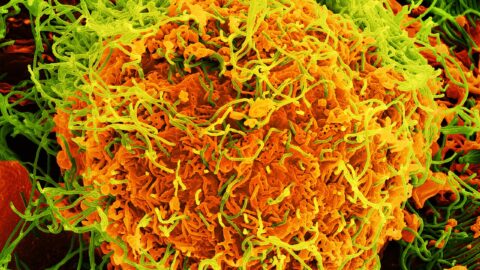
Kenya’s cases are linked to the Ebola epidemic in the DRC — the second-largest on record, with more than 9,000 cases and over 4,000 deaths. The virus involved, Bundibugyo, has no approved vaccine and no approved treatment: the World Health Organization says several candidate vaccines are under development but none are licensed, and the outbreak was classified a Public Health Emergency of International Concern in May 2026. Health officials have warned that more cases could still surface among quarantined contacts before their 21-day monitoring period ends.
Why this matters
For Kenya, the worry is Nairobi itself — one of Africa’s busiest aviation hubs, where an uncontrolled outbreak would carry regional and global risk. But the pattern so far is what epidemiologists want to see: every case linked to the first patient, every new detection pulled out of the quarantine net before it could spread. The health-worker infections are the sobering reminder of what happens when that net slips — infected caregivers were among the darkest signals of the 2014 West Africa epidemic. Whether the net holds through the end of the monitoring period will decide whether Kenya’s outbreak stays a contained footnote or becomes a far bigger story.

2 Comments