What happened?
National Security Adviser Ajit Doval spoke to his Iranian counterpart, Mohsen Rezaei — the secretary of Iran’s Supreme National Security Council — on Monday evening, October 12. The call was announced by Tehran; the Iranian embassy in New Delhi said the two men “exchanged views on the latest regional and international developments and issues of mutual interest to the two countries.” India has issued no official readout of its own.
Why did they talk now?
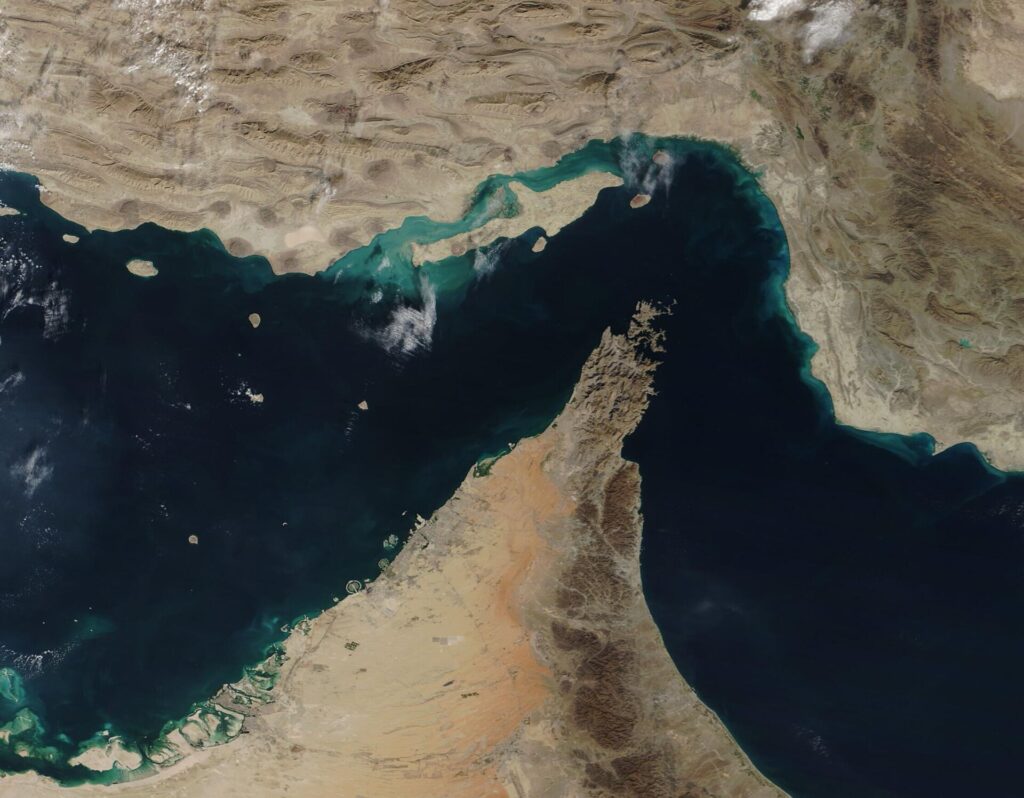
The timing points to the Strait of Hormuz. A day earlier, on Sunday, two merchant ships with Indian crew members were attacked in the strait, where Iran has enforced a blockade for several months. The strait has already seen a supertanker set ablaze in recent weeks, and New Delhi is watching every incident involving Indian seafarers closely.
Exactly what happened to the two ships?
The Nicaragua-flagged MT Petro Dolphin was struck by a drone. Eleven Indian seafarers were on board; two are still missing and the rest were rescued, according to the Ministry of External Affairs.
The Marshall Islands-flagged tanker MT Valthera was hit by an unidentified projectile and caught fire. All eleven Indian sailors on board were reported safe.
Both attacks fit a pattern India has been warning about for weeks. Earlier, an oil tanker was hit by a projectile in the strait and 11 of the 12 injured crew were Indian, and a drone attack at Sharjah anchorage put another 22 Indian crew in danger.
What did the two sides actually say about the call?
Very little, on the record. The Iranian readout gave no specifics and did not mention the ship attacks at all. New Delhi has not commented on the conversation. Reporting citing officials suggests the attacks on the merchant vessels — and the wider wave of strikes on Saudi airports — figured in the discussion, but neither government has confirmed what was raised.
What is on the record is India’s public position. On Sunday, the Ministry of External Affairs condemned the targeting of the two ships, saying: “Attacks on commercial vessels, seafarers and civilian infrastructure must cease. Freedom of navigation and the safe, unimpeded flow of maritime commerce through international waterways, in accordance with international law, must be upheld.” The ministry also reiterated that India wants de-escalation and a resolution of the conflict through dialogue and diplomacy.
What did India say at the UN on the same day?
On Monday, India used a different stage to make a related point. At the 81st session of the UN General Assembly’s Sixth Committee — which deals with legal matters — counsellor R. Mythili said terrorist acts that meet the requisite threshold should be treated within the framework of crimes against humanity, as part of a convention due to be adopted in 2028.
The emphasis was unmistakably on sovereignty: states have the primary responsibility to prevent, investigate and prosecute such crimes through their own legal systems, national jurisdictions must have primacy, and any convention must respect “state sovereignty and the principle of non-interference in internal affairs.” It was a legal argument with an obvious contemporary target — the attacks on civilians, airports and shipping lanes across West Asia.
Why does this call matter, and what happens next?
India is walking a tightrope in the Gulf, and this call shows it. More than twenty Indian seafarers have now been caught in attacks in and around the strait in a matter of weeks. New Delhi needs Tehran’s cooperation — on the safety of its sailors, on the blockade strangling a waterway a fifth of the world’s oil passes through — while also standing with the Gulf states absorbing Houthi strikes and with Washington as it weighs joining the fight.
Speaking to Iran’s national security chief directly, rather than routing everything through foreign-ministry statements, keeps a line open to the one capital that can order attacks on shipping to stop. The readout’s vagueness is the point: both sides get to signal engagement without committing to anything in public. The real test is whether the next week brings fewer burning ships. The phone line between New Delhi and Tehran is still open. Whether it can keep Indian sailors safe is the question the coming weeks will answer.