On Monday, a crowded market in one of Africa’s most contested patches of land was hit by drone strikes. By Tuesday, the United Nations was condemning the attack — and the question of how many people died at Amiet Market had turned into a bitter dispute of its own, with figures ranging from 28 to more than 220.
The strike landed in Abyei, a region claimed by both Sudan and South Sudan and patrolled by UN peacekeepers. The UN’s condemnation, delivered Tuesday, covered not just Abyei but what it called a “deeply concerning pattern” of “relentless drone strikes across the country” that are “taking a devastating toll on communities already struggling with the consequences of more than three years of conflict.”
A week of strikes: the timeline
Sunday: A drone strike hit Al Dibab market in West Kordofan, killing “dozens,” according to the UN. The Sudan War Observatory separately reported that a strike on a funeral gathering in Al-Dabab killed around 145 people — a staggering toll not independently confirmed.
Monday: Drones struck Amiet Market and nearby Todach in Abyei, killing “at least 28 civilians, with many injured and many unaccounted for,” in the words of UN spokesman Stéphane Dujarric. The same day, a drone hit a residential area of Khartoum, killing three children aged two to six and their father, and another struck a residential house in Nyala.
Tuesday: The UN formally condemned the strikes. South Sudan’s foreign ministry summoned Sudan’s ambassador in protest. The violence continued regardless: a drone hit the main power station in Tendalti, in White Nile state.
What we know
- The UN has confirmed at least 28 civilians killed at Amiet Market and Todach on Monday, with many injured and many more unaccounted for.
- Aid workers describe worse: Reuters, citing local information minister Yohana Akol Ngor, reported fires complicated body recovery, and MSF was treating more than 20 wounded, including burn patients, at Ameth Bek Hospital. Around 8,000 people have fled the area.
- South Sudan’s government has protested directly to Khartoum, summoning the Sudanese ambassador.
- UN peacekeepers from UNISFA — the UN Interim Security Force for Abyei, deployed since 2011 — are present in the region but did not prevent the strike.
What is disputed
- The death toll. Local Abyei authorities, speaking via Dawn, put the dead at 53 with 27 wounded and said 22 munitions were fired. Minister Ngor later raised the figure to 153, up from an earlier 73. The outlet abaytimes quoted an official saying “more than 220” were killed. The UN’s figure is the most conservative and the only one from an international body, but it may yet be revised upward.
- Who carried out the strike. An unnamed senior Sudanese military officer told the Associated Press the army struck fuel tankers supplying the Rapid Support Forces (RSF) — the paramilitary group Sudan’s army has fought since the civil war began in April 2023. Three diplomatic sources, an aid worker and a conflict expert said it hit a fuel depot inside the market previously used by the RSF. The army says it does not attack civilians.
- Whether the RSF was even there. Local officials deny any RSF presence in Abyei at all — which, if true, leaves the military justification for the strike in serious doubt.
Abyei, the RSF, and why this market matters
Sudan’s civil war pits the Sudanese Armed Forces (SAF), the country’s regular military, against the Rapid Support Forces (RSF), a powerful paramilitary group, in a conflict that began in April 2023 and has killed tens of thousands. Abyei is an oil-rich region claimed by both Sudan and South Sudan — the latter became an independent country in 2011 — and parts of it are controlled by a faction of the SPLM-N, an armed movement. The UN has kept peacekeepers there since 2011.
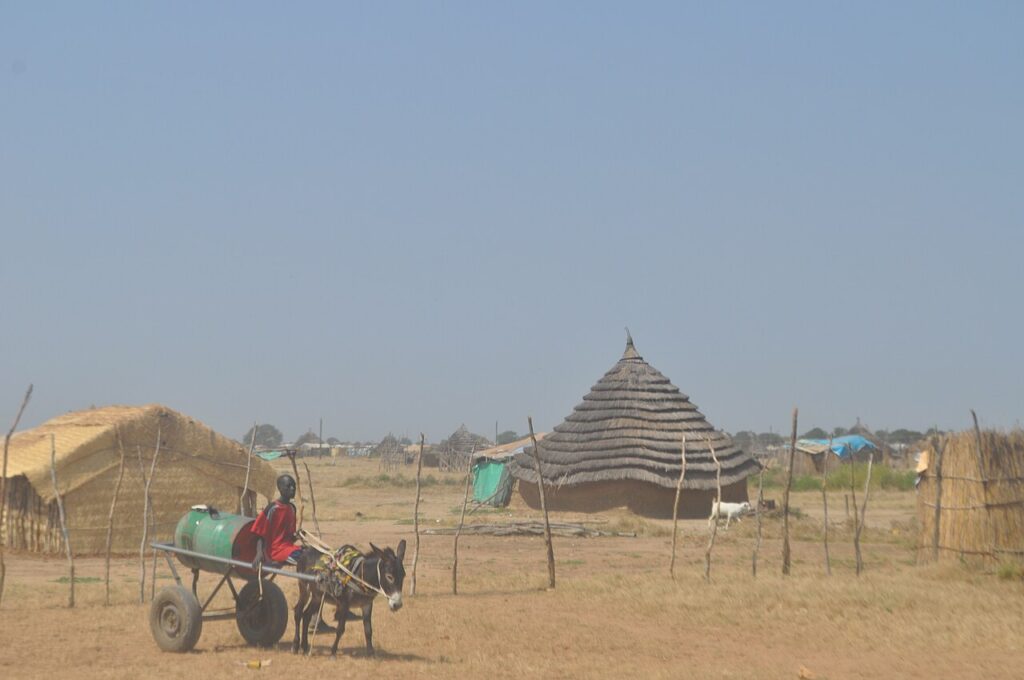
Amiet market is one of the region’s main trading hubs, used by Ngok Dinka traders, South Sudanese returnees and Sudanese refugees — civilians from both sides of a disputed border doing business. For a fuller account of the territory itself, see our Explains piece on what Abyei is, and why both Sudans claim it.
Why a market in a disputed border zone matters for the region
Strikes inside Sudan’s war are grimly routine now; a strike in Abyei is not. The region sits under an international mandate, and an attack there drags South Sudan — which has spent years trying to stay out of its northern neighbour’s war — closer to the fire. Juba summoning Khartoum’s ambassador signals that a line was crossed. It also tests a UN peacekeeping presence of fifteen years: a force that could neither prevent the strike nor, so far, establish what happened. And because Abyei’s oil and trade routes matter to both economies, each disputed toll becomes ammunition in a propaganda war alongside the real one. Until an independent accounting exists, the numbers will keep climbing — and so, most likely, will the tension.