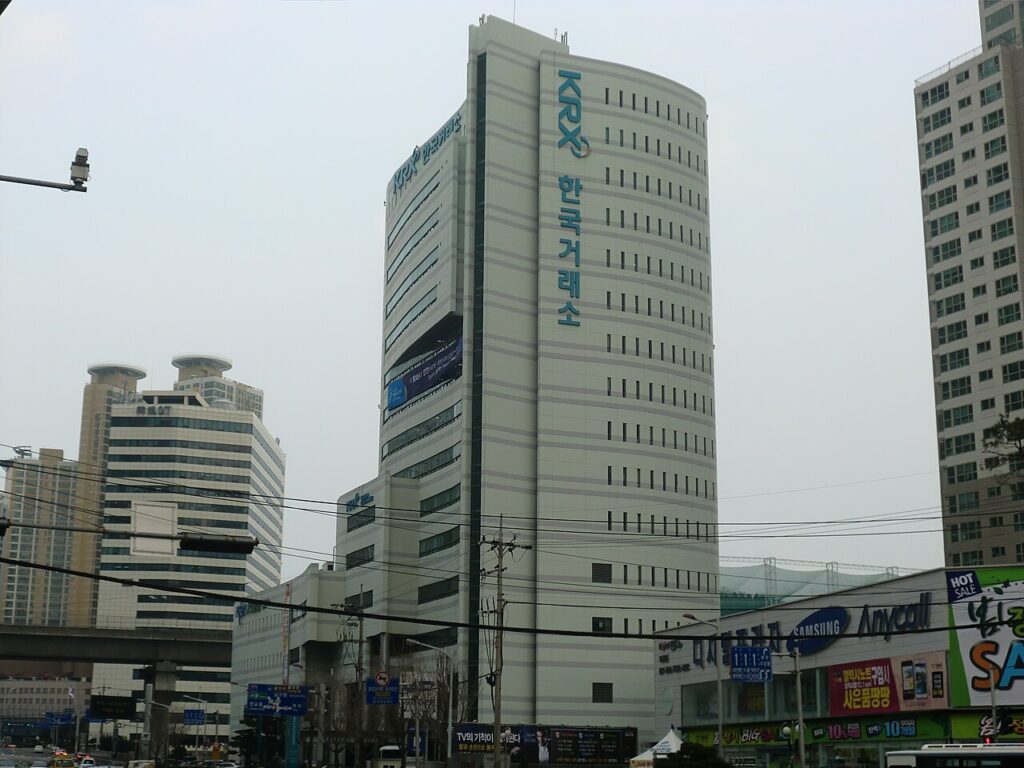
South Korea’s stock market did something on Thursday it had not done in two and a half months: it stopped. At 12:38 p.m. in Seoul, with the benchmark KOSPI down 8% on the day, the Korea Exchange pulled the circuit breaker and froze all trading for 20 minutes. It was the tenth time this year the KOSPI has needed the panic button — and the first simultaneous halt on both Korean boards since July 29.
Wednesday, October 14: the inflation number that ruined the week
September’s U.S. consumer price index came in at 3.7% year on year, above the 3.6% economists expected, with prices up 0.6% in a single month and core inflation running at 2.6% versus a 2.5% forecast. The number revived bets on further U.S. rate hikes — the kryptonite of growth stocks — and Wall Street sold off: the Nasdaq fell 1.88%, the S&P 500 1.11%, and the Philadelphia Semiconductor Index dropped 4.3% overnight. At the same time, shares of AI cloud company CoreWeave plunged on questions about its debt load, deepening doubts about how the artificial-intelligence build-out is being financed.
Thursday, 9:00–9:12 a.m.: the sidecar fires
The KOSPI opened at 5,673.01, down 5.59% from Wednesday’s close of 6,008.81. Seven minutes later, KOSPI 200 futures had fallen far enough — more than 5%, and holding for a full minute — to trip a sell-sidecar, the lighter mechanism that freezes program sell orders for five minutes. At 9:12, the KOSDAQ’s own sidecar fired. But the selling did not stop. The market kept sliding toward the deeper tripwire: a full 8% decline.
Thursday, 12:23 and 12:38 p.m.: the halt
At 12:23:13 p.m., the KOSDAQ fell 8.01% to 757.88 and stayed there for a minute. The exchange suspended all trading for 20 minutes — order entry frozen, cancellations only — followed by a 10-minute single-price auction on reopen. Fifteen minutes later, at 12:38:12 p.m., the KOSPI crossed its own line: down 8.00% at 5,528.05. Trading stopped across the entire market. Level 1 is the mildest of Korea’s three circuit-breaker stages — the 15% and 20% levels would bring longer halts — but it still silences one of the world’s busiest stock markets completely.
Thursday’s close: counting the damage
When the session ended, the KOSPI had closed at 5,554.22, down 454.59 points or 7.57% — its lowest close since April 7 and its seventh straight losing session, the longest losing run since September 2024. At its worst it had been down 9.29%. The KOSDAQ closed at 760.82, down 7.65%. Samsung Electronics fell about 9.5% and SK Hynix lost 11.1% — enough to drag SK Hynix’s market value below the 1,000-trillion-won line, to roughly 929 trillion won. Foreign investors did the selling, with net sales of roughly 4.8 trillion won, while individuals and institutions bought heavily in response. The rout spread across the region, with Japan’s Nikkei and Taiwan’s Taiex both falling sharply the same day.
“The market is reacting sensitively to whether capital raising will be sustainable and whether massive infrastructure investment will lead to real income, rather than revenue growth itself in AI services,” said Seo Sang-young, an analyst at Mirae Asset Securities.
Friday, October 16: the rebound
One day later, the panic eased. U.S. stocks advanced overnight as Treasury yields fell, and bargain-hunting lifted the KOSPI 2.05% to 5,668.05 — its first gain in eight sessions — with the KOSDAQ up 4.46% to 794.78. Foreigners, who had dumped Korean shares all week, turned net buyers again. The relief may prove short-lived: Wall Street’s tech rout deepened again on Friday, wiping more than $1 trillion off tech stocks as oil pushed past $110.
Why this matters
South Korea’s market is the purest public bet on the artificial-intelligence cycle anywhere: two memory-chip makers dominate the index, and foreign investors — who sold roughly 4.8 trillion won on Thursday — amplify every turn. Foreign money moves fast in Asia, as the MSCI standoff over Indonesia showed this month, and on Thursday it moved out of Seoul. The deeper question behind the halt is the one now hanging over the entire AI boom: who pays for it, and what if the returns arrive slower than the debt bills? The buyback programs that used to put a floor under Samsung and SK Hynix are ending, and nothing obvious has replaced them.
The question for Monday: was Friday’s 2% bounce the start of a recovery, or just a pause between selloffs? Late-October earnings from Samsung and SK Hynix, the next U.S. inflation prints, and whether foreign buyers stick around will decide. Seoul’s panic button has now done its job ten times this year. The market’s real test is everything that happens between the halts.