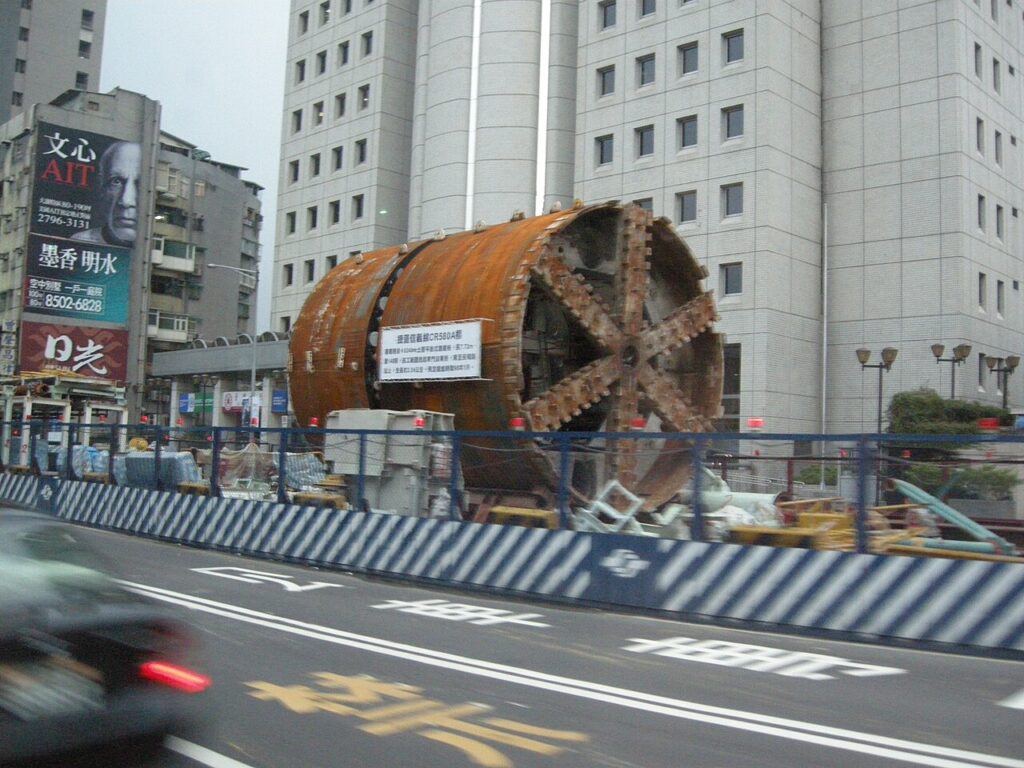
Beijing made it official on Monday: starting November 18, the drones the world buys from China — and the giant tunnel-boring machines India needs to build its metros — will be much harder to get out of the country.
China’s Ministry of Commerce issued two separate announcements, both citing national security. The first, Announcement No. 49, jointly released with the customs administration and the Central Military Commission’s Equipment Development Department, rewrites the export rules for drones and their parts. The second puts export licenses on tunnel-boring machines, certain walking excavators and high-altitude concrete-spraying machines — specifically for countries Beijing describes as “sensitive countries and regions that have disputes with China.”
What the drone rules actually change
The new drone regime is precise about what it catches. Exporters will now need permits for autopilots built specifically for unmanned aircraft, for drones and unmanned airships able to fly beyond the operator’s visual range with an endurance of three hours or more, and for machines with a range of at least 300 kilometers.
The threshold itself moved: China raised the endurance cutoff from one hour to three. Drones in the middle band — 30 minutes to three hours of flight, able to hold stable flight in gusts of 46.3 kilometers per hour — drop to a lighter registration-based procedure instead of full licensing. The net also covers communications equipment, motors, propeller blades, software, and the technologies Beijing cares about most: autonomous navigation, swarm control, anti-jamming satellite navigation, and aerosol-spraying systems with tanks over 80 litres.
It is not a blanket shutdown. The ministry said simplified procedures will apply to exhibition shipments, and companies with solid internal compliance systems can get general licenses. Beijing’s framing is “optimize and adjust” — tightening the military-relevant end while greasing the wheels for ordinary civilian drones.
The tunnel machines — and the India problem
The second announcement is where the geopolitics gets pointed. Tunnel-boring machines, walking excavators and wet shotcrete machines bound for countries “in disputes” with China will need licenses; everyone else gets a registration-based route. The official announcement does not name India, but it hardly needs to.
India is heavily dependent on imported tunnel-boring machines for metro rail networks, railway corridors and tunneling projects in border areas — and it buys them from China. The friction is not new: difficulties with Chinese customs clearance started in 2024, and in October that year Commerce Minister Piyush Goyal publicly complained to visiting German Vice Chancellor Robert Habeck that China was blocking exports of tunnel machines made by a German company on Chinese soil. Now the informal squeeze has a formal license regime behind it.
Why Beijing says it’s doing this
A commerce ministry spokesperson said the measures aim to “safeguard national security and interests, and fulfill international obligations such as non-proliferation,” and to oppose “the illegal use of drones for non-peaceful purposes.” The drone items, the spokesperson said, have “a clear dual-use nature that can be applied for both military and civilian purposes.” Applications that meet the requirements, the ministry promised, will be approved.
The move follows Beijing’s October 16 draft plan to restrict exports of more than 40 cutting-edge technologies — including certain AI models, solar manufacturing equipment and biotech platforms — which we covered in detail here. Monday’s announcements are the first binding rules to land after that draft, and they show Beijing moving from consultation to enforcement.
Why this matters
This is not really about drones as toys. China manufactures the overwhelming share of the world’s commercial drones, and cheap unmanned aircraft have rewritten modern warfare — from the battlefields of Ukraine to the Red Sea. When Beijing decides which engines, autopilots and anti-jamming navigation kits leave the country, it is reaching into every conflict and every supply chain that runs on Chinese hardware.
And the machinery controls are a different kind of weapon: economic geography. A tunnel-boring machine is not fungible — you cannot swap a 6-meter shield machine overnight, and India’s metro and border-tunnel timelines now depend on a licensing office in Beijing. Four weeks stand between Monday’s announcement and the November 18 start date. Expect a scramble — of permit applications, of alternative suppliers, and of governments recalculating what “sensitive destination” means for them.