Several hundred activists broke into the construction site of a planned Microsoft data centre in Amsterdam on Friday, climbing a crane, setting off flares and spray-painting the concrete foundations — the opening act of a coordinated two-day protest wave across 15 European countries. Dutch police detained between 150 and 200 people on suspicion of trespassing.
How the day unfolded
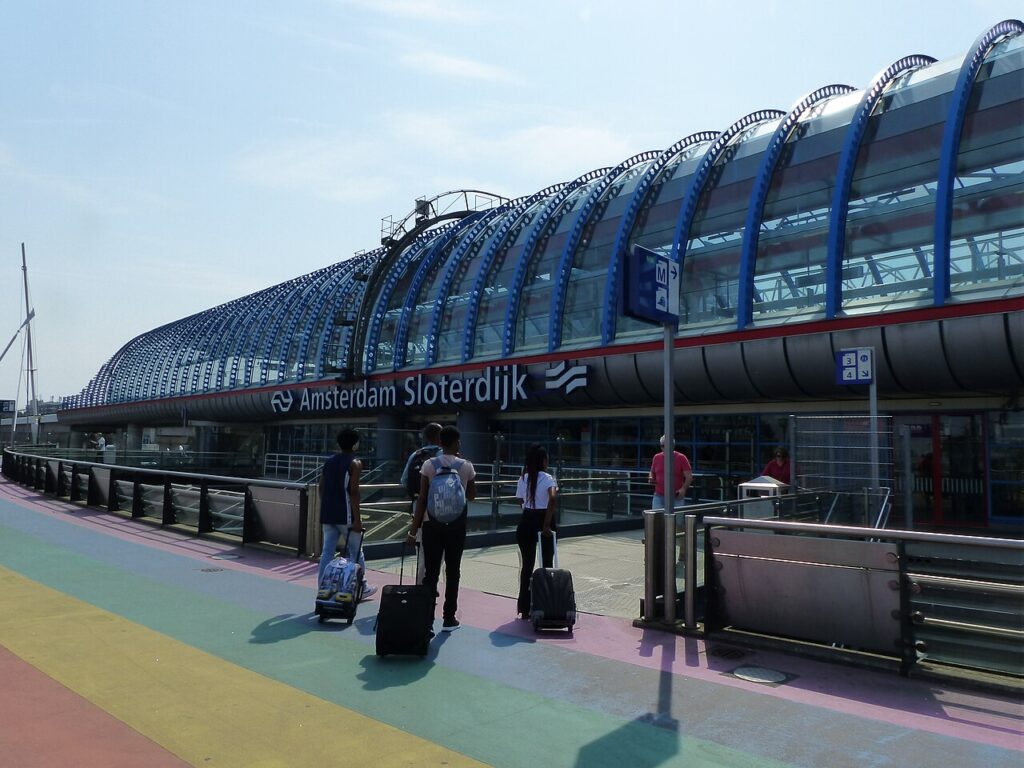
Morning: Demonstrators gathered near the Sloterdijk district, in Amsterdam’s western port area, where three 85-metre towers are being built for Microsoft by Britain’s Pure Data Centres Group. The planned capacity is 78 megawatts, and Microsoft is set to be the sole tenant. Police halted the march as it approached the site, and the mayor banned the demonstration — prompting protesters to attempt to break through police barricades, according to Dutch news agency ANP.
Midday: Around 100 demonstrators entered the site — organisers claimed as many as 500 — cutting open a gate, climbing a crane and spraying graffiti on the foundations. Riot police were deployed with batons, and several arrests were made. Police confiscated items including an angle grinder and climbing equipment.
Afternoon: By late afternoon, police were escorting activists off the site, though some still remained, local media reported. Dutch police said on Friday evening that they had detained 150–200 people suspected of trespassing. Microsoft said it was aware of the demonstration but condemned unlawful actions.
Why a data centre?
The protest was organised by Geef Tegengas — Dutch for “Push Back” — alongside Extinction Rebellion, Fossiel Vrij Nederland and pro-Palestinian demonstrators. Their case is about more than one building. The group says the facility will consume as much electricity as all the households in Amsterdam combined, and could delay the construction of 30,000 new homes. Amsterdam has formally restricted new data centres through 2030, but the Sloterdijk project was grandfathered in because its planning dates to about 2016.
Spokesperson Nathan Timmer framed the action around Microsoft’s contracts with US Immigration and Customs Enforcement and the Israeli military, as well as artificial intelligence’s water and energy footprint. The same site was targeted in July, when Extinction Rebellion activists threw balloons filled with paint and an acidic mixture over the fences.
A movement, not a moment
Friday’s action opens a two-day “Stop Dirty Data Centres” wave coordinated across 15 European countries, with further protests planned at another Microsoft site in Denmark, and in Dublin and Warsaw. The coalition, involving more than 100 groups, is calling for a moratorium on large data centres across Europe.
The timing is no accident. Data centres are the physical footprint of the AI boom: every chatbot query, every video generated, every model trained runs through buildings like the one rising at Sloterdijk. Their appetite for electricity and water has become one of the most contested questions in European energy policy — and the hidden climate cost of the cooling that keeps them running is only part of the argument. The protesters’ point is simpler: a city short of homes and power should not hand both to a single tenant.
Whether the wave grows will depend on what happens this weekend in Denmark, Ireland and Poland. But the Amsterdam breach already shows something new: the backlash against the AI infrastructure boom has moved from opinion pages to construction sites. Europe has seen mass protest before this autumn — what is different now is the target. The fight is no longer just about what AI does. It is about what AI is built on.